Post-Impressionism
Artists who kept Impressionism's colour but pushed towards structure, symbol and feeling.
First room, north wall
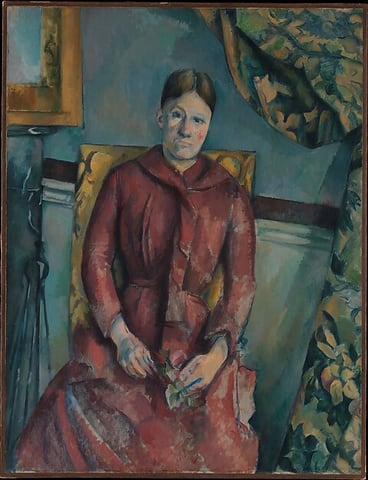
Madame Cézanne (Hortense Fiquet, 1850–1922) in a Red DressPaul Cézanne, 1888–90Courtesy of The Metropolitan Museum of Art 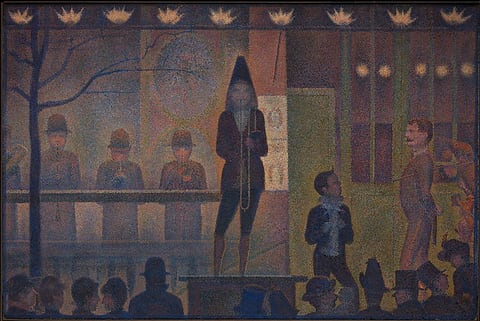
Circus Sideshow (Parade de cirque)Georges Seurat, 1887–88Courtesy of The Metropolitan Museum of Art 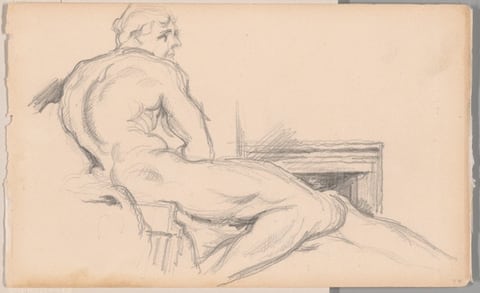
Hercules RestingPaul Cézanne, 1897Courtesy of the Art Institute of Chicago
First room, south wall
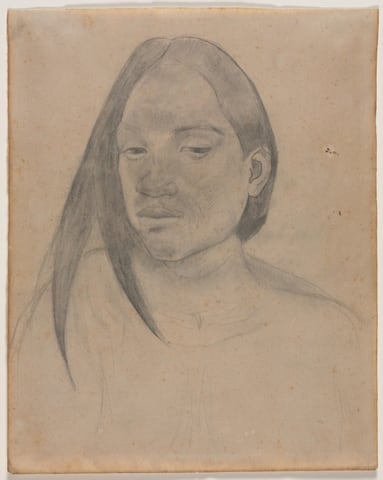
Head of a Tahitian WomanPaul Gauguin, 1891Courtesy of the Cleveland Museum of Art 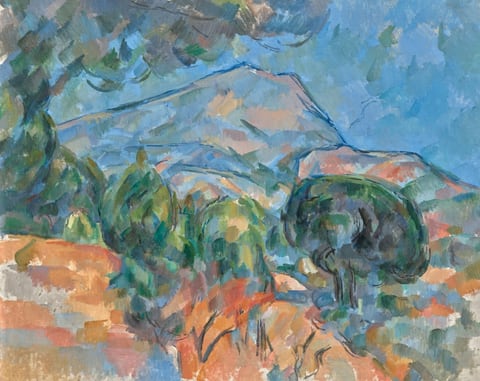
Mount Sainte-VictoirePaul Cézanne, c. 1904Courtesy of the Cleveland Museum of Art 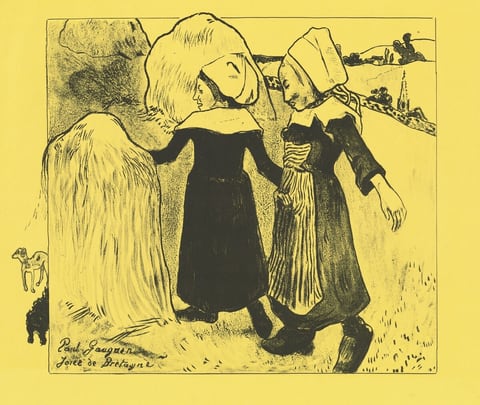
Pleasures of Brittany (Joies de Bretagne)Paul Gauguin, 1889Courtesy National Gallery of Art, Washington 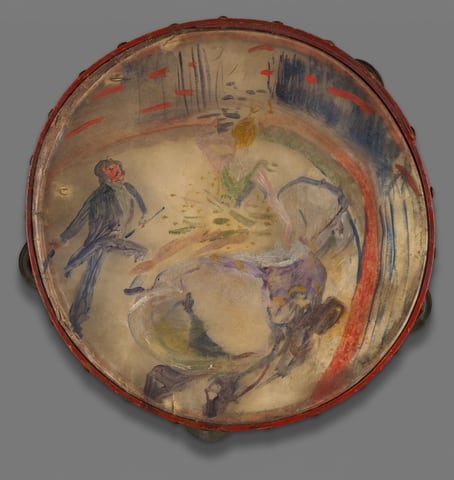
At the Circus: The Bareback Rider (Au Cirque: Écuyère)Henri de Toulouse-Lautrec, 1888Courtesy of the Art Institute of Chicago
Second room, south wall
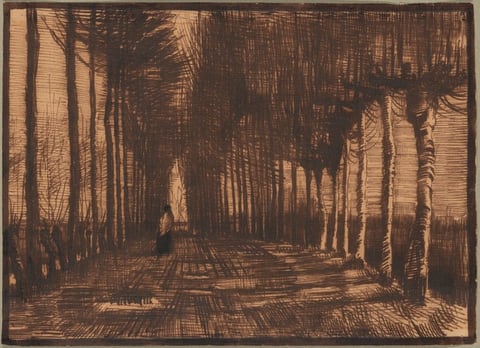
Avenue of Pollard Birches and PoplarsVincent van Gogh, March 1884Courtesy of the Art Institute of Chicago 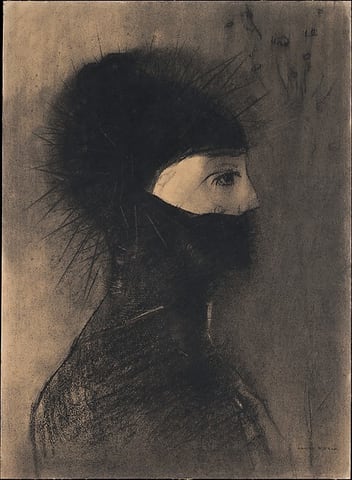
ArmorOdilon Redon, 1891Courtesy of The Metropolitan Museum of Art 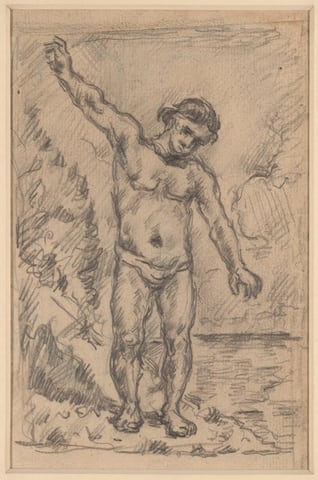
Bather With Outstretched Arms (recto); Study of a Tree (verso)Paul Cézanne, 1874/77Courtesy of the Art Institute of Chicago 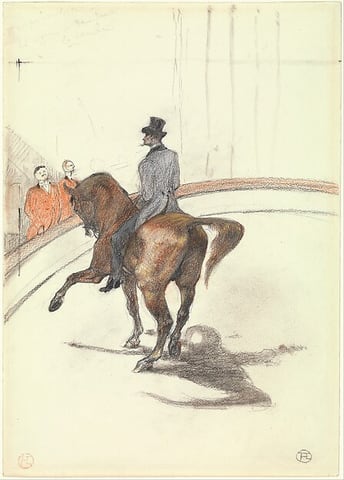
At the Circus: The Spanish Walk (Au Cirque: Le Pas espagnol)Henri de Toulouse-Lautrec, 1899Courtesy of The Metropolitan Museum of Art
Second room, north wall
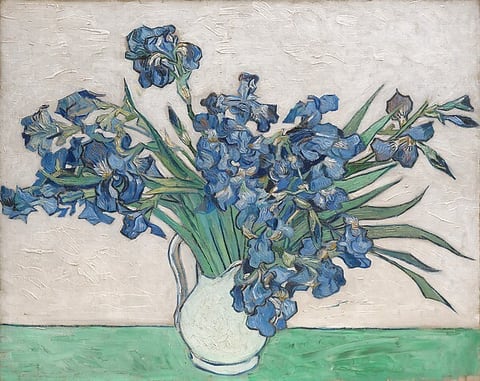
IrisesVincent van Gogh, 1890Courtesy of The Metropolitan Museum of Art 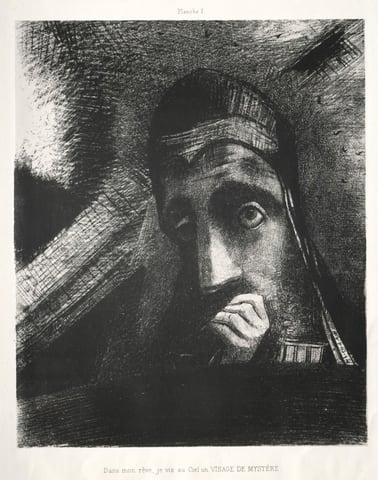
In My Dream I Saw in the Sky a Face of MysteryOdilon Redon, 1885Courtesy of the Cleveland Museum of Art 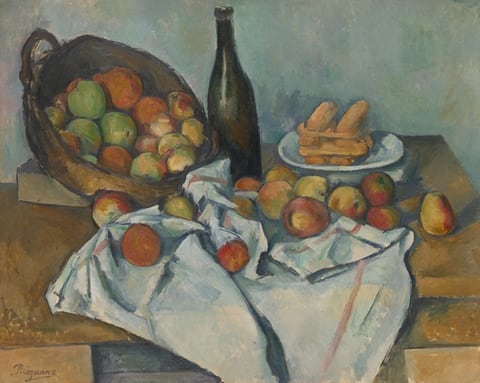
The Basket of ApplesPaul Cézanne, c. 1893Courtesy of the Art Institute of Chicago
Third room, north wall
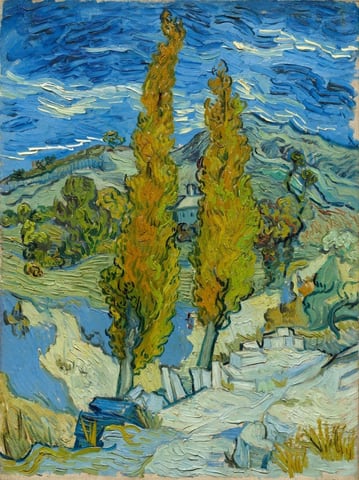
Two Poplars in the Alpilles near Saint-RémyVincent van Gogh, 1889Courtesy of the Cleveland Museum of Art 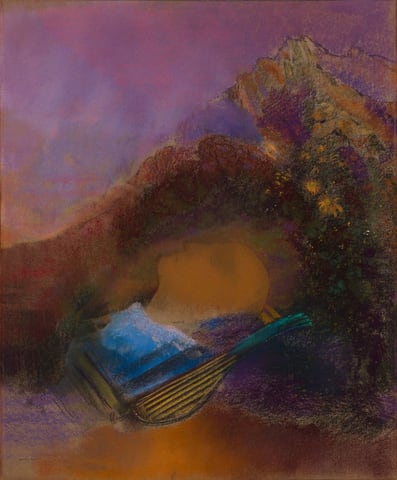
OrpheusOdilon Redon, c. 1903–10Courtesy of the Cleveland Museum of Art