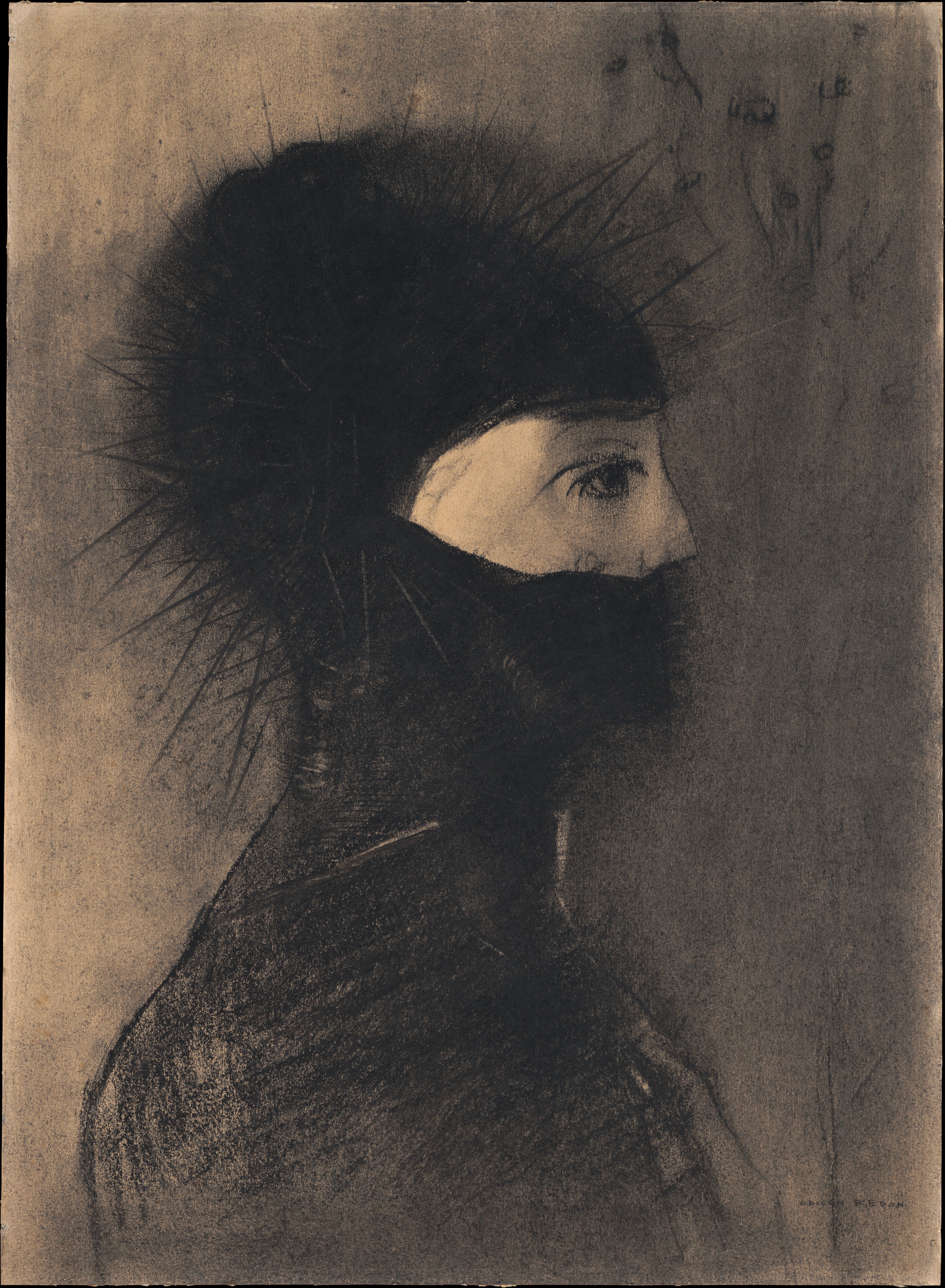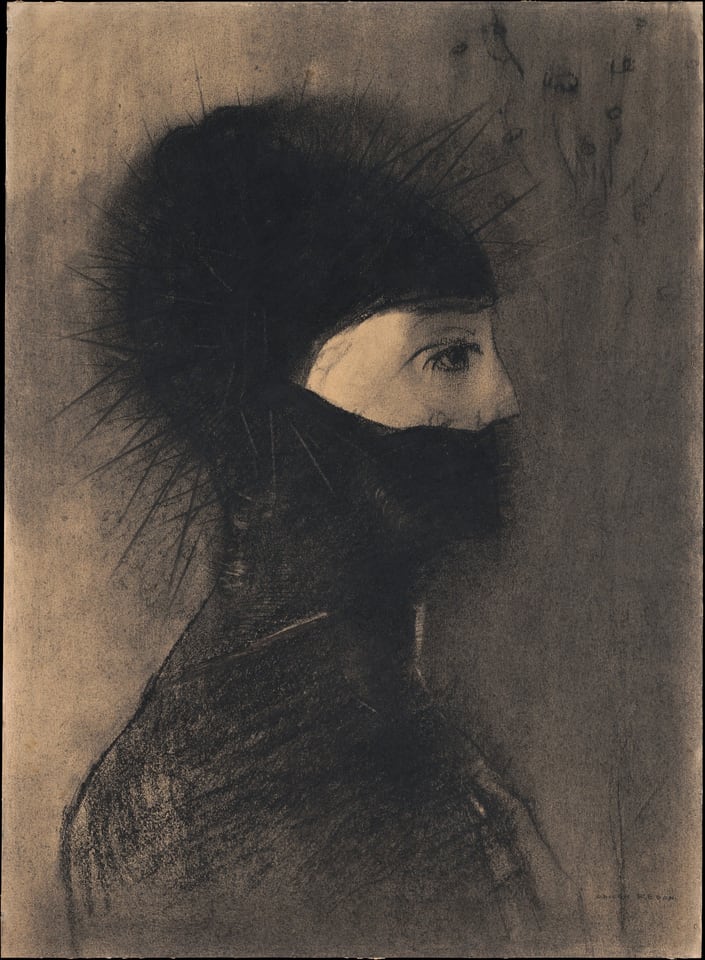
Armor1891
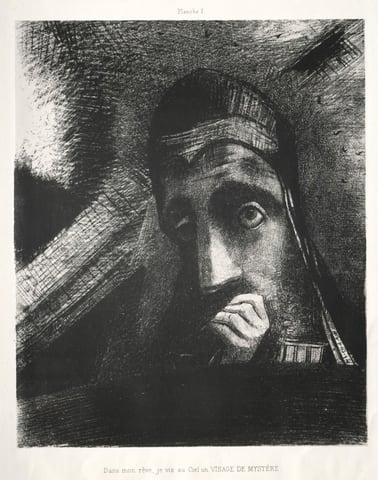
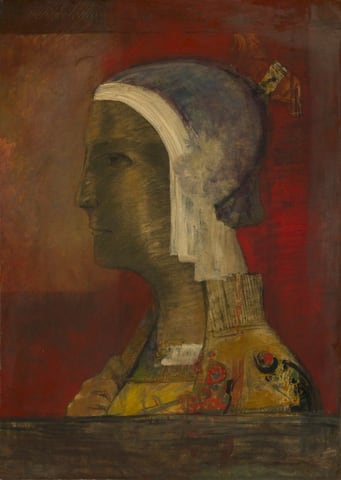
A head encased in a dark, close-fitting helmet emerges from shadow, its features barely visible, in this charcoal and conté crayon drawing of 1891. More about this work
About this work
A head encased in a dark, close-fitting helmet emerges from shadow, its features barely visible, in this charcoal and conté crayon drawing of 1891. It belongs to Redon’s ‘noirs’, the black drawings and lithographs that occupied him for some three decades, in which ordinary forms become strange and haunting. The rich, velvety blacks, built up and rubbed to create glowing transitions of tone, show his mastery of the medium shortly before he turned to colour.
Written by Ochre Editions.
How it was made
- Charcoal
- Burnt willow or vine. It smudges and wipes away easily, which made it the natural tool for working out a composition.
Odilon Redon
French, 1840–1916 · Born in Bordeaux; died in Paris.
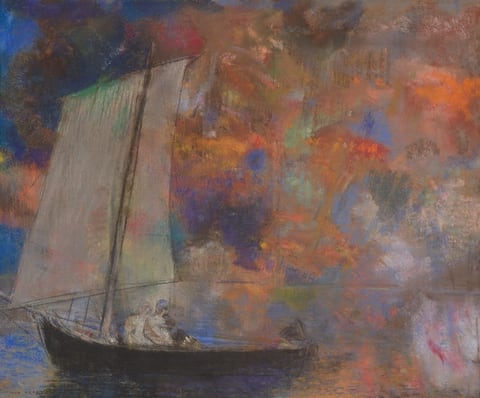
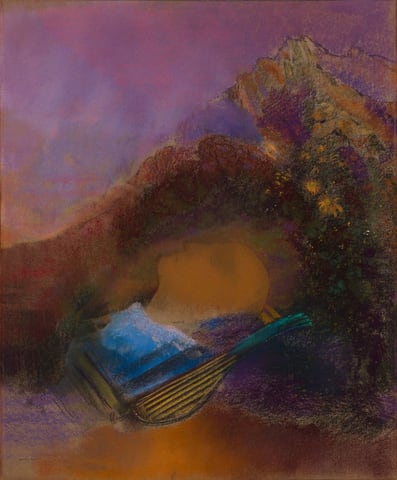
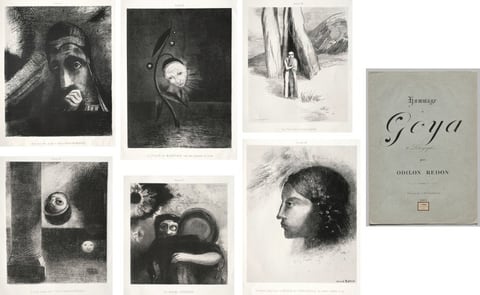
Redon spent three decades working almost entirely in black: charcoal drawings he called his “noirs” and albums of lithographs peopled with floating eyes, strange plants and dreamlike heads, which made him a hero of the Symbolist writers. In the 1890s he turned to colour, and his later pastels and oils of flowers, myths and visions glow with intense hues. He was close to Mallarmé and admired by the young Nabis.
Written by Ochre Editions.
Post-Impressionism
Artists who kept Impressionism's colour but pushed towards structure, symbol and feeling.
Rights and the museum’s record
Public domain. The Met has dedicated this image to the public domain under CC0, so anyone may copy, adapt and use it, for any purpose, without asking. Our prints and files are reproductions made from the museum’s image; the museum doesn’t endorse them.
- Object number
- 48.10.1
- Credit
- Courtesy of The Metropolitan Museum of Art
- Type
- Drawings
- Department
- Drawings and Prints
- Licence
- CC0 1.0 Universal
- Museum record
- See it on the museum’s site