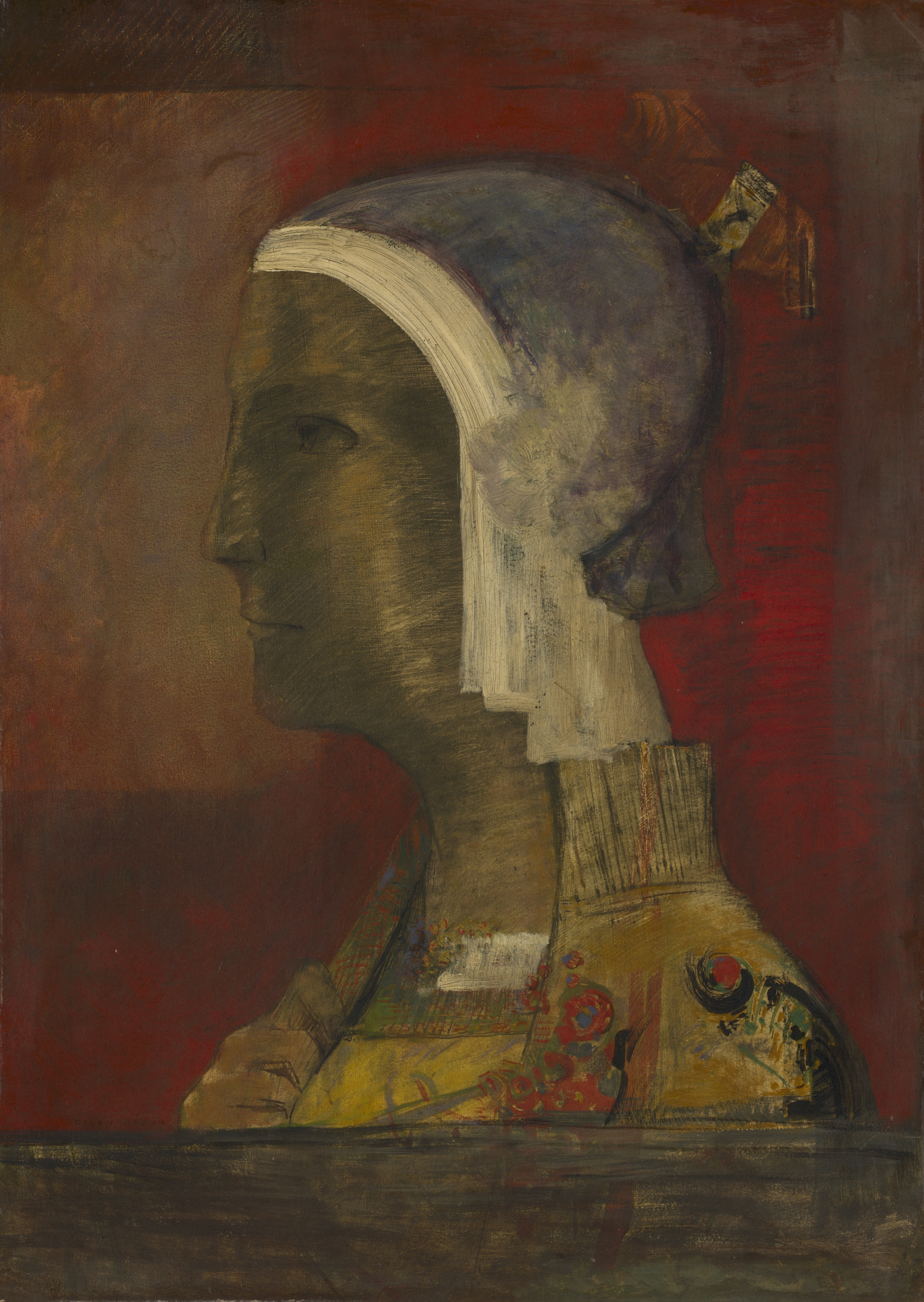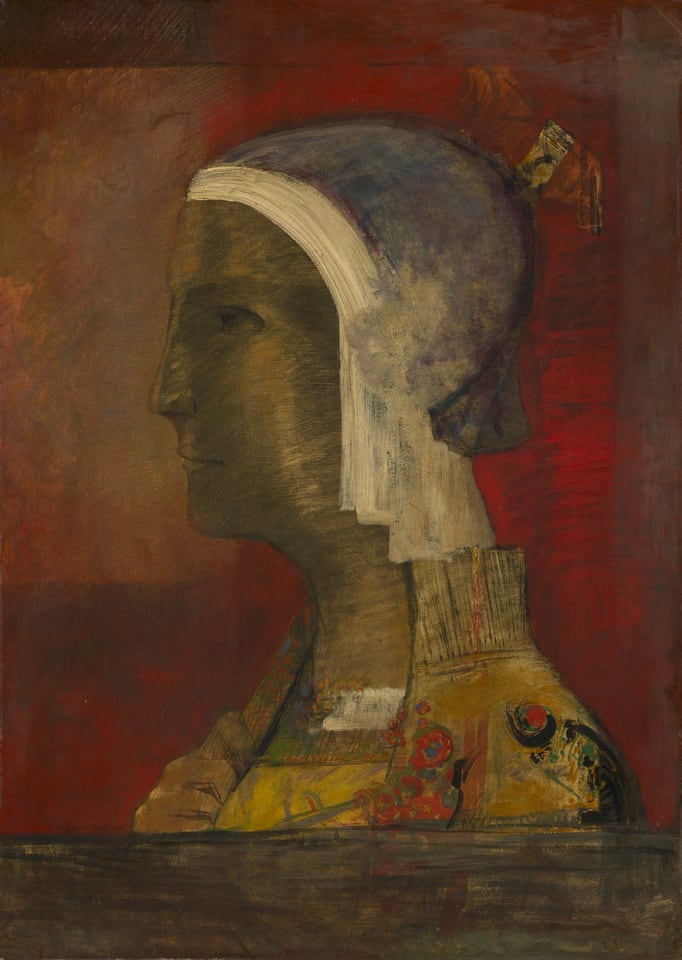
Symbolic Headc. 1890
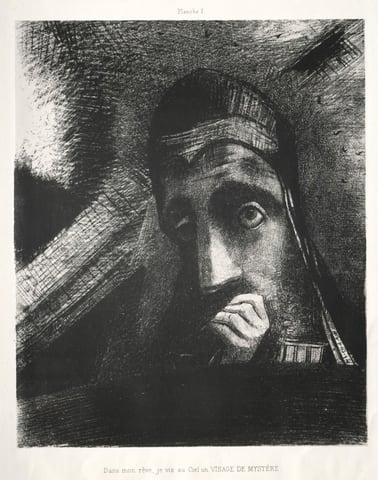
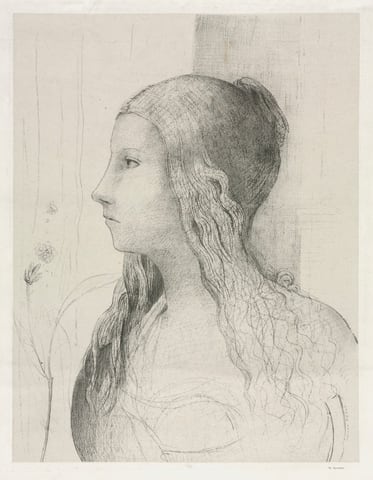
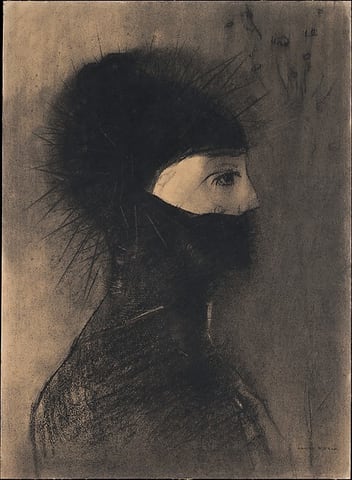
One of Redon’s favorite themes was a head depicted in profile, sometimes separated from the body to symbolize the spirit released from the material world. More about this work
About this work
One of Redon’s favorite themes was a head depicted in profile, sometimes separated from the body to symbolize the spirit released from the material world. It also suggests a metaphor for abandoning physical reality for the inner realm of dreams, fantasy, and poetic reverie. This painting conveys the idea of inward-turning vision by framing the head in a series of collapsing rectangles. Conservation analysis confirms that the figure is a woman wearing a helmet and holding a green staff in her right hand.
Text from the Cleveland Museum of Art.
How it was made
- Oil paint
- Pigment ground in a drying oil, usually linseed. It dries slowly, so painters could blend on the canvas, build up thin translucent glazes, and rework a picture over weeks. Canvas replaced wooden panels in the 1500s because it is lighter and can be rolled.
Odilon Redon
French, 1840–1916 · Born in Bordeaux; died in Paris.
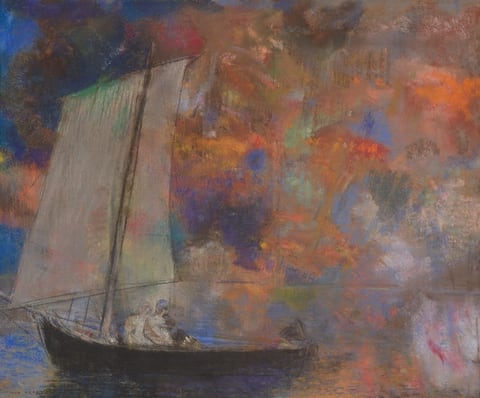
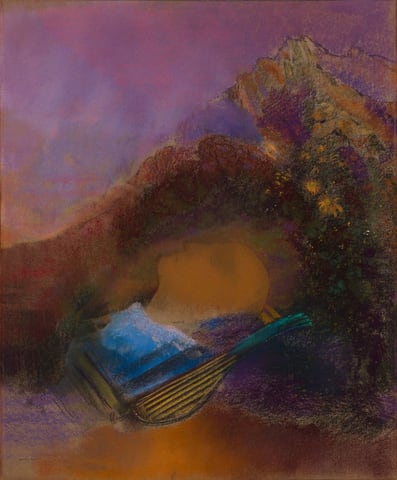
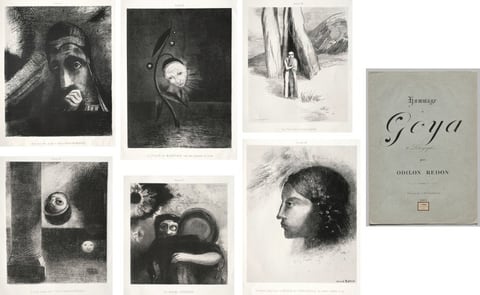
Redon spent three decades working almost entirely in black: charcoal drawings he called his “noirs” and albums of lithographs peopled with floating eyes, strange plants and dreamlike heads, which made him a hero of the Symbolist writers. In the 1890s he turned to colour, and his later pastels and oils of flowers, myths and visions glow with intense hues. He was close to Mallarmé and admired by the young Nabis.
Written by Ochre Editions.
Post-Impressionism
Artists who kept Impressionism's colour but pushed towards structure, symbol and feeling.
Rights and the museum’s record
Public domain. The Cleveland Museum of Art has dedicated this image to the public domain under CC0, so anyone may copy, adapt and use it, for any purpose, without asking. Our prints and files are reproductions made from the museum’s image; the museum doesn’t endorse them.
- Object number
- 1988.91
- Credit
- Courtesy of the Cleveland Museum of Art
- Type
- Painting
- Department
- Modern European Painting and Sculpture
- Licence
- CC0 1.0 Universal
- Museum record
- See it on the museum’s site