Orpheusc. 1903–10
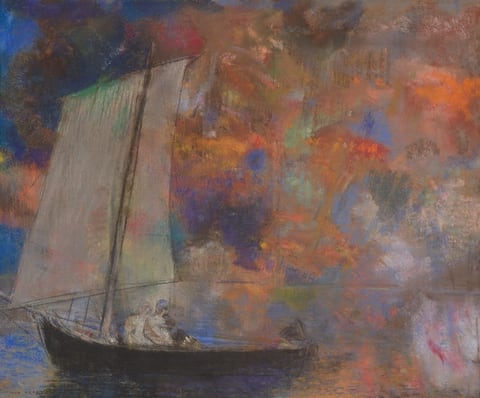
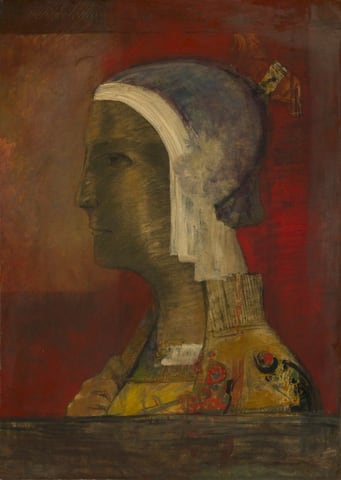
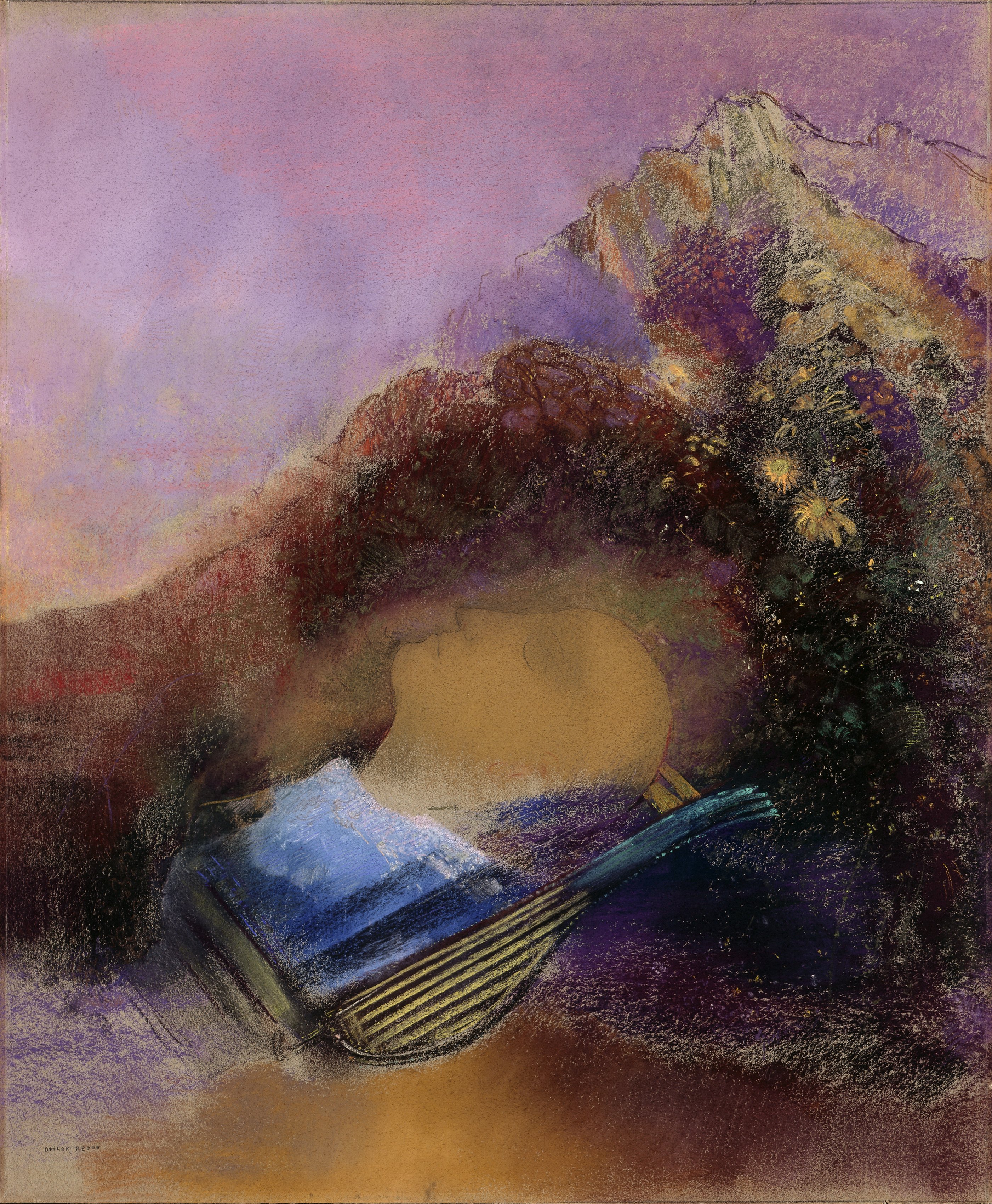
Drawn in vivid layers of pastel crayon, this work depicts the head of the poet and musician Orpheus. More about this work
About this work
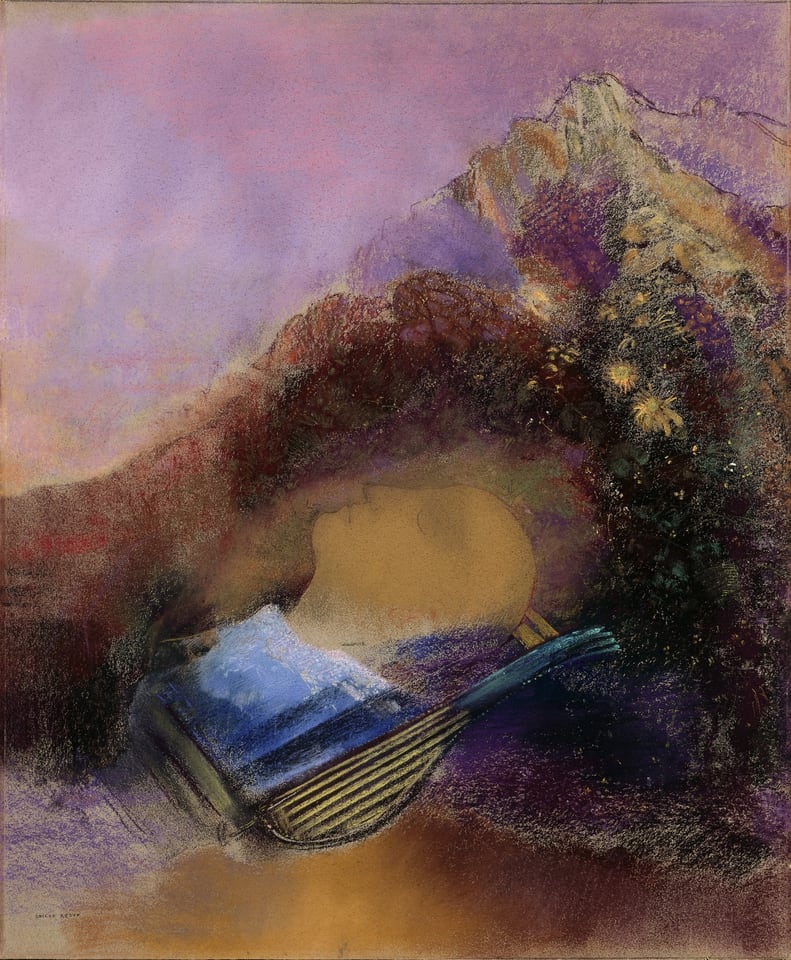
Drawn in vivid layers of pastel crayon, this work depicts the head of the poet and musician Orpheus. The story of the god of music, whose music carried on after his death through his lyre and head, fascinated Redon, who related to Orpheus's dedication to his art. The subject also aligned with Redon's broader interest in dreams and spirituality around this time and he represented Orpheus several times throughout his career, in various media. Here, the god's head floats as if in stasis while Mount Parnassus—the home of Apollo and the Muses—soars from behind.
Text from the Cleveland Museum of Art.
How it was made
- Pastel
- Sticks of almost pure pigment with very little binder. The colour sits on the paper as powder: bright, matte and fragile.
Odilon Redon
French, 1840–1916 · Born in Bordeaux; died in Paris.
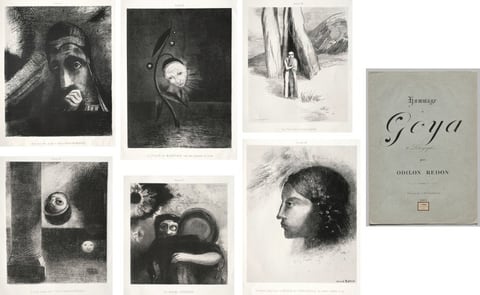
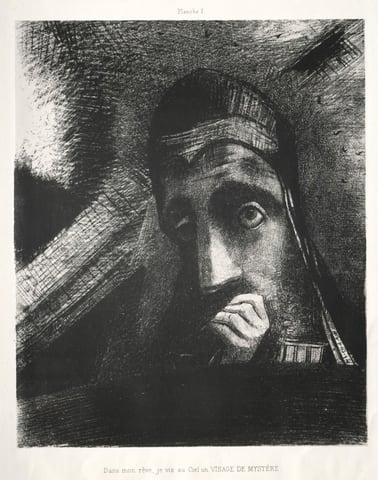
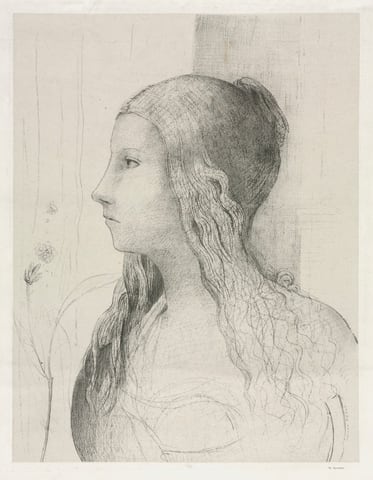
Redon spent three decades working almost entirely in black: charcoal drawings he called his “noirs” and albums of lithographs peopled with floating eyes, strange plants and dreamlike heads, which made him a hero of the Symbolist writers. In the 1890s he turned to colour, and his later pastels and oils of flowers, myths and visions glow with intense hues. He was close to Mallarmé and admired by the young Nabis.
Written by Ochre Editions.
Post-Impressionism
Artists who kept Impressionism's colour but pushed towards structure, symbol and feeling.
Rights and the museum’s record
Public domain. The Cleveland Museum of Art has dedicated this image to the public domain under CC0, so anyone may copy, adapt and use it, for any purpose, without asking. Our prints and files are reproductions made from the museum’s image; the museum doesn’t endorse them.
- Object number
- 1926.25
- Credit
- Courtesy of the Cleveland Museum of Art
- Type
- Drawing
- Department
- Drawings
- Licence
- CC0 1.0 Universal
- Museum record
- See it on the museum’s site