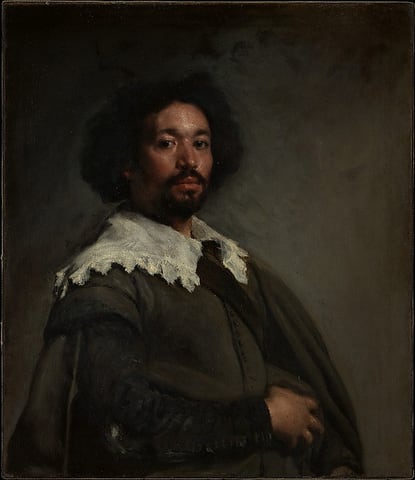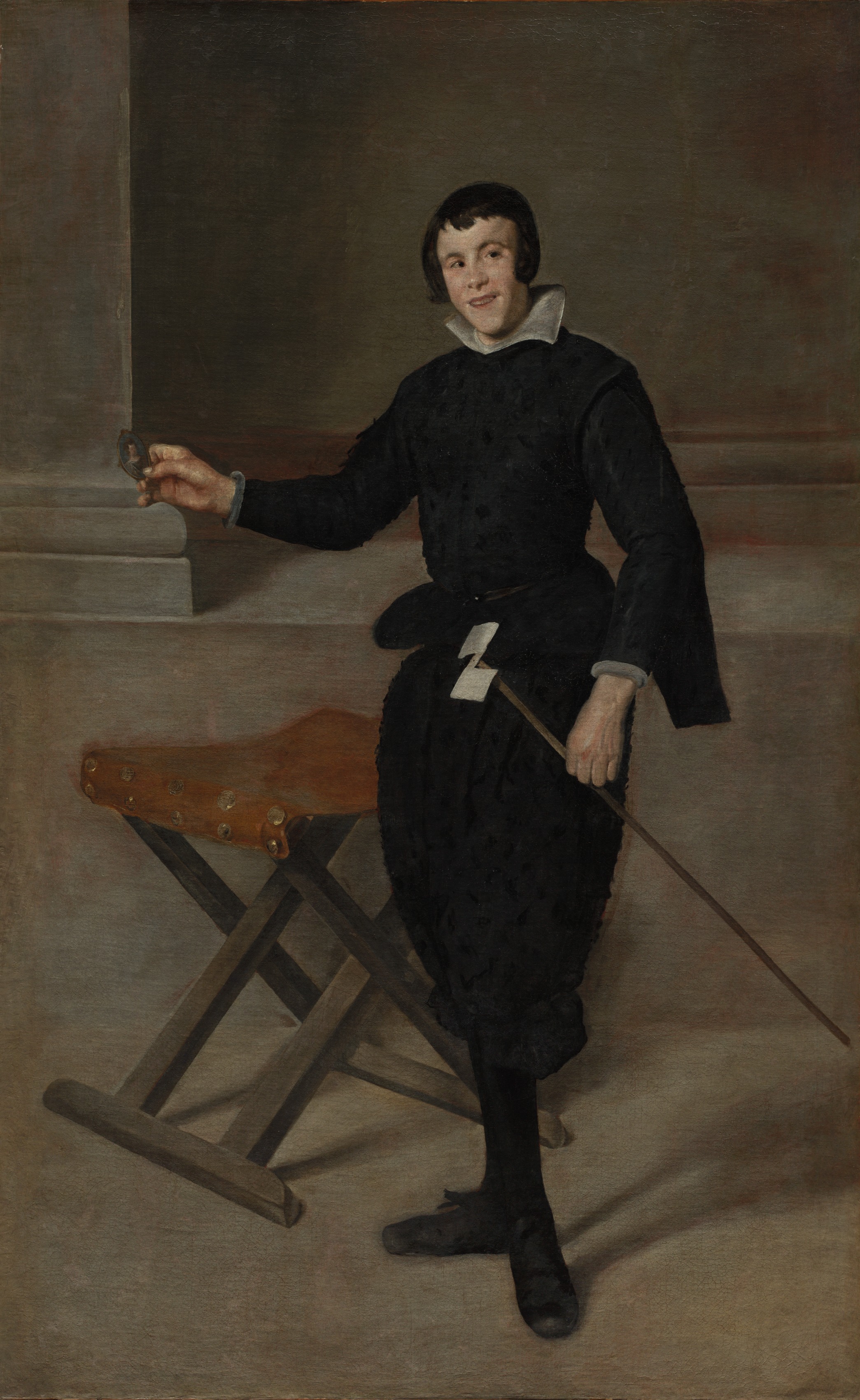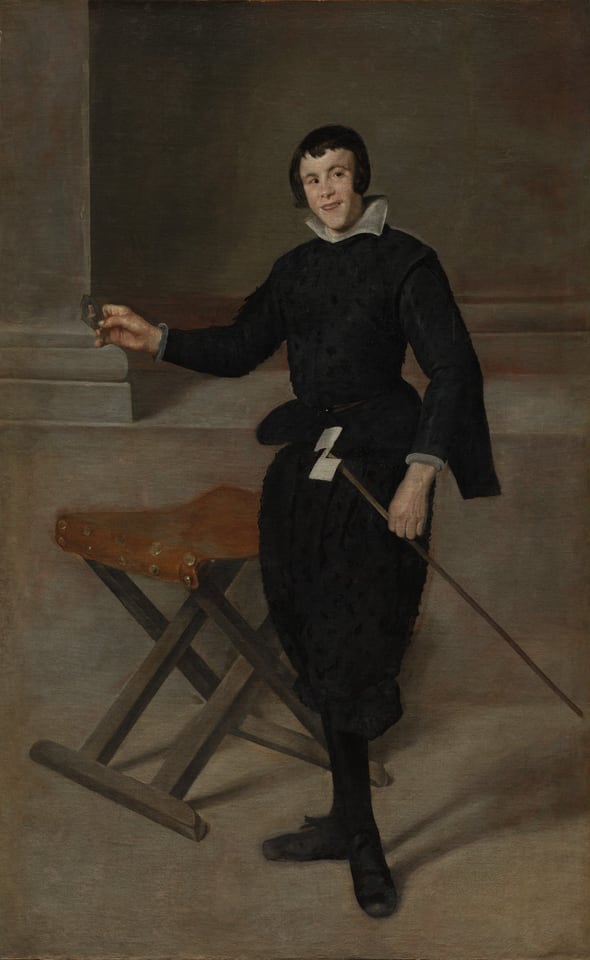
Portrait of the Jester Calabazasc. 1631–32
Calabazas, a jester in the court of King Philip IV of Spain, had physical and mental disabilities, a state that the artist emphasizes, rather than tries to hide. More about this work
About this work
Calabazas, a jester in the court of King Philip IV of Spain, had physical and mental disabilities, a state that the artist emphasizes, rather than tries to hide. While the Spanish court prized and doted upon people with disabilities such as Calabazas, Velázquez transformed their depiction in portraiture. This startling work uses the format of the formal, full-length court portrait to present a type of person who was generally perceived as marginal at this point in history and profoundly humanizes him.
Text from the Cleveland Museum of Art.
How it was made
- Oil paint
- Pigment ground in a drying oil, usually linseed. It dries slowly, so painters could blend on the canvas, build up thin translucent glazes, and rework a picture over weeks. Canvas replaced wooden panels in the 1500s because it is lighter and can be rolled.
Diego Velázquez
Spanish, 1599–1660 · Born in Seville; died in Madrid.
Rights and the museum’s record
Public domain. The Cleveland Museum of Art has dedicated this image to the public domain under CC0, so anyone may copy, adapt and use it, for any purpose, without asking. Our prints and files are reproductions made from the museum’s image; the museum doesn’t endorse them.
- Object number
- 1965.15
- Credit
- Courtesy of the Cleveland Museum of Art
- Type
- Painting
- Department
- European Painting and Sculpture
- Licence
- CC0 1.0 Universal
- Museum record
- See it on the museum’s site