Post-Impressionism
Artists who kept Impressionism's colour but pushed towards structure, symbol and feeling.
Section 1, north wall
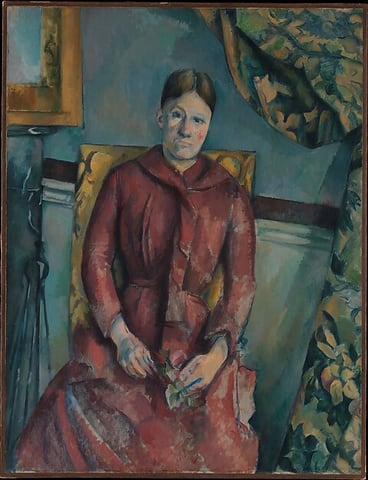
Madame Cézanne (Hortense Fiquet, 1850–1922) in a Red DressPaul Cézanne, 1888–90Courtesy of The Metropolitan Museum of Art 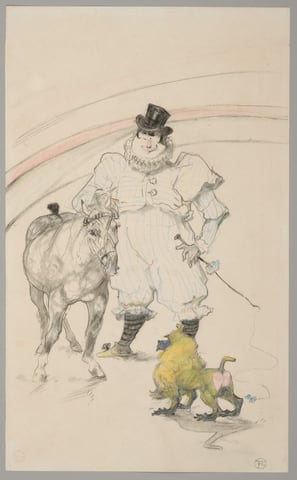
At the Circus: Trained Pony and BaboonHenri de Toulouse-Lautrec, 1899Courtesy of the Art Institute of Chicago 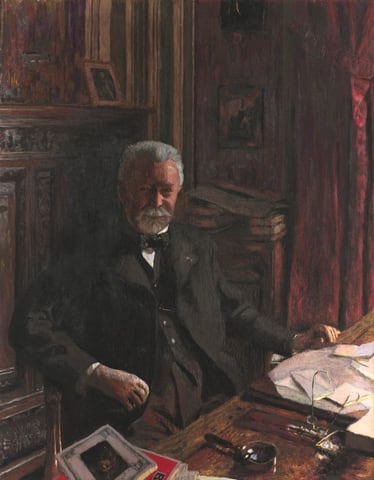
André BénacÉdouard Vuillard, 1936Courtesy of the Cleveland Museum of Art 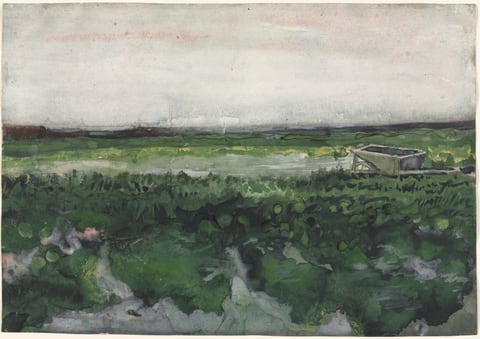
Landscape with WheelbarrowVincent van Gogh, 1883Courtesy of the Cleveland Museum of Art
Section 1, south wall
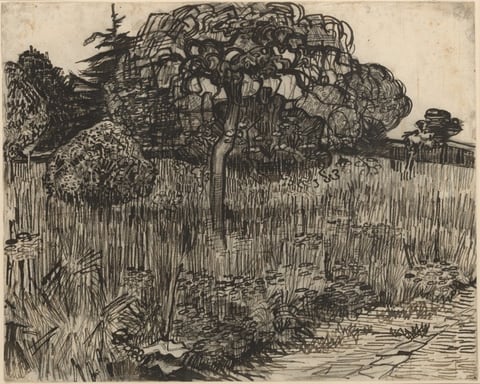
Weeping TreeVincent van Gogh, 1889Courtesy of the Art Institute of Chicago 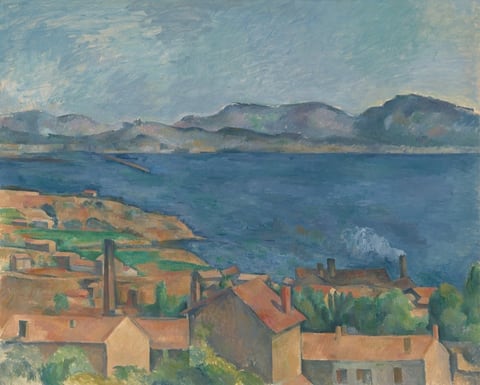
The Bay of Marseille, Seen from L'EstaquePaul Cézanne, c. 1885Courtesy of the Art Institute of Chicago 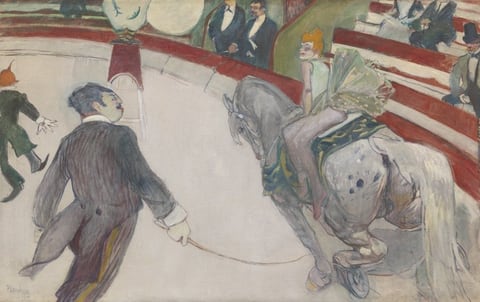
Equestrienne (At the Cirque Fernando)Henri de Toulouse-Lautrec, 1887–88Courtesy of the Art Institute of Chicago
Section 2, south wall
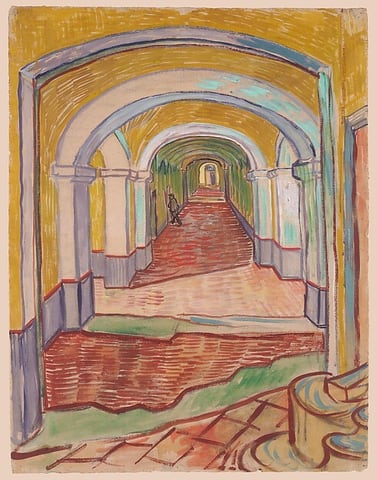
Corridor in the AsylumVincent van Gogh, September 1889Courtesy of The Metropolitan Museum of Art 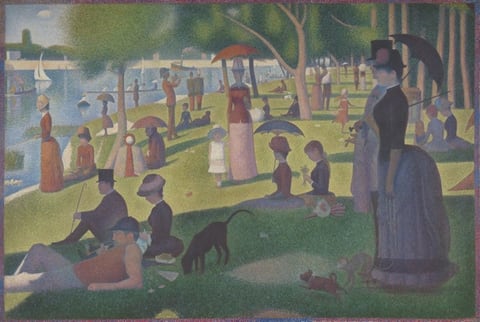
A Sunday on La Grande Jatte — 1884Georges Seurat, 1884–86, border added 1888–89Courtesy of the Art Institute of Chicago 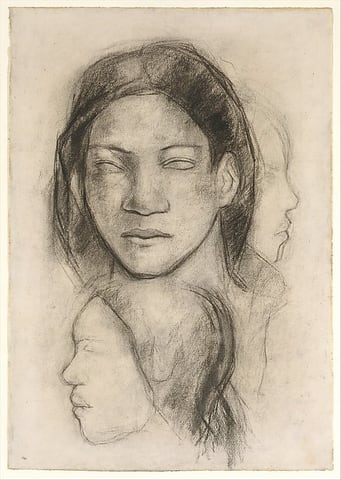
Tahitian Faces (Frontal View and Profiles)Paul Gauguin, ca. 1899Courtesy of The Metropolitan Museum of Art
Section 2, north wall
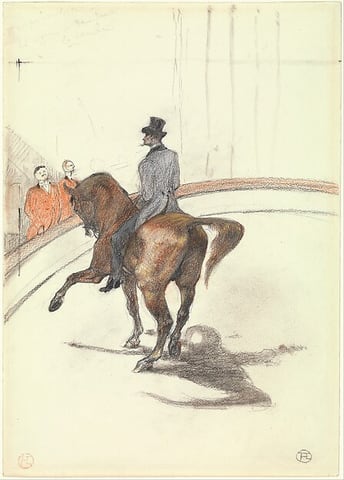
At the Circus: The Spanish Walk (Au Cirque: Le Pas espagnol)Henri de Toulouse-Lautrec, 1899Courtesy of The Metropolitan Museum of Art 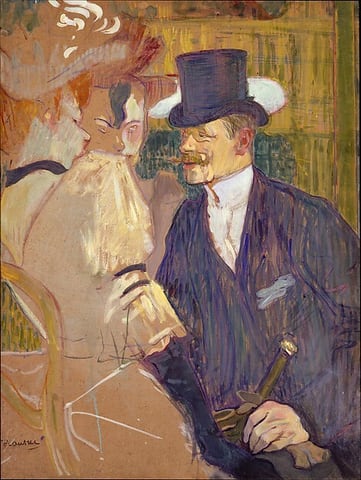
The Englishman (William Tom Warrener, 1861–1934) at the Moulin RougeHenri de Toulouse-Lautrec, 1892Courtesy of The Metropolitan Museum of Art 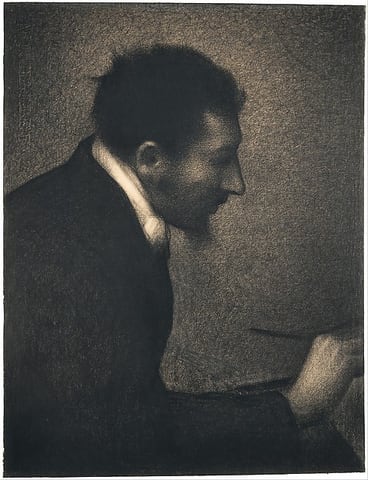
Aman-Jean (Portrait of Edmond François Aman-Jean)Georges Seurat, 1882–83Courtesy of The Metropolitan Museum of Art 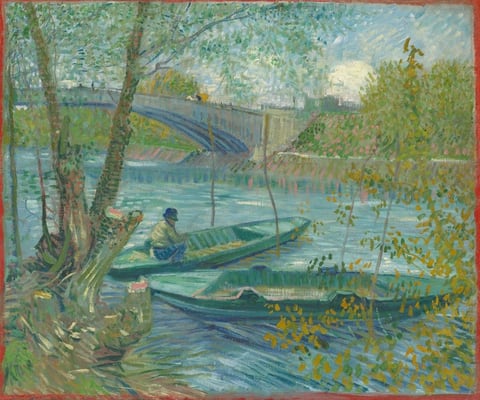
Fishing in Spring, the Pont de Clichy (Asnières)Vincent van Gogh, 1887Courtesy of the Art Institute of Chicago
Section 3, north wall
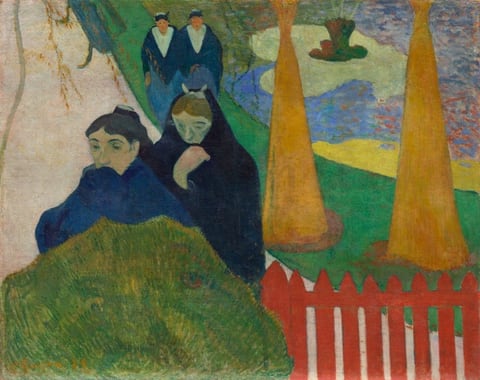
Arlésiennes (Mistral)Paul Gauguin, 1888Courtesy of the Art Institute of Chicago 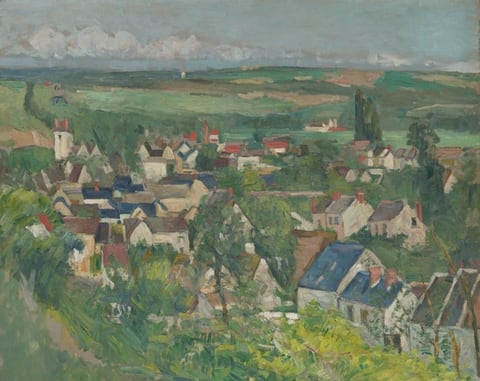
Auvers, Panoramic ViewPaul Cézanne, 1873–75Courtesy of the Art Institute of Chicago