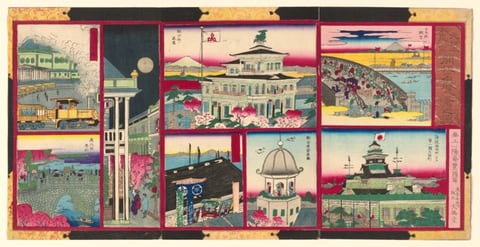
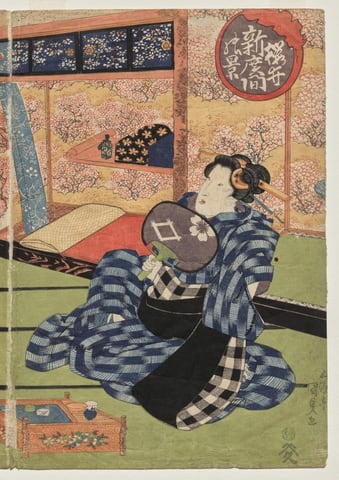
Eight Modern Views of Famous Places in Tokyo of Great Japan (Dai Nippon Tokyo kaika meisho hakkei no zu)Utagawa Kunisada II (Kunimasa III, Toyokuni IV), 1875
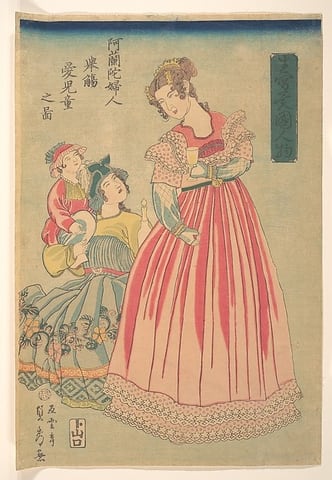
Dutch Woman and Child (Seisha ikoku jinbutsu Oranda fujin aijidō no zu)Utagawa (Gountei) Sadahide, 1860
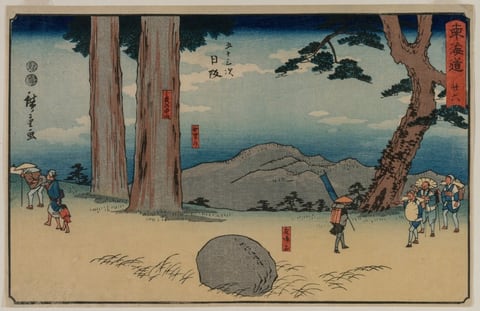
Nissaka: The Night-Weeping Stone at Sayo no Nakayama, from the series The Fifty-Three Stations of the TōkaidōUtagawa Hiroshige, c. 1848–50
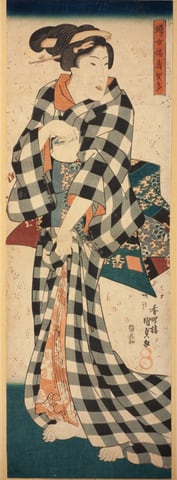
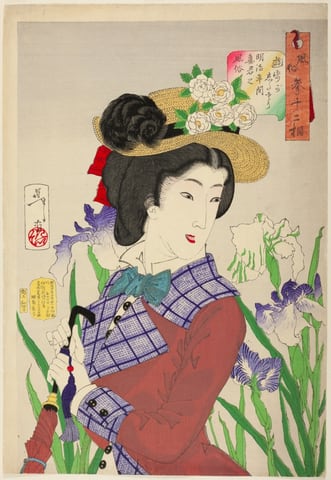
In The Mood for a Walk (Yuho ga shitaso), from the series "Thirty-two Aspects of Women (Fuzoku sanjuniso)"Tsukioka Yoshitoshi, 1888
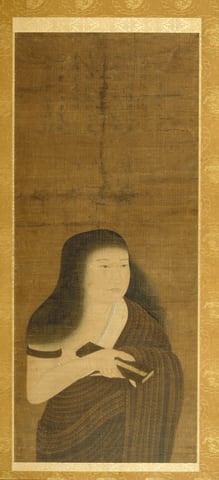
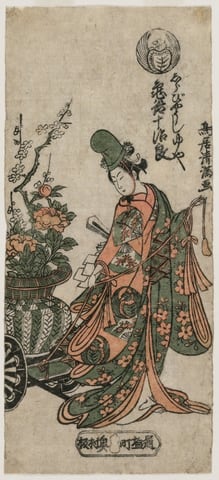
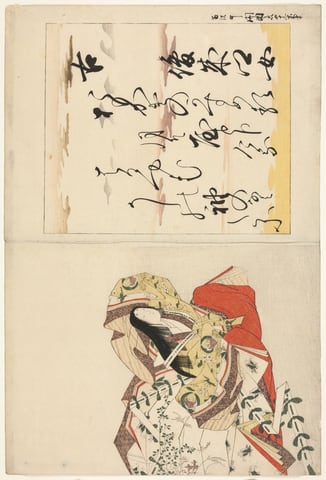
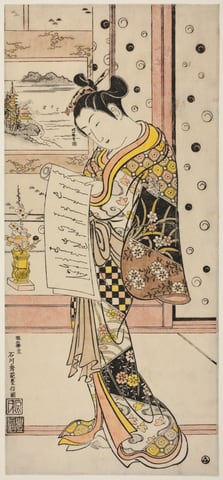
The Poetess Shunzei no Musume, from the series The Thirty-six Immortal Women Poets (Nishikizuri onna sanjurokkasen)Chôbunsai Eishi, Edo period (1615–1868), 1801
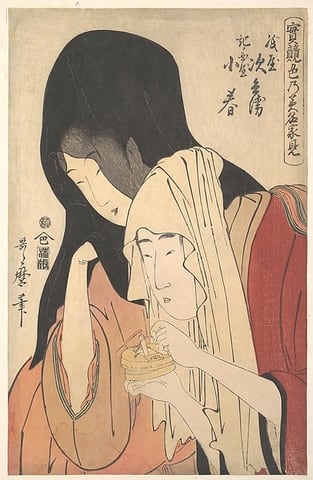
Jihei of Kamiya Eloping with the Geisha Koharu of Kinokuniya, from the series “True Feelings Compared: The Founts of Love” (Jitsu kurabe iro no Minakami)Kitagawa Utamaro, ca. 1798–99
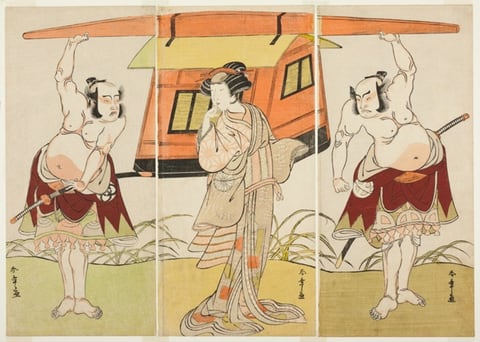
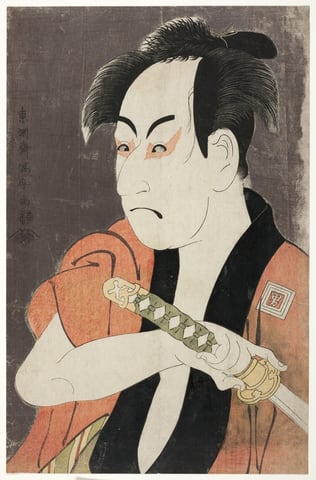
The Actors Otani Hiroji III as Yokambei (right), Nakamura Tomijuro I as Kuzunoha (center), and Bando Mitsugoro I as Yakambei (left), in the Last Scene from the Play Shinodazuma (The Wife from Shinoda Forest), Performed as a Supplement to the Play Kikyo-zome Onna Urakata (Female Diviner in Deep Violet), at the Morita Theater from the Ninth Day of the Ninth Month, 1776Katsukawa Shunshō, c. 1776
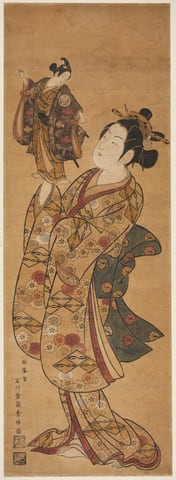
The Actor Onoe Kikugoro I holding a puppet of the Actor Sanogawa Ichimatsu IIshikawa Toyonobu, c. 1740s
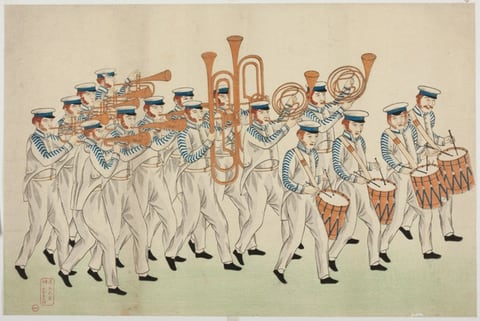
Procession of Russian Marching Band, from the Album of seven prints of Russian Army and Warship (Roshia seigi shashin kan), 1853Keiga, 1853
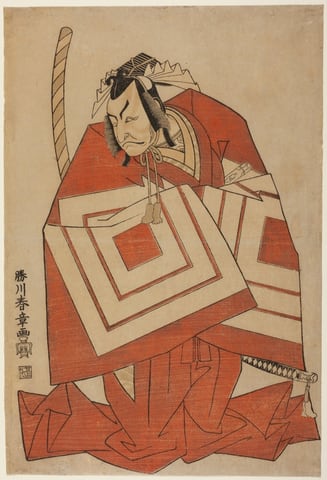
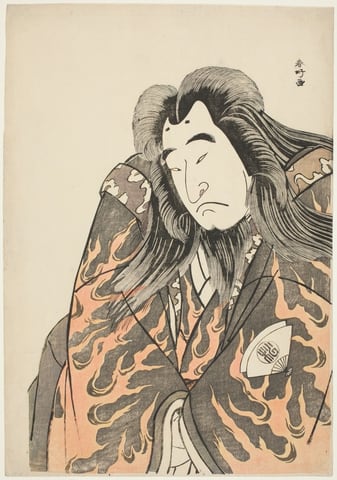
The Actor Ichikawa Danjuro IV in a "Shibaraku" Role, Possibly from the Play Ima o Sakari Suehiro Genji (The Genji Clan Now at Its Zenith), Performed at the Nakamura Theater from the First Day of the Eleventh Month, 1768Katsukawa Shunshō, c. 1768