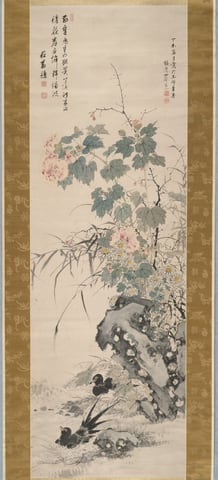
Beggar (Kojiki)1871
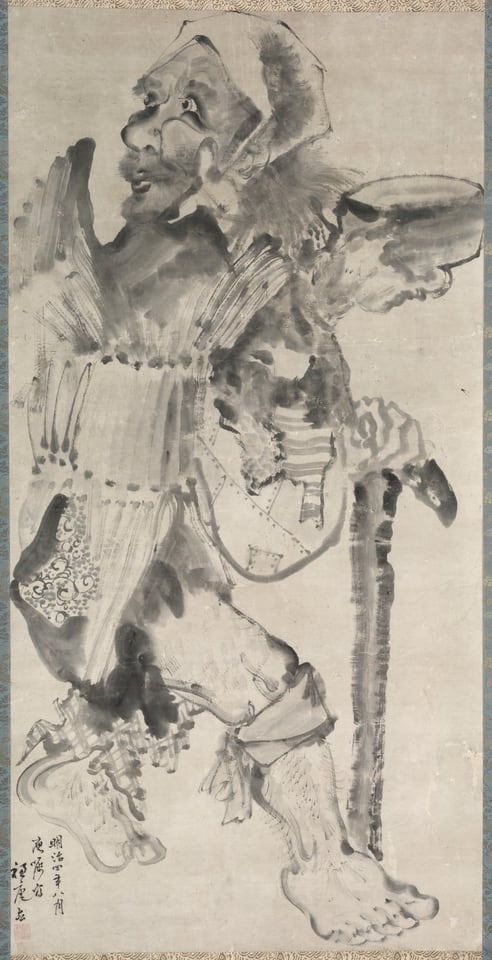
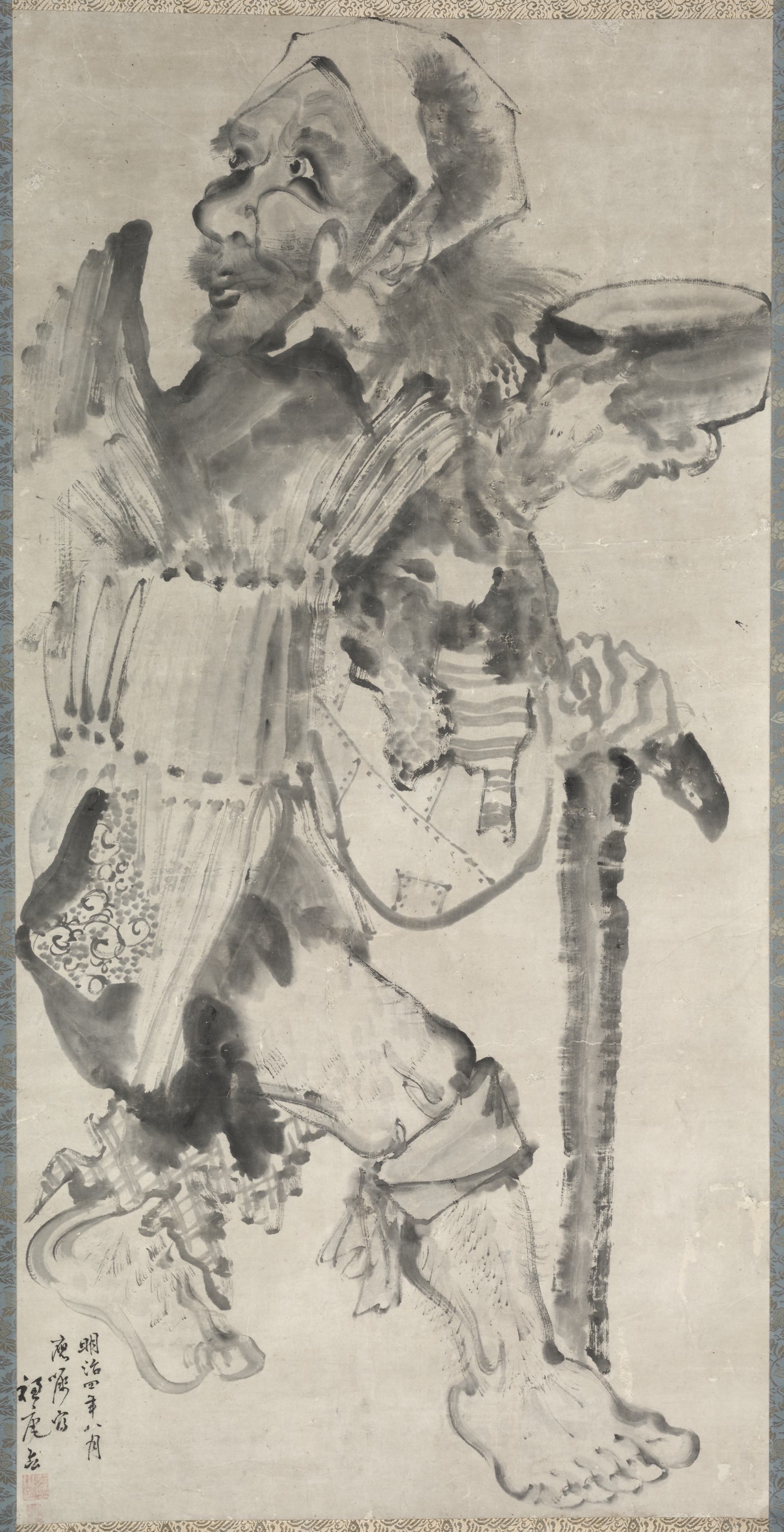
The Japanese term for beggar, kojiki, derives from the word kotsujiki, which refers to Buddhist monks taking bowls from door to door to request sustenance. More about this work
About this work
The Japanese term for beggar, kojiki, derives from the word kotsujiki, which refers to Buddhist monks taking bowls from door to door to request sustenance. The son of the artist Suian Bunrō, Suian Hirafuku was born in Kakunodate in Japan’s northern Akita prefecture. When he was 16, he went to study in Kyoto. In 1880 he took first place with another painting titled Beggar at the third Akita Prefectural Industrial Exposition, and in 1890, he took second prize for technical achievement with Nursing Tigress at the third National Industrial Exposition.
Text from the Cleveland Museum of Art.
How it was made
- Hanging scroll
- A painting mounted on silk with a wooden roller at the foot. It was rolled up for storage and brought out to hang for a season, a guest or an occasion.
- Ink on paper
- Ink made from soot and animal glue, ground with water on an inkstone. A single brush can give a hair-fine line or a broad wash, and nothing can be corrected.
Hirafuku Suian
Japanese, 1844–1890
Rights and the museum’s record
Public domain. The Cleveland Museum of Art has dedicated this image to the public domain under CC0, so anyone may copy, adapt and use it, for any purpose, without asking. Our prints and files are reproductions made from the museum’s image; the museum doesn’t endorse them.
- Object number
- 1988.73
- Credit
- Courtesy of the Cleveland Museum of Art
- Type
- Painting
- Department
- Japanese Art
- Licence
- CC0 1.0 Universal
- Museum record
- See it on the museum’s site
Report this work
Close in colour