The Rabbit Hunt1560
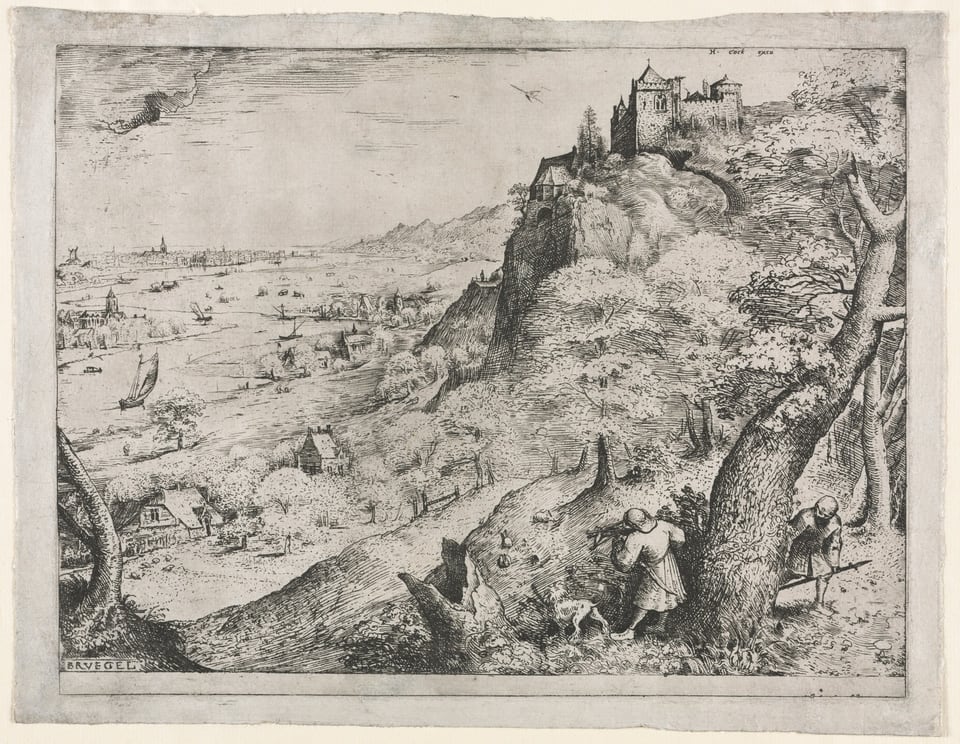
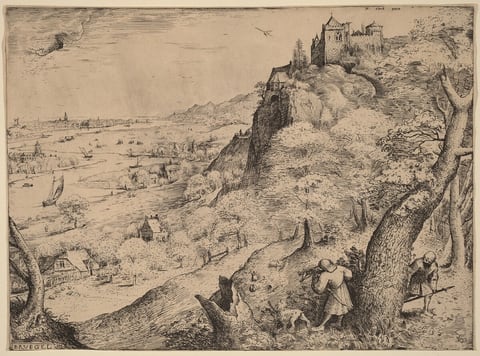
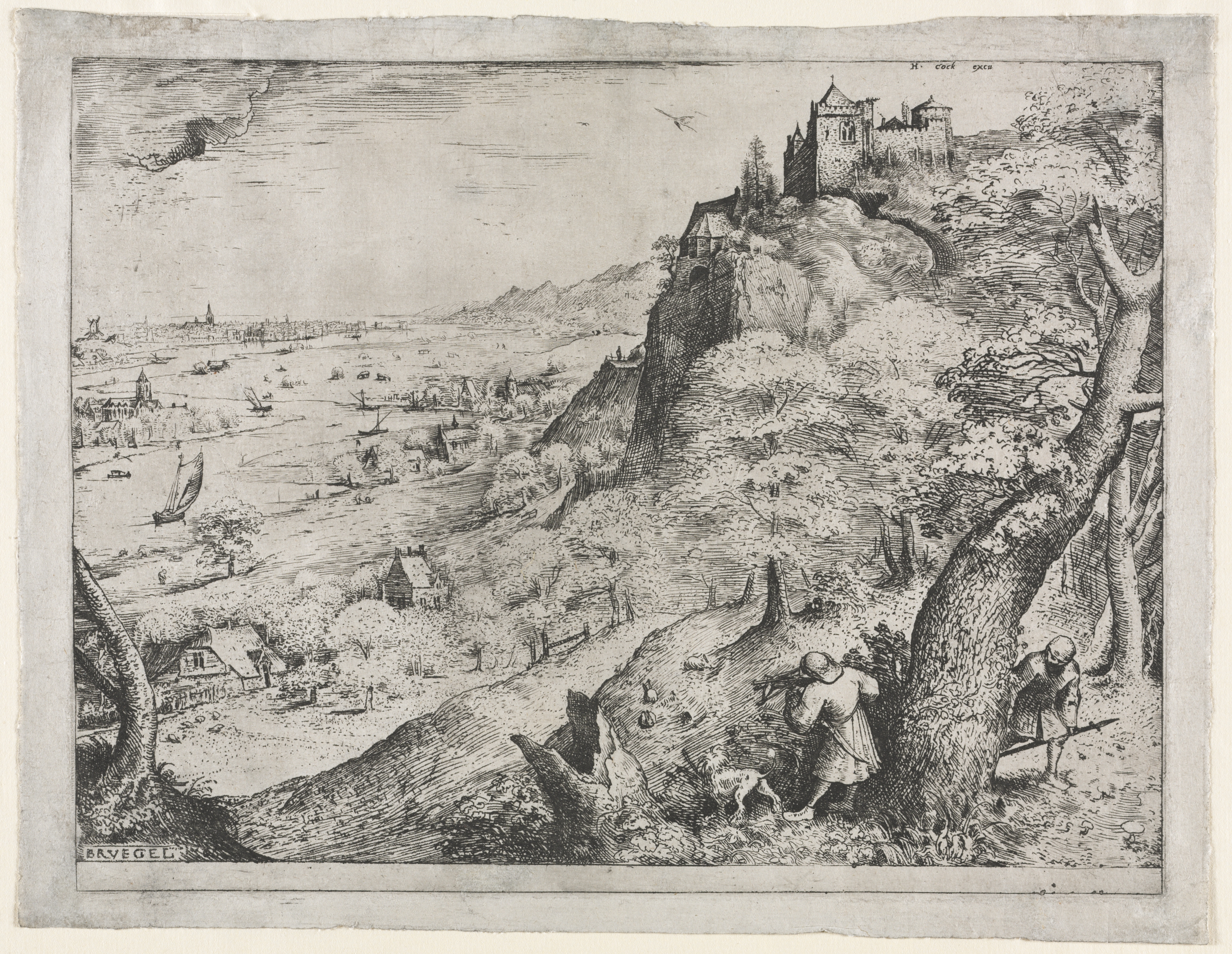
In this etching considered the artist's only autograph print, Pieter Bruegel the Elder replicated the graphic vocabulary of dots and dashes of his pen-and-ink drawings to evoke a vivid sense of atmosphere and light and create a deep recession into space. More about this work
About this work
In this etching considered the artist's only autograph print, Pieter Bruegel the Elder replicated the graphic vocabulary of dots and dashes of his pen-and-ink drawings to evoke a vivid sense of atmosphere and light and create a deep recession into space. His representations of nature, including majestic mountains—an unusual and popular subject in the flat Netherlands—exemplify an unprecedented naturalism that the artist helped to usher in. What at first appears to be a pleasant landscape with a hunter aiming his crossbow at some rabbits in the grass becomes more ominous when we notice the spear-bearing soldier stalking not the rabbits, but the hunter. Bruegel often translated popular proverbs into pictorial form: in this case, "A hare yourself, you hunt for prey" is the most apt. In Bruegel's world, reversals such as this suggested that humans, vainly believing they control their fate, are instead subject to powers outside of their control.
Text from the Cleveland Museum of Art.
How it was made
- Etching
- The artist draws with a needle through a waxy coating on a copper plate, and acid bites the exposed lines. The plate is then inked, wiped and printed under pressure, so the line keeps the freedom of drawing.
Pieter Bruegel
Netherlandish, c. 1525/30–1569 · Died in Brussels.
Bruegel trained in Antwerp, travelled through Italy in the early 1550s, and on his return made drawings for the publisher Hieronymus Cock, many in the manner of Hieronymus Bosch. In 1563 he moved to Brussels. His paintings of peasant festivals, proverbs and the seasons look closely at village life and landscape, and The Harvesters belongs to his series of the months painted in 1565 for the Antwerp merchant Niclaes Jongelinck. The Rabbit Hunt is the only etching he made himself.
Written by Ochre Editions.
Rights and the museum’s record
Public domain. The Cleveland Museum of Art has dedicated this image to the public domain under CC0, so anyone may copy, adapt and use it, for any purpose, without asking. Our prints and files are reproductions made from the museum’s image; the museum doesn’t endorse them.
- Object number
- 2009.80
- Credit
- Courtesy of the Cleveland Museum of Art
- Type
- Department
- Prints
- Licence
- CC0 1.0 Universal
- Museum record
- See it on the museum’s site
Report this work
More by Pieter Bruegel
All their works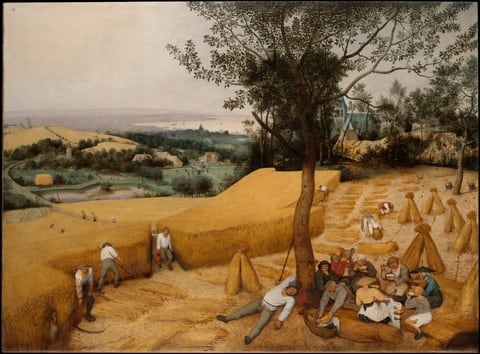
Close in colour