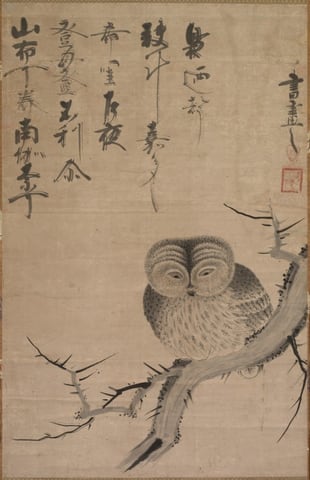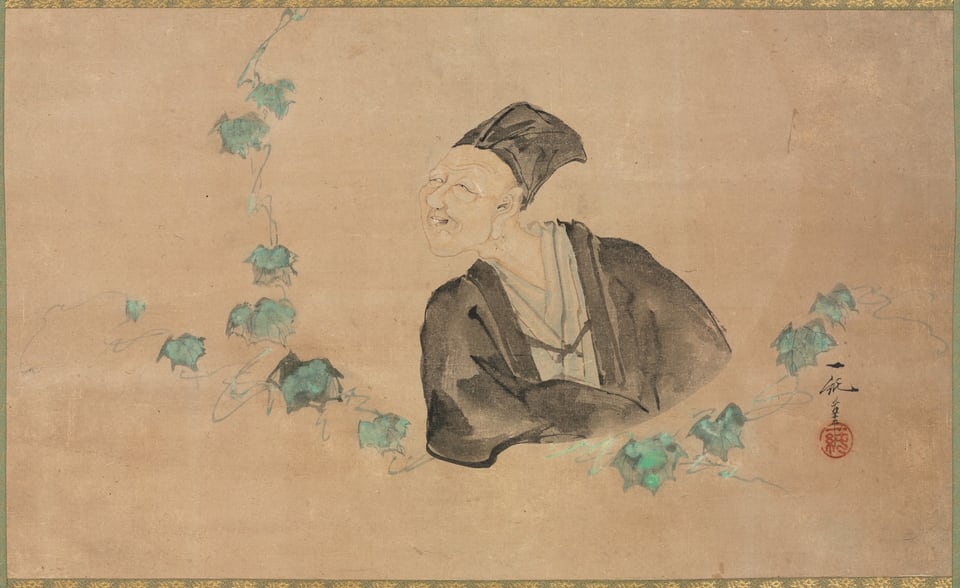
Portrait of Basho1700s
The 15th-century poet Matsuo Basho is still considered Japan’s greatest master of the haiku poem, a short, 17-syllable verse form that relates some aspect of nature to the human experience. More about this work
About this work
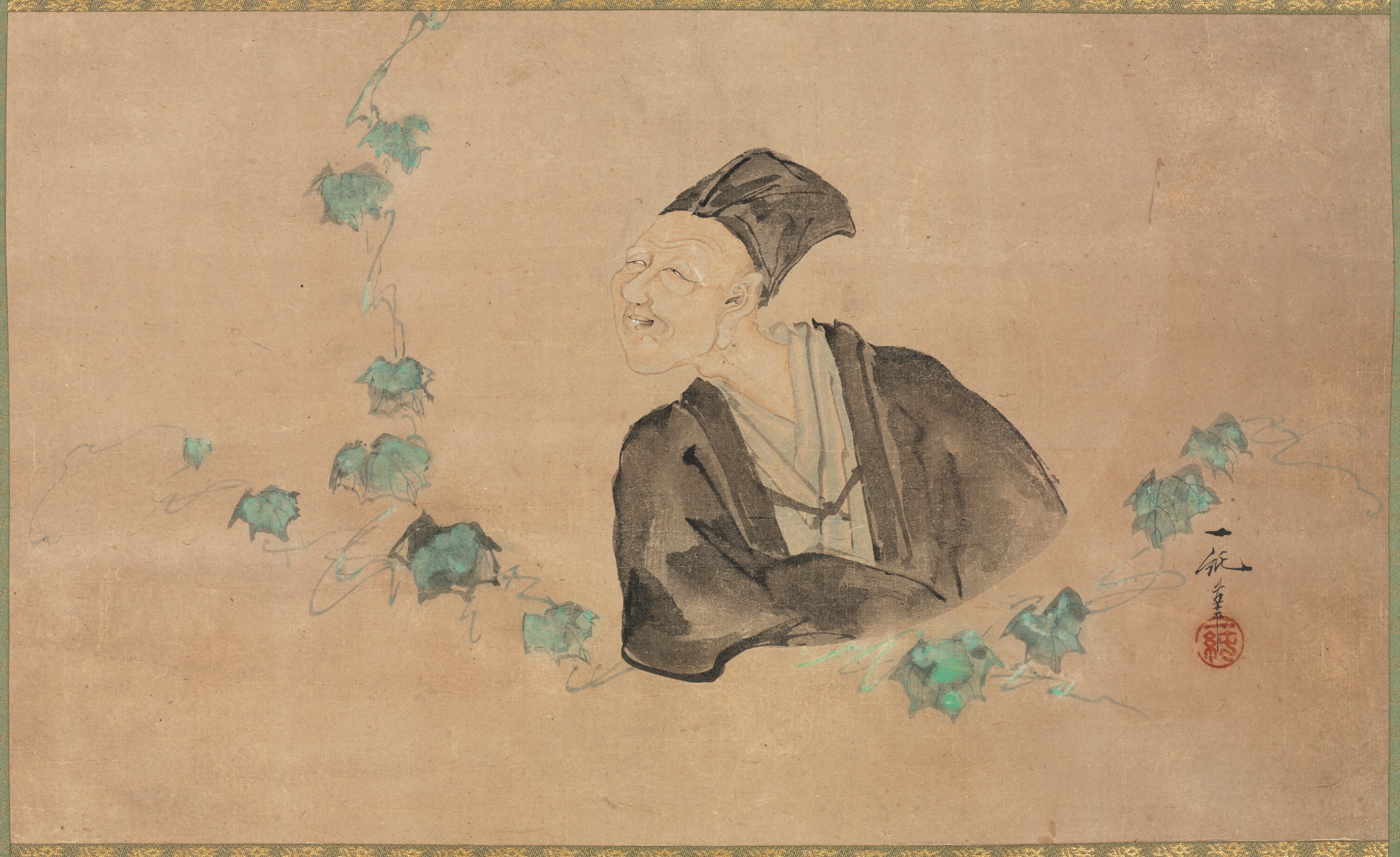
The 15th-century poet Matsuo Basho is still considered Japan’s greatest master of the haiku poem, a short, 17-syllable verse form that relates some aspect of nature to the human experience. Although he was one of the most celebrated men of his day, he pursued a simple life of self-imposed poverty and solitude. In this portrait, Ichijun alluded to Matsuo’s haiku about the transient life: warau beshi naku beshi, waga asagao no, shibomu toki (to smile or to cry when my face in the morning [glory] is wilted).
Text from the Cleveland Museum of Art.
How it was made
- Hanging scroll
- A painting mounted on silk with a wooden roller at the foot. It was rolled up for storage and brought out to hang for a season, a guest or an occasion.
- Ink on paper
- Ink made from soot and animal glue, ground with water on an inkstone. A single brush can give a hair-fine line or a broad wash, and nothing can be corrected.
Ichijun
Japanese, active 1700s
Rights and the museum’s record
Public domain. The Cleveland Museum of Art has dedicated this image to the public domain under CC0, so anyone may copy, adapt and use it, for any purpose, without asking. Our prints and files are reproductions made from the museum’s image; the museum doesn’t endorse them.
- Object number
- 1988.72
- Credit
- Courtesy of the Cleveland Museum of Art
- Type
- Painting
- Department
- Japanese Art
- Licence
- CC0 1.0 Universal
- Museum record
- See it on the museum’s site
Report this work
Close in colour