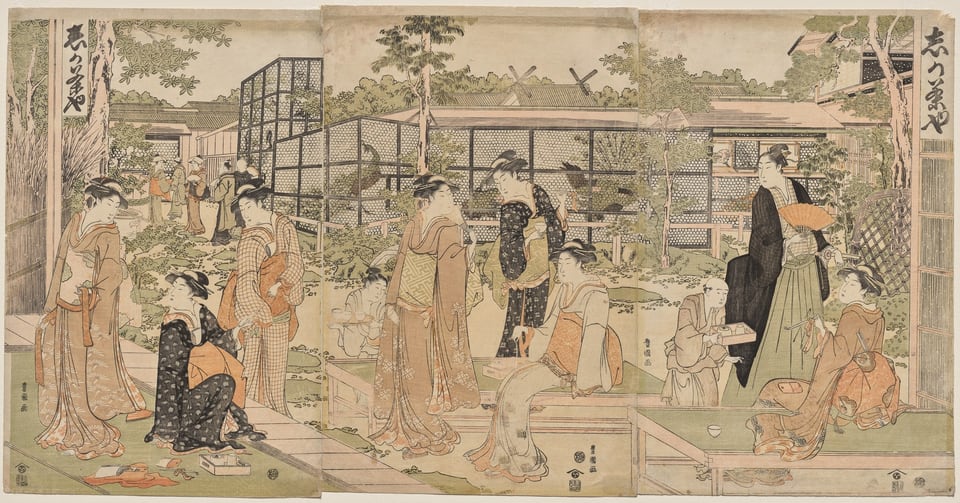
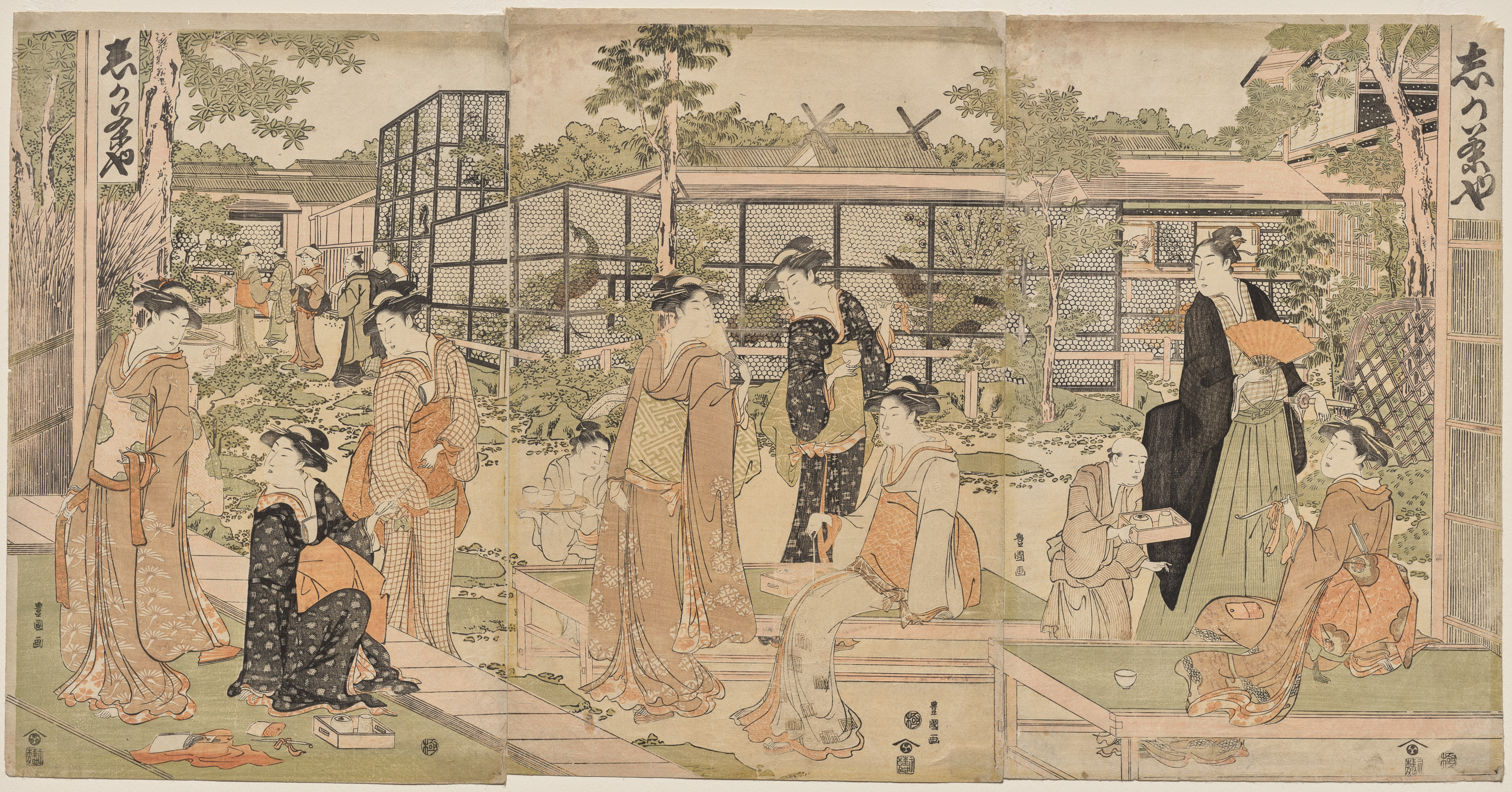
The Shika Teahouseearly 1790s
Exotic birds and tobacco—Western imports—feature in this composition. Peacocks and parrots were brought to Japan by Dutch traders in the 1700s. More about this work
About this work
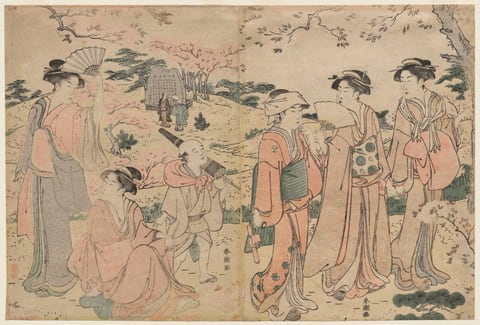
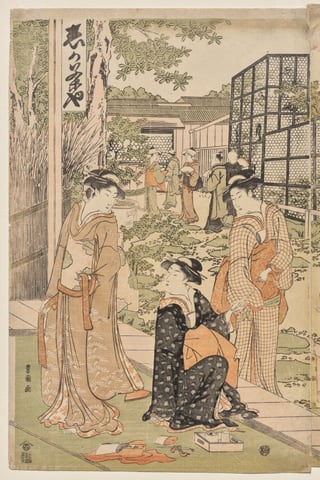
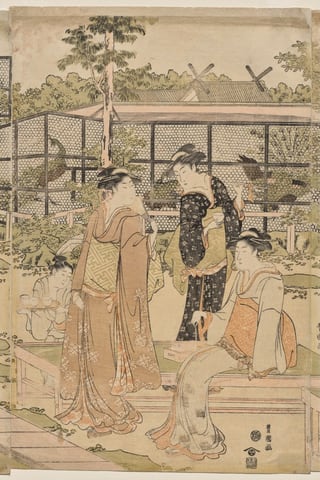
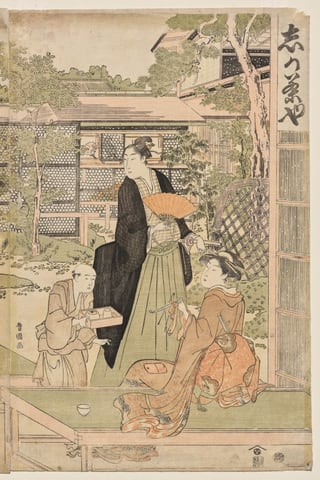
Exotic birds and tobacco—Western imports—feature in this composition. Peacocks and parrots were brought to Japan by Dutch traders in the 1700s. Many of the visitors to this teahouse, which specialized in displays of foreign birds, admire the unusual fowl while sipping tea and smoking long pipes. The birds have attracted curious courtesans, entertainers, samurai, merchants and their wives, and even a Buddhist monk.
Text from the Cleveland Museum of Art.
How it was made
- Colour woodblock print
- In Japan these were a team effort. The artist drew the design, a carver cut it into cherry-wood blocks, one block for each colour, and a printer brushed on the pigment and rubbed each sheet by hand. Full-colour prints of this kind were called nishiki-e, “brocade pictures”, from the 1760s on.
- Triptych
- Three sheets designed to sit side by side and read as one wide picture.
Utagawa Toyokuni
Japanese, 1769–1825
Toyokuni studied with Utagawa Toyoharu, founder of the Utagawa school, and made his name in the 1790s with vivid portraits of kabuki actors and pictures of fashionable women. His full-length series of actors in their roles, issued in 1794–96, rivalled the best of the day, and his commercial success made the Utagawa line the dominant force in Edo woodblock design. Among his many pupils were Kunisada and Kuniyoshi, who carried the school into the next generation.
Written by Ochre Editions.
Ukiyo-e
Japanese woodblock prints of the floating world: actors, courtesans, landscapes and the sea.
Rights and the museum’s record
Public domain. The Cleveland Museum of Art has dedicated this image to the public domain under CC0, so anyone may copy, adapt and use it, for any purpose, without asking. Our prints and files are reproductions made from the museum’s image; the museum doesn’t endorse them.
- Object number
- 1916.1113
- Credit
- Courtesy of the Cleveland Museum of Art
- Type
- Department
- Japanese Art
- Licence
- CC0 1.0 Universal
- Museum record
- See it on the museum’s site
Report this work
More by Utagawa Toyokuni
All their works
Close in colour