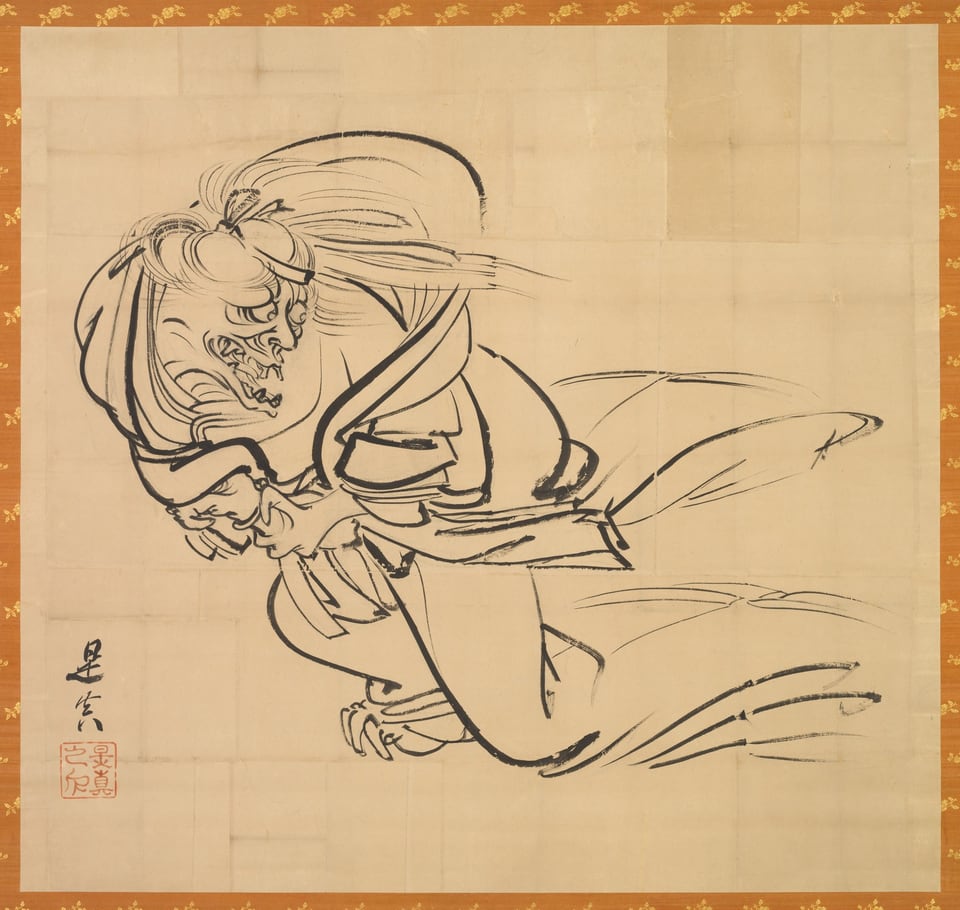
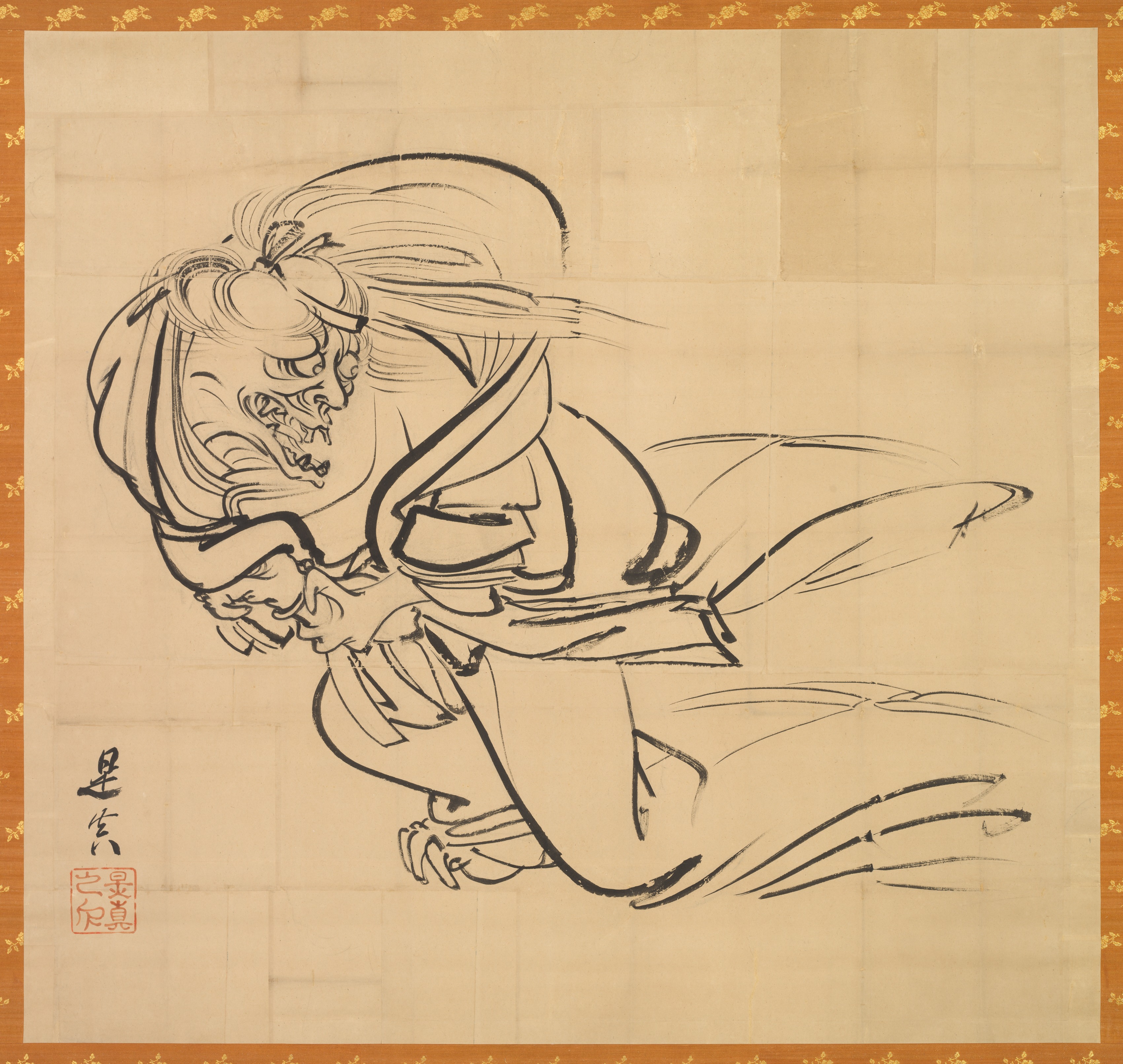
Sketch of Ibaraki-dōjic. 1840
Even before the arrival of US ships demanding trade, Japan’s military government was experiencing economic challenges. More about this work
About this work
Even before the arrival of US ships demanding trade, Japan’s military government was experiencing economic challenges. This preparatory drawing is for a wooden plaque to be offered to a shrine, beseeching divine intervention in business affairs. Commissioned by a wholesalers’ union, it shows the demon Ibaraki-dōji reclaiming his arm from a warrior who, according to legend, had cut it off. The repossession of the arm is a metaphor for the union’s desire for the restoration of rights to sell sugar, which had been rescinded by the government as part of a misguided effort to stabilize the economy.
Text from the Cleveland Museum of Art.
How it was made
- Hanging scroll
- A painting mounted on silk with a wooden roller at the foot. It was rolled up for storage and brought out to hang for a season, a guest or an occasion.
- Ink on paper
- Ink made from soot and animal glue, ground with water on an inkstone. A single brush can give a hair-fine line or a broad wash, and nothing can be corrected.
Shibata Zeshin
Japanese, 1807–1891
Rights and the museum’s record
Public domain. The Cleveland Museum of Art has dedicated this image to the public domain under CC0, so anyone may copy, adapt and use it, for any purpose, without asking. Our prints and files are reproductions made from the museum’s image; the museum doesn’t endorse them.
- Object number
- 1990.6
- Credit
- Courtesy of the Cleveland Museum of Art
- Type
- Painting
- Department
- Japanese Art
- Licence
- CC0 1.0 Universal
- Museum record
- See it on the museum’s site
Report this work
Close in colour