Skip to content
Ochre Editions
ArtArtistsCollectionsGalleriesDrops
SearchSign inCart (0)
The galleries · Style galleries

Drawings of the 19th century

Drawings made in the 19th century, from every museum.

92 works · hang 754 ·

Share Drawings of the 19th century, in the galleries

The rooms are imagined; every work on their walls is real.

Walk this roomRehang this room

Section 1, north wall

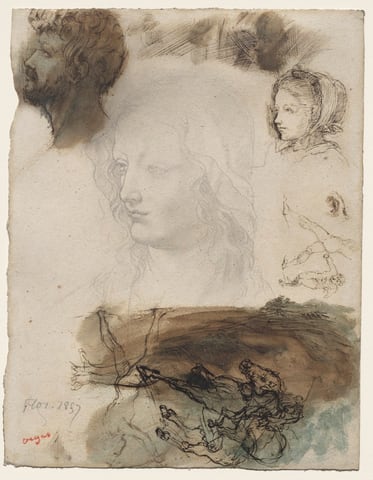
  1. Sheet of Studies and Sketches, by Edgar Degas, 1858
    Sheet of Studies and SketchesEdgar Degas, 1858Courtesy of the Cleveland Museum of Art
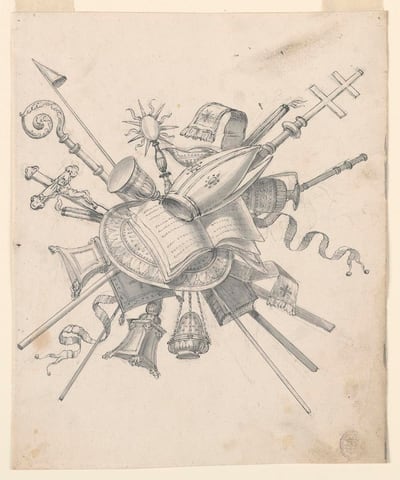
  2. TROPHY WITH ECCLESIASTICAL OBJECTS
    Trophy with Ecclesiastical ObjectsRomolo Achille Liverani, 1830–1850Courtesy of Cooper Hewitt, Smithsonian Design Museum
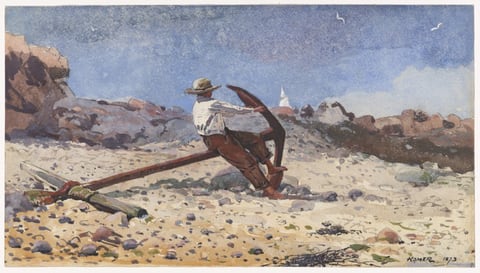
  3. Boy with Anchor, by Winslow Homer, 1873
    Boy with AnchorWinslow Homer, 1873Courtesy of the Cleveland Museum of Art

Section 1, south wall
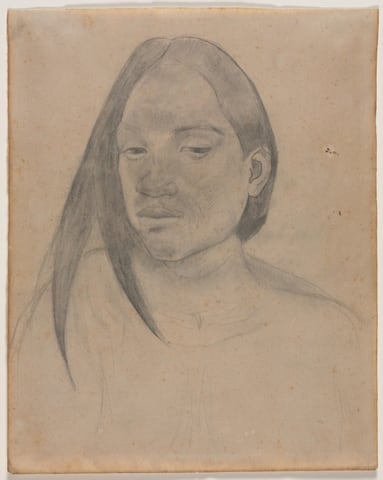
  1. Head of a Tahitian Woman, by Paul Gauguin, 1891
    Head of a Tahitian WomanPaul Gauguin, 1891Courtesy of the Cleveland Museum of Art
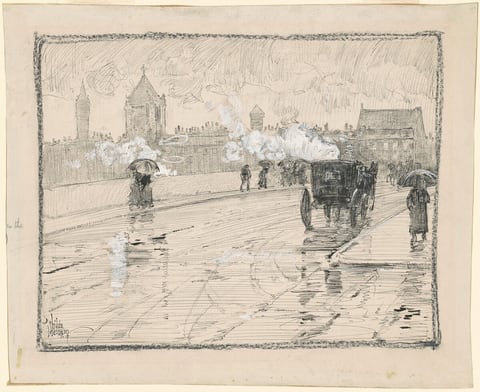
  2. The image shows a street scene from an elevated viewpoint. A horse-drawn carriage is seen moving on a wet road, reflecting light. Pedestrians with umbrellas populate the avenue. The road is visibly marked with rainwater. The skyline displays detailed architectural features like church spires and towers. The painting is done in fine, linear brushstrokes highlighting movement and atmosphere. The grayscale palette emphasizes the rainy urban setting. Wisps of steam or smoke are visible. The intricate line work and shading depict a textured, busy street under an overcast sky.
    Rainy Day, BostonChilde Hassam, 1886Courtesy National Gallery of Art, Washington
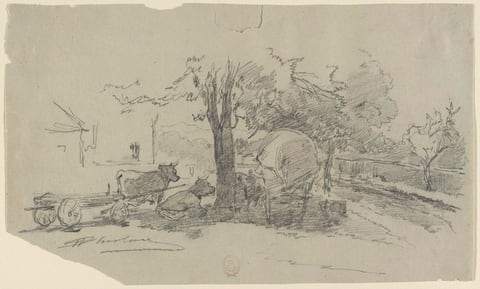
  3. A VILLAGE SQUARE
    A Village SquareWalter Shirlaw, 1875–80Courtesy of Cooper Hewitt, Smithsonian Design Museum

Section 2, south wall
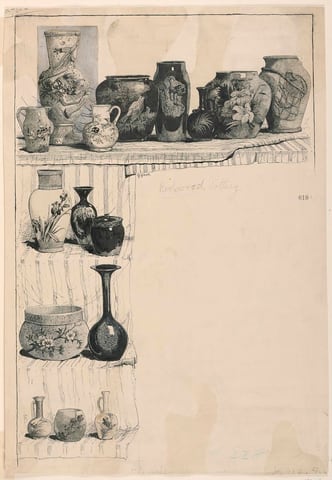
  1. ROOKWOOD POTTERY
    Rookwood PotteryGeorge Gibson, 1886Courtesy of Cooper Hewitt, Smithsonian Design Museum
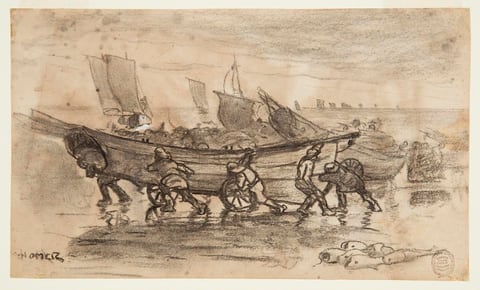
  2. FISHERMEN BEACHING A DORY, CULLERCOATS, ENGLAND
    Fishermen Beaching a Dory, Cullercoats, EnglandWinslow Homer, 1881Courtesy of Cooper Hewitt, Smithsonian Design Museum

Section 2, north wall
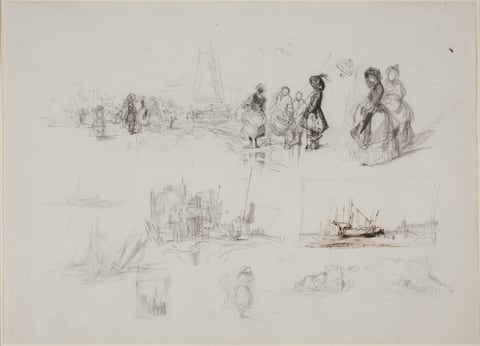
  1. This image is a pencil sketch on paper with a monochrome palette of graphite gray. The viewer sees various scenes without a defined horizon line. The upper section shows figures in period clothing, possibly mid-19th century women's fashion. The middle area has abstract architectural forms. In the lower right corner, a sailing ship or boat is sketched with more detail than the rest. The drawing style consists of quick, expressive strokes. The image conveys multiple narrative or compositional ideas on a single sheet.
    Seaside StudiesEugène Isabey, 1830sCourtesy National Gallery of Art, Washington
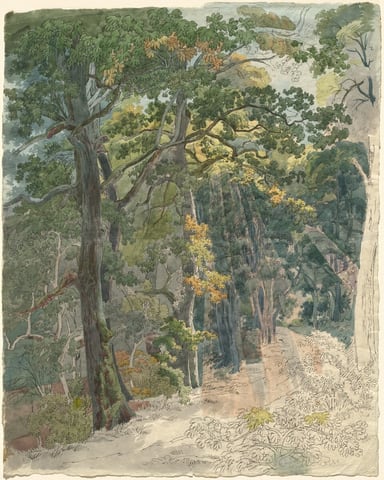
  2. The image shows a dense, forested area with towering trees. The composition leads the eye along a pathway into the distance, without a distinct horizon line. The intricate brushstrokes depict the texture and foliage of the trees, suggesting movement and light filtering through the leaves. The color palette is rich and earthy, with shades of green, brown, yellow, and orange, creating a vibrant yet tranquil atmosphere emphasizing light and shadow.
    Rays of Sunlight Striking a Woodland PathFriedrich Salathé, c. 1815Courtesy National Gallery of Art, Washington

Section 3, north wall
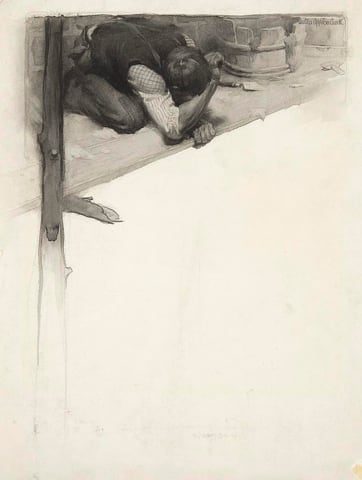
  1. VIGNETTE: MAN CROUCHING ON A SCAFFOLDING
    Vignette: Man Crouching on a ScaffoldingWalter Appleton Clark, 1899Courtesy of Cooper Hewitt, Smithsonian Design Museum
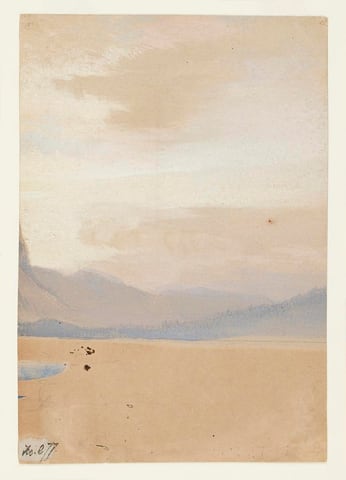
  2. AMERICAN PLAINS WITH MOUNTAIN RANGE IN THE DISTANCE
    American Plains with Mountain Range in the DistanceThomas Moran, before 1872Courtesy of Cooper Hewitt, Smithsonian Design Museum
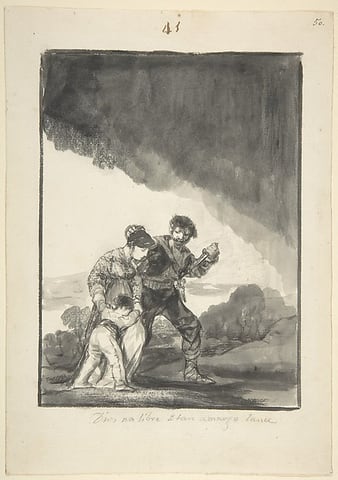
  3. God save us from such a bitter fate; a bandit threatening a woman and a child with a knife, page 41 from the "Black Border Album" (E), by Francisco Goya, ca. 1816–20
    God save us from such a bitter fate; a bandit threatening a woman and a child with a knife, page 41 from the "Black Border Album" (E)Francisco Goya, ca. 1816–20Courtesy of The Metropolitan Museum of Art

Section 3, south wall
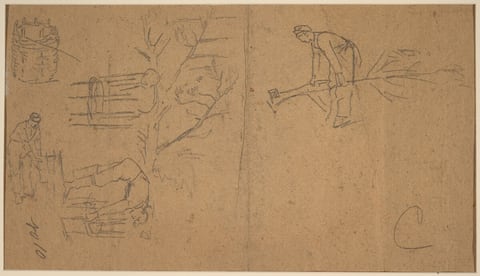
  1. This is a drawing of various sketches related to woodcutting or carpentry. The drawing features several pencil sketches on tan paper. On the left side, there are depictions of a barrel or basket, and beneath it, several outline sketches of figures engaged in activities involving woodwork. The right side of the drawing shows a figure bent over a large beam or branch. The sketches are simple, with minimal detail, capturing the basic form and movement of the figures and objects involved in woodwork-related activities.
    Soldiers felling sapling, and weaving saplings into baskets [verso]Winslow Homer, 1862Courtesy National Gallery of Art, Washington
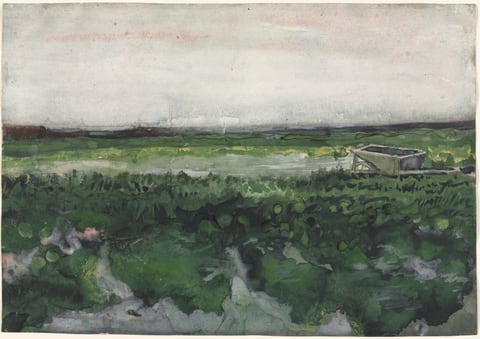
  2. Landscape with Wheelbarrow, by Vincent van Gogh, 1883
    Landscape with WheelbarrowVincent van Gogh, 1883Courtesy of the Cleveland Museum of Art
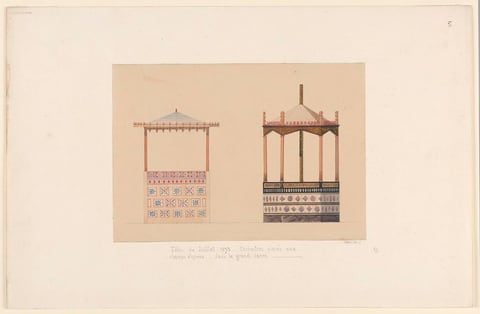
  3. "ORCHSTRES PLACES AUX CHAMPS ELYSEES, DANS LE GRAN CARRES"
    "Orchstres places aux Champs elysees, dans le gran carres"Félix Duban, 1833Courtesy of Cooper Hewitt, Smithsonian Design Museum

Walk on

  • Drawings of the 19th century, room 2
  • Félix Duban's contemporaries 8 works
  • 19th-century France 237 works
Ochre Editions

The world's museums, on your wall. Every work here is a reproduction of a public-domain original, credited to the museum that holds it.

Shop

All artCollectionsLimited dropsPrints and framing

Help

Find an orderShippingReturnsVerify a certificate

About

About Ochre EditionsMuseum creditsFor agentsDevelopers

Legal

Terms of UseTerms of SaleLimited Editions and CertificatesPrivacy PolicyCookie PolicyAcceptable Use PolicyAgent & API TermsCopyright and DMCA PolicyPrinting Your Own PhotoVulnerability Disclosure PolicyAccessibility StatementOpen-Access Credits
© 2026 Ochre EditionsPrices in US dollars. Prints ship within the United States.