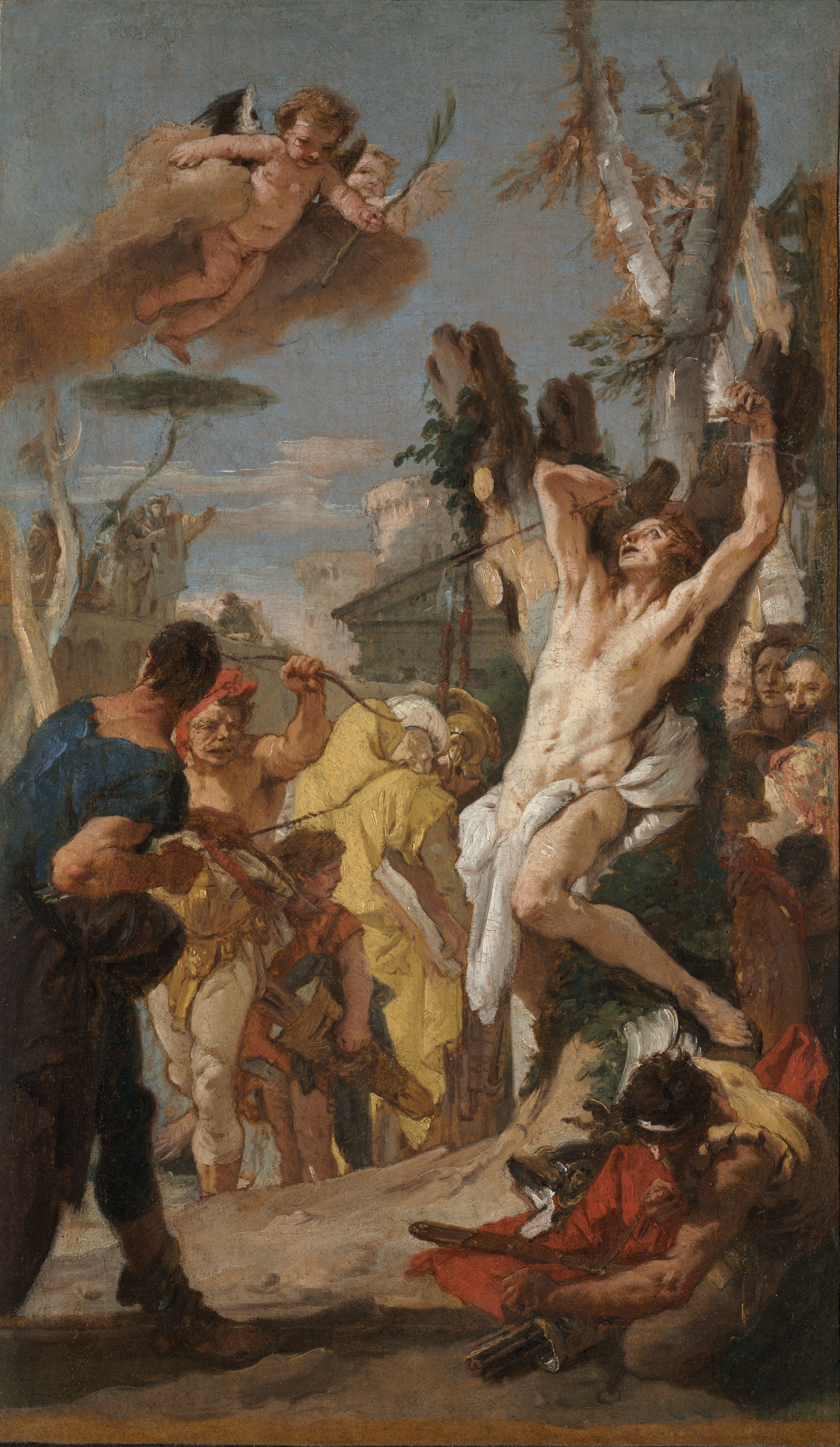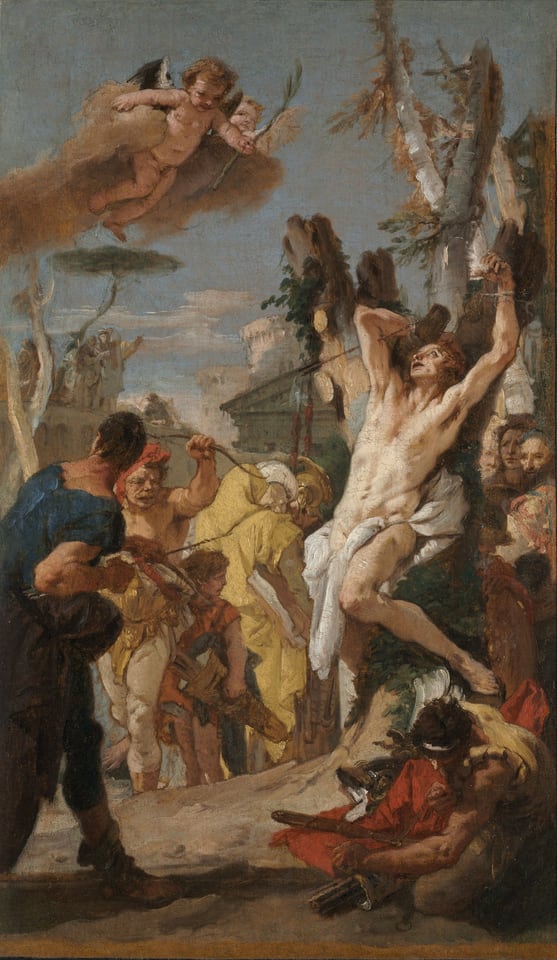
Study for "The Martyrdom of Saint Sebastian" (for the Augustinian monastery at Diessen, Germany)1739
In 1739 a pair of monumental altarpieces by two Venetian painters (Giovanni Battista Tiepolo and Giambattista Pittoni) were installed in a church in southern Germany, part of a carefully orchestrated… More about this work
About this work
In 1739 a pair of monumental altarpieces by two Venetian painters (Giovanni Battista Tiepolo and Giambattista Pittoni) were installed in a church in southern Germany, part of a carefully orchestrated decorative program that included architecture, painting, sculpture, and decorative stuccowork. This sketch is Tiepolo’s initial design for his altarpiece, submitted for approval before beginning the final work. With quick, assured brushstrokes, he represents the Christian martyr Sebastian bound to a tree and shot with arrows, flooded with radiant light to symbolize his devotion to his faith.
Text from the Cleveland Museum of Art.
How it was made
- Oil paint
- Pigment ground in a drying oil, usually linseed. It dries slowly, so painters could blend on the canvas, build up thin translucent glazes, and rework a picture over weeks. Canvas replaced wooden panels in the 1500s because it is lighter and can be rolled.
Giovanni Battista Tiepolo
Italian, 1696–1770 · Born in Venice; died in Madrid.
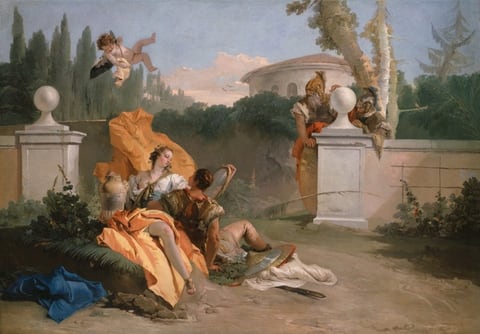
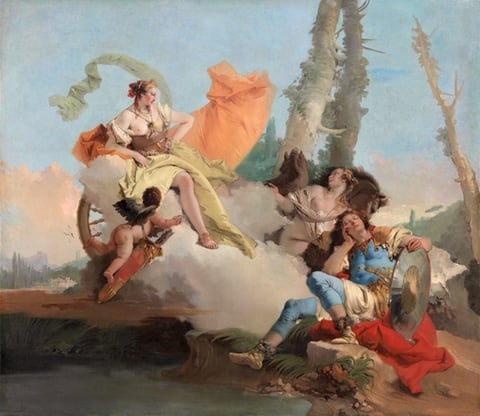
Tiepolo was the leading decorative painter of eighteenth-century Europe, covering ceilings and walls with airy skies, foreshortened figures and luminous colour. After establishing himself in Venice, he worked with his sons Giandomenico and Lorenzo on the frescoes of the Residenz at Würzburg in 1750–53, and in 1762 he went to Madrid to decorate the Royal Palace for Charles III, remaining there until his death. Rinaldo and Armida, the lovers of Tasso’s epic Jerusalem Delivered, were subjects he painted more than once.
Written by Ochre Editions.
Rights and the museum’s record
Public domain. The Cleveland Museum of Art has dedicated this image to the public domain under CC0, so anyone may copy, adapt and use it, for any purpose, without asking. Our prints and files are reproductions made from the museum’s image; the museum doesn’t endorse them.
- Object number
- 1946.277
- Credit
- Courtesy of the Cleveland Museum of Art
- Type
- Painting
- Department
- European Painting and Sculpture
- Licence
- CC0 1.0 Universal
- Museum record
- See it on the museum’s site
Report this work
More by Giovanni Battista Tiepolo
All their works