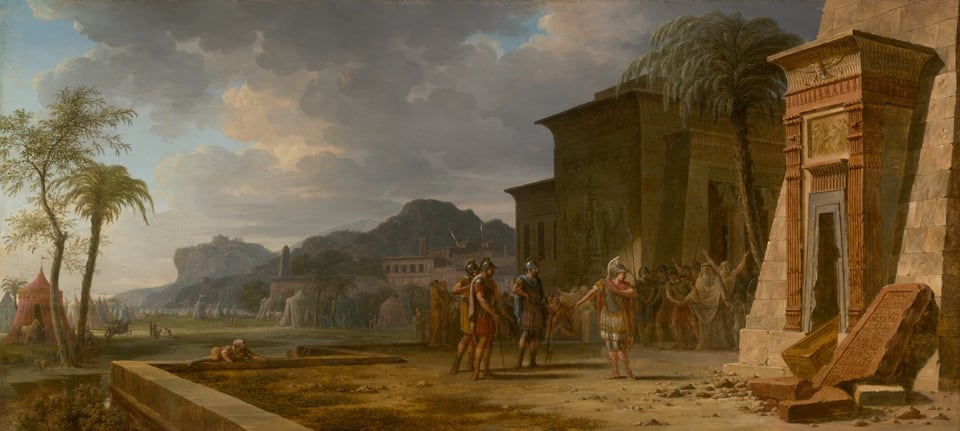
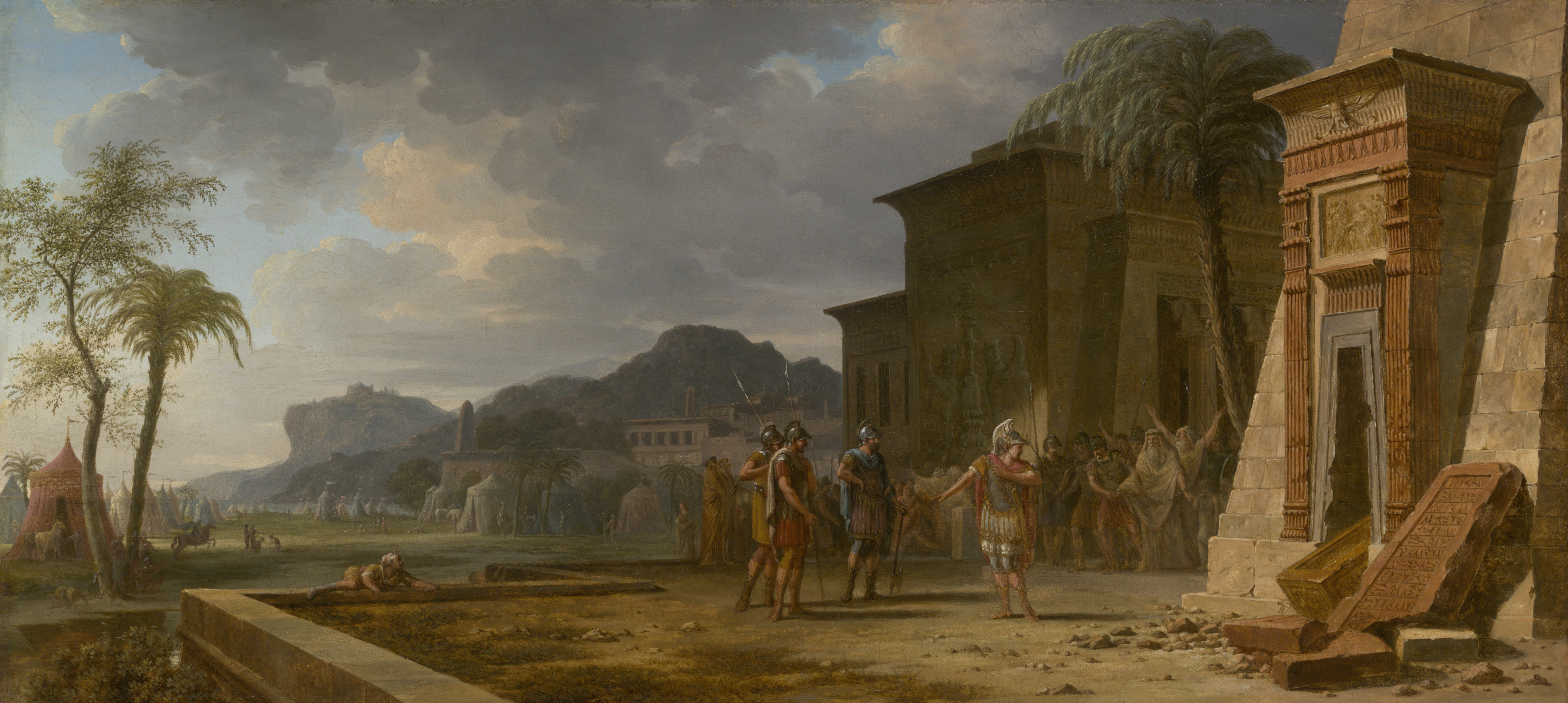
Alexander at the Tomb of Cyrus the Great1796
Alexander the Great and his soldiers pause among tents and trees before the tomb of Cyrus the Great, founder of the Persian Empire, whose grave at Pasargadae Alexander found plundered and ordered to be restored. More about this work
About this work
Alexander the Great and his soldiers pause among tents and trees before the tomb of Cyrus the Great, founder of the Persian Empire, whose grave at Pasargadae Alexander found plundered and ordered to be restored. Pierre-Henri de Valenciennes, the leading French theorist of historical landscape, painted this canvas in 1796 with a companion showing Mount Athos carved into a monument to Alexander. He believed landscape could rival history painting if it carried a noble theme, and his idealised classical scenery shaped French landscape painting in the early nineteenth century.
Written by Ochre Editions.
What you’re looking at
A work made of oil on canvas.
Description from the Art Institute of Chicago.
How it was made
- Oil paint
- Pigment ground in a drying oil, usually linseed. It dries slowly, so painters could blend on the canvas, build up thin translucent glazes, and rework a picture over weeks. Canvas replaced wooden panels in the 1500s because it is lighter and can be rolled.
Pierre Henri de Valenciennes
French, 1750–1819
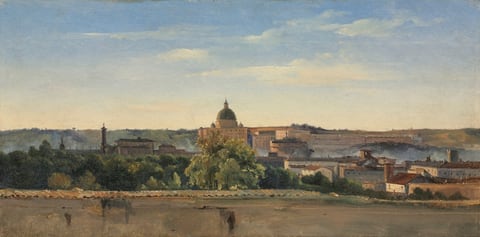
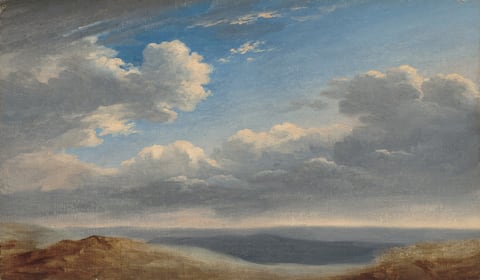
Valenciennes was the leading theorist of French historical landscape. During years in Italy in the late 1770s and 1780s he made small oil sketches outdoors, recording the same rooftops or clouds at different times of day, studies he kept in his studio but which are now his most admired work. His treatise of 1800 urged students to paint from nature, and his teaching helped bring about the Prix de Rome for historical landscape, created in 1817.
Written by Ochre Editions.
Rights and the museum’s record
Public domain. The Art Institute of Chicago has dedicated this image to the public domain under CC0, so anyone may copy, adapt and use it, for any purpose, without asking. Our prints and files are reproductions made from the museum’s image; the museum doesn’t endorse them.
- Object number
- 1983.35
- Credit
- Courtesy of the Art Institute of Chicago
- Type
- Painting
- Department
- Painting and Sculpture of Europe
- Licence
- CC0 1.0 Universal
- Museum record
- See it on the museum’s site
Report this work
More by Pierre Henri de Valenciennes
All their works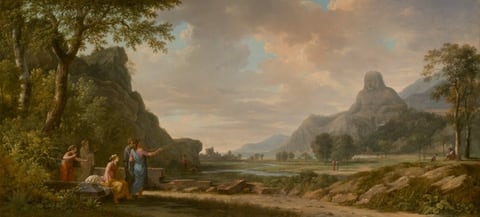
Close in colour