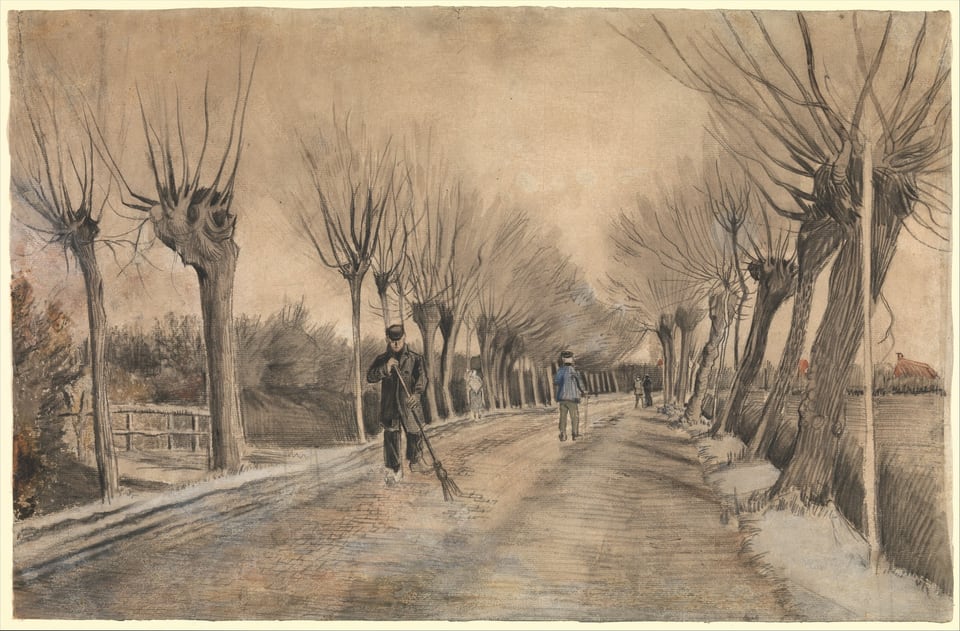
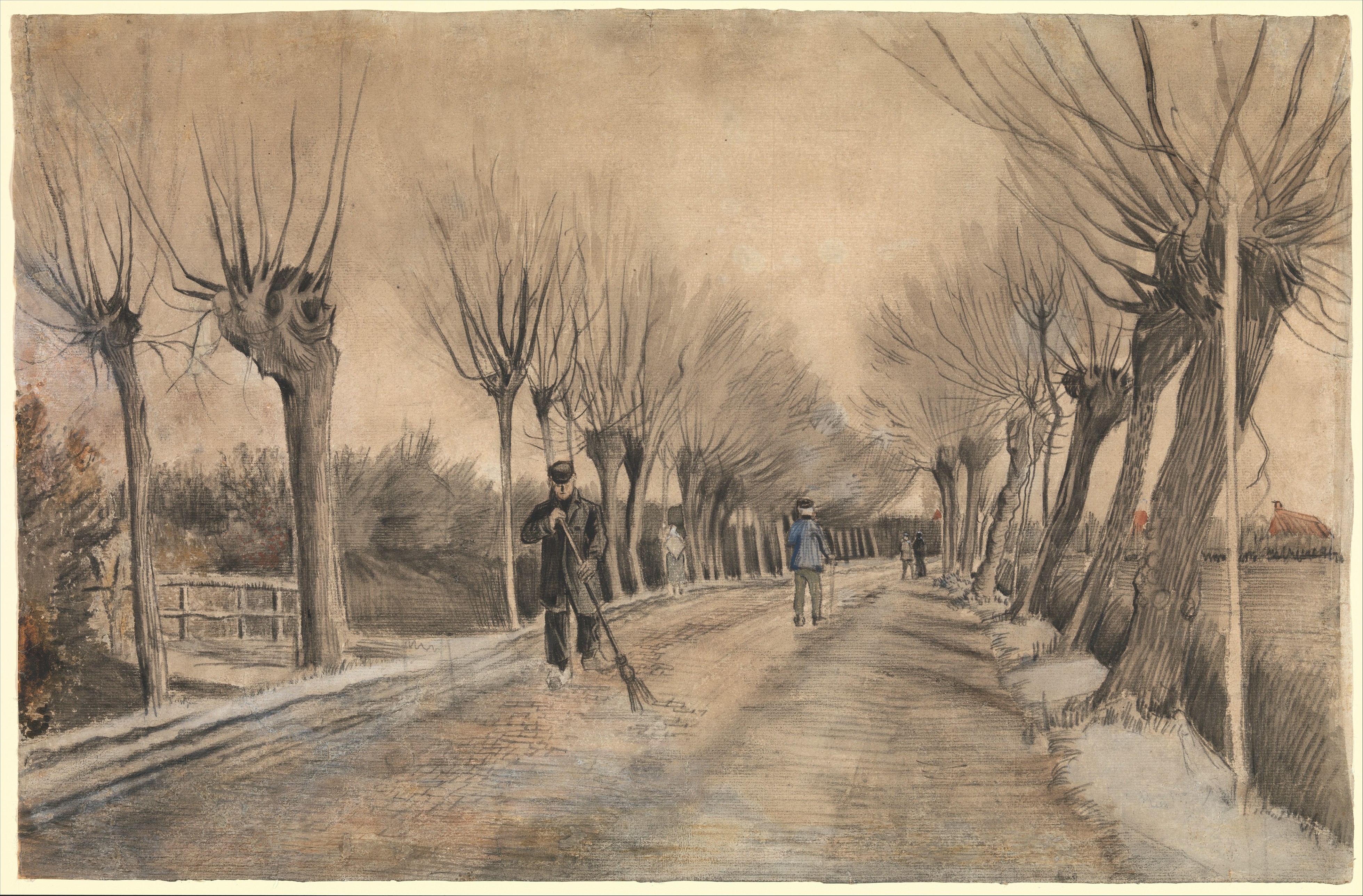
Road in Etten1881
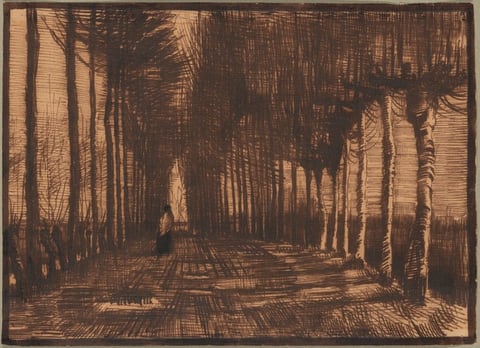
A road lined with trees runs through the flat countryside near Etten, the village in the southern Netherlands where Van Gogh’s father was pastor and where the young artist lived in 1881, in the first year of his career as an artist. More about this work
About this work
A road lined with trees runs through the flat countryside near Etten, the village in the southern Netherlands where Van Gogh’s father was pastor and where the young artist lived in 1881, in the first year of his career as an artist. Working in chalk, pencil, pastel and watercolour over a pen underdrawing, he was still teaching himself, and the careful perspective and layering of media show his determination to master the craft of drawing.
Written by Ochre Editions.
How it was made
- Pastel
- Sticks of almost pure pigment with very little binder. The colour sits on the paper as powder: bright, matte and fragile.
- Chalk
- Natural black, red and white chalks. Used together on toned paper they could give the warmth of flesh with very little effort, and they were favourites for studies from life.
- Watercolour
- Pigment in gum arabic, thinned with water and laid in transparent washes. Nothing white is painted: the light is the paper showing through.
Vincent van Gogh
Dutch, 1853–1890 · Born in Zundert; died in Auvers-sur-Oise.
Van Gogh worked as an art dealer, teacher and lay preacher before he turned to art in 1880, at twenty-seven. His early pictures of Dutch peasants are dark and heavy; in Paris from 1886 he met the Impressionists and Neo-Impressionists, and his palette brightened. In Arles in 1888–89 he painted with intense colour and thick, directional strokes, and he worked on at the asylum in Saint-Rémy and finally at Auvers-sur-Oise. The Poet’s Garden belongs to a group made to decorate Gauguin’s room in the Yellow House.
Written by Ochre Editions.
Post-Impressionism
Artists who kept Impressionism's colour but pushed towards structure, symbol and feeling.
Rights and the museum’s record
Public domain. The Met has dedicated this image to the public domain under CC0, so anyone may copy, adapt and use it, for any purpose, without asking. Our prints and files are reproductions made from the museum’s image; the museum doesn’t endorse them.
- Object number
- 1975.1.774
- Credit
- Courtesy of The Metropolitan Museum of Art
- Type
- Drawings
- Department
- Robert Lehman Collection
- Licence
- CC0 1.0 Universal
- Museum record
- See it on the museum’s site
Report this work
More by Vincent van Gogh
All their works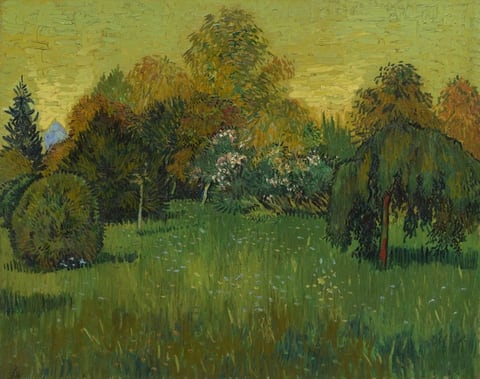
Close in colour