A Puppet-show: The Story of The Potted Treesearly 18th century
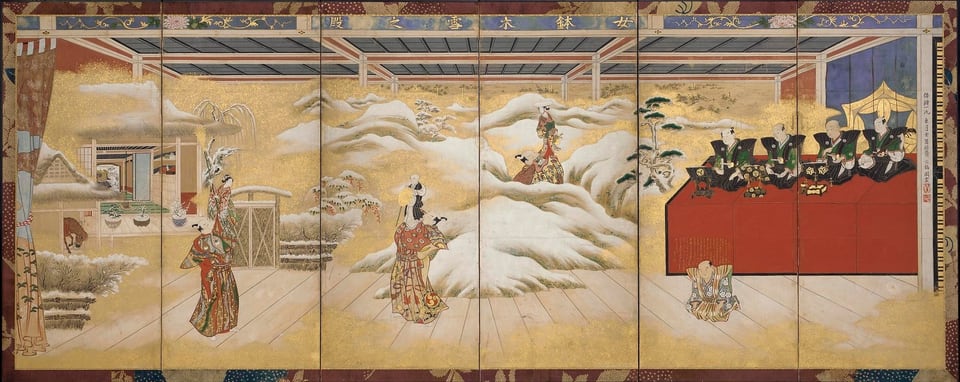
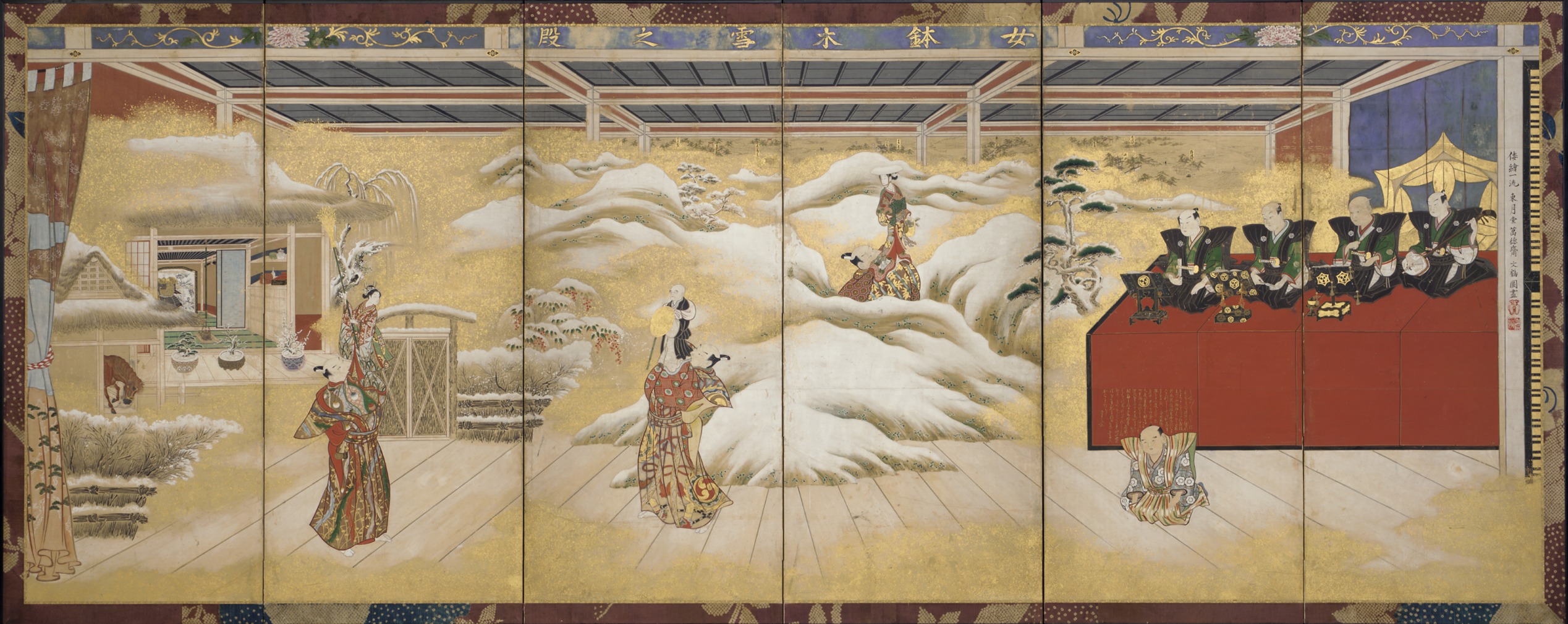
This rare painting depicts the stage of the Takemoto theater in Osaka during a performance of the puppet play, The Woman's Potted Dwarf Trees. More about this work
About this work
This rare painting depicts the stage of the Takemoto theater in Osaka during a performance of the puppet play, The Woman's Potted Dwarf Trees. The story takes place during the reign of Hojo Tokiyori (1227-1263), a leader of the recently formed Kamakura military government. A retainer of that government, Tsuneyo, fell into disfavor and was banished. One snowy night Tsuneyo and his wife, living in much diminished circumstances, received a traveling monk seeking shelter. Tsuneyo, embarrassed by his poverty, turned the monk away, but his wife persuaded him to show mercy. When firewood had been used up, Tsuneyo removed beloved dwarf trees (bonsai) from their pots and burned them to provide warmth for his guest. Later, Tsuneyo's generous hospitality was rewarded with reinstatement, because the monk was really a high government official traveling in disguise. Until the late nineteenth century this painting remained in a family of theater musicians founded by Tsuruzawa Tomojiro (died 1747). The painting's vitality and detail suggest the passion for all types of theater performance during the Edo period (1615-1868).
Text from the National Museum of Asian Art.
How it was made
- Ink on paper
- Ink made from soot and animal glue, ground with water on an inkstone. A single brush can give a hair-fine line or a broad wash, and nothing can be corrected.
Rights and the museum’s record
Public domain. The National Museum of Asian Art has dedicated this image to the public domain under CC0, so anyone may copy, adapt and use it, for any purpose, without asking. Our prints and files are reproductions made from the museum’s image; the museum doesn’t endorse them.
- Object number
- F1898.505
- Credit
- Courtesy of the National Museum of Asian Art, Smithsonian Institution
- Type
- Painting
- Department
- National Museum of Asian Art
- Licence
- CC0 1.0 Universal
- Museum record
- See it on the museum’s site
Report this work
Close in colour