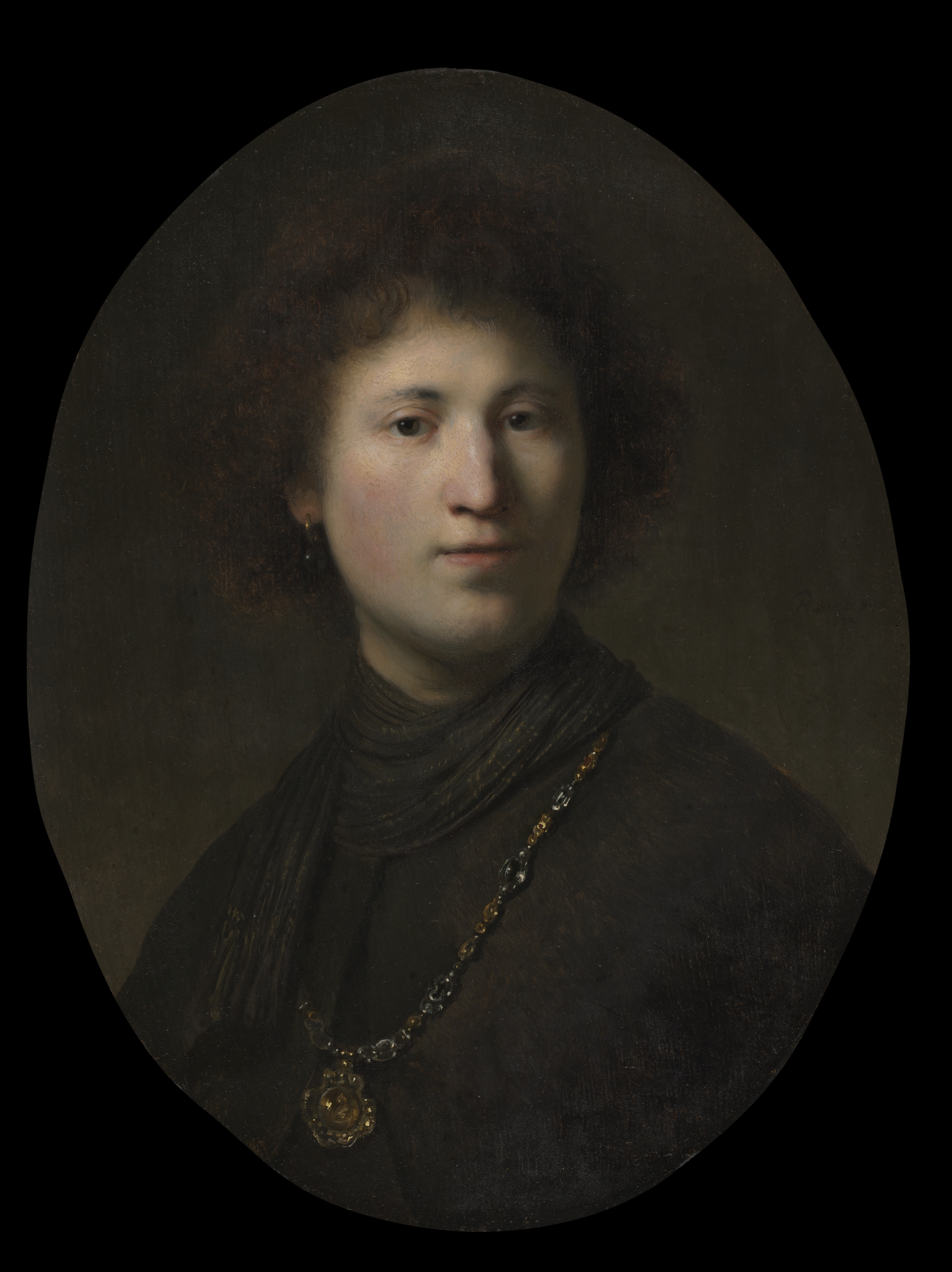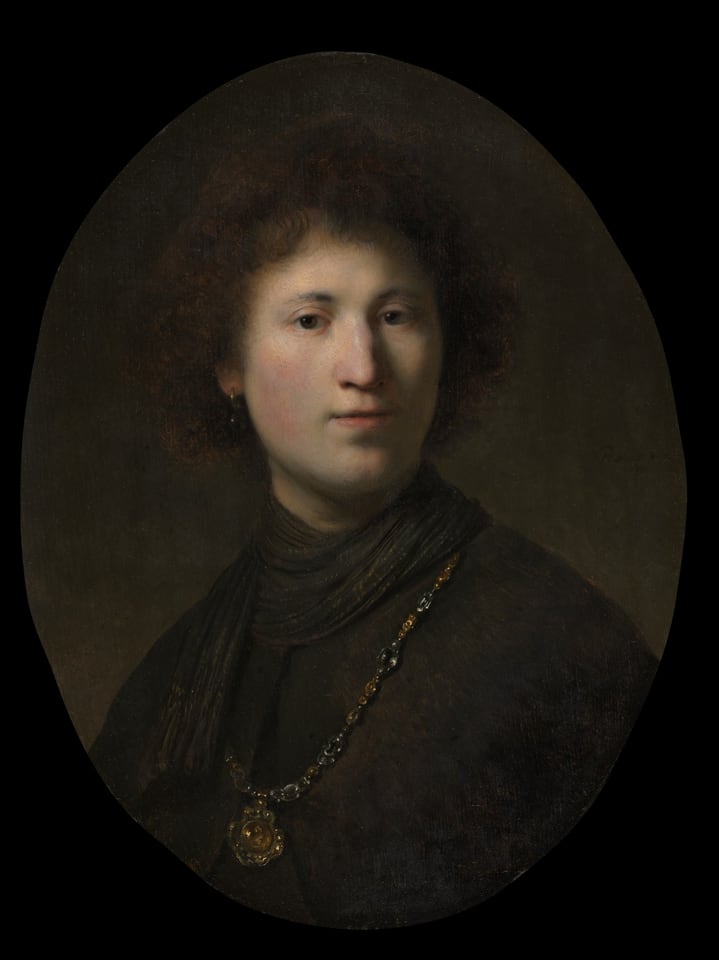
A Young Man with a Chainc. 1629 or 1632
This painting is an example of a tronie , a Dutch word meaning “head” or “facial expression.” More about this work
About this work
This painting is an example of a tronie , a Dutch word meaning “head” or “facial expression.” Tronies were not intended to be identifiable portraits, but artistic investigations of facial appearance and fanciful costume. Particularly in the years around 1630, Rembrandt used this popular format to explore different lighting effects and facial expressions. Here, the strong contrast of light and shade shapes the contours of the young man’s face; unusual accessories such as the striped scarf and glittering pendant on a jeweled chain add an exotic touch. Although this painting bears Rembrandt’s monogram, the authorship is not certain. Some scholars have attributed it to Isaac de Joudreville (1613–1648), a pupil and associate of Rembrandt who painted comparable tronies in a similarly smooth and elegant style.
Text from the Cleveland Museum of Art.
How it was made
- Oil on panel
- Oil paint on prepared wooden boards, usually oak in the north and poplar in Italy. The rigid, smooth surface suits fine detail and thin, glowing glazes.
- Oil paint
- Pigment ground in a drying oil, usually linseed. It dries slowly, so painters could blend on the canvas, build up thin translucent glazes, and rework a picture over weeks. Canvas replaced wooden panels in the 1500s because it is lighter and can be rolled.
Rembrandt van Rijn
Dutch, 1606–1669 · Born in Leiden; died in Amsterdam.
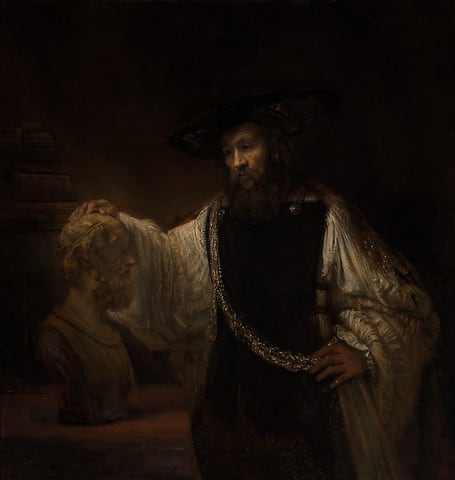
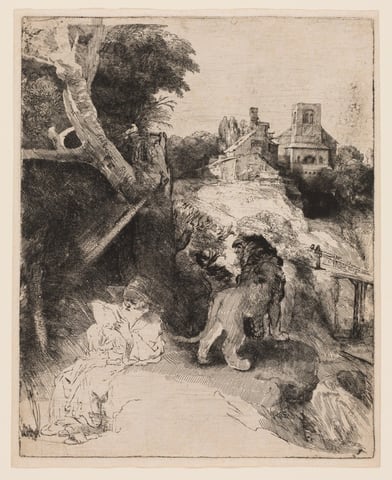
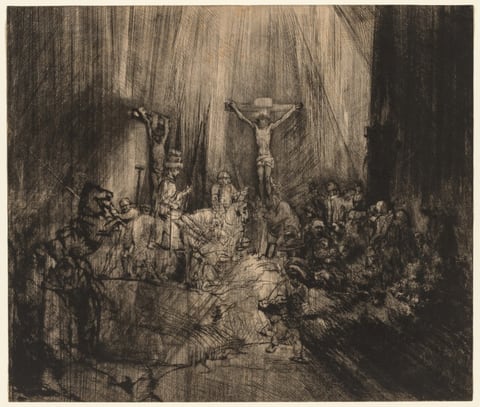
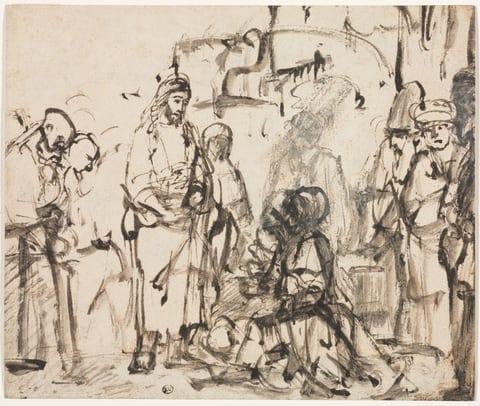
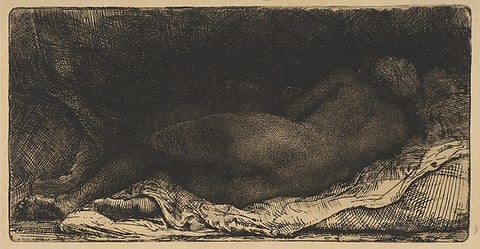
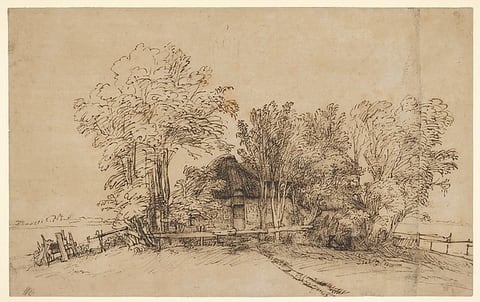
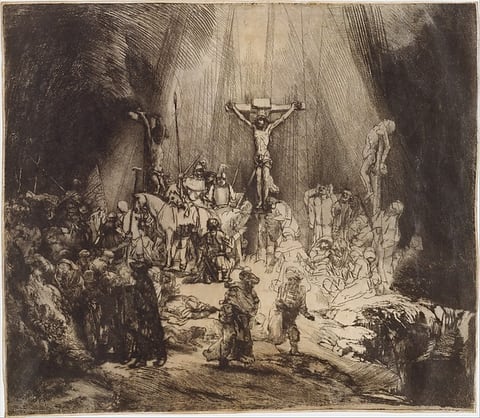
Rembrandt trained in Leiden and Amsterdam, settled in Amsterdam in the early 1630s and became the city’s most sought-after portraitist. His later work grows rougher and more searching, with thick paint, deep shadow and faces that seem lost in thought, as in Aristotle with a Bust of Homer, painted for a Sicilian collector. He was also the leading etcher of his age, reworking plates through many states and making the medium as expressive as painting.
Written by Ochre Editions.
Dutch Golden Age
Seventeenth-century painting from the Dutch Republic: still lifes, interiors, portraits and flat, wide skies.
Rights and the museum’s record
Public domain. The Cleveland Museum of Art has dedicated this image to the public domain under CC0, so anyone may copy, adapt and use it, for any purpose, without asking. Our prints and files are reproductions made from the museum’s image; the museum doesn’t endorse them.
- Object number
- 1942.644
- Credit
- Courtesy of the Cleveland Museum of Art
- Type
- Painting
- Department
- European Painting and Sculpture
- Licence
- CC0 1.0 Universal
- Museum record
- See it on the museum’s site
Report this work
More by Rembrandt van Rijn
All their works