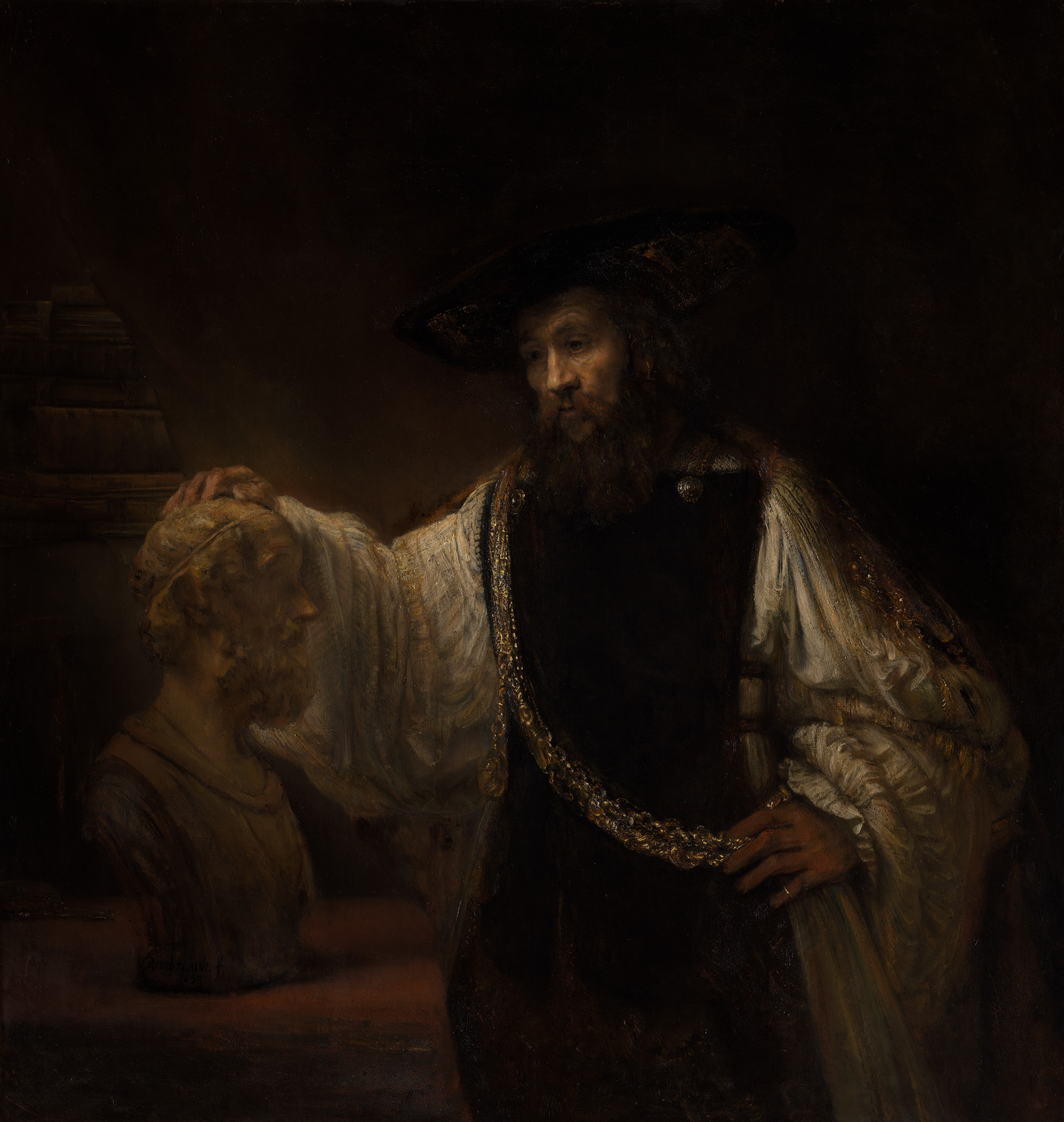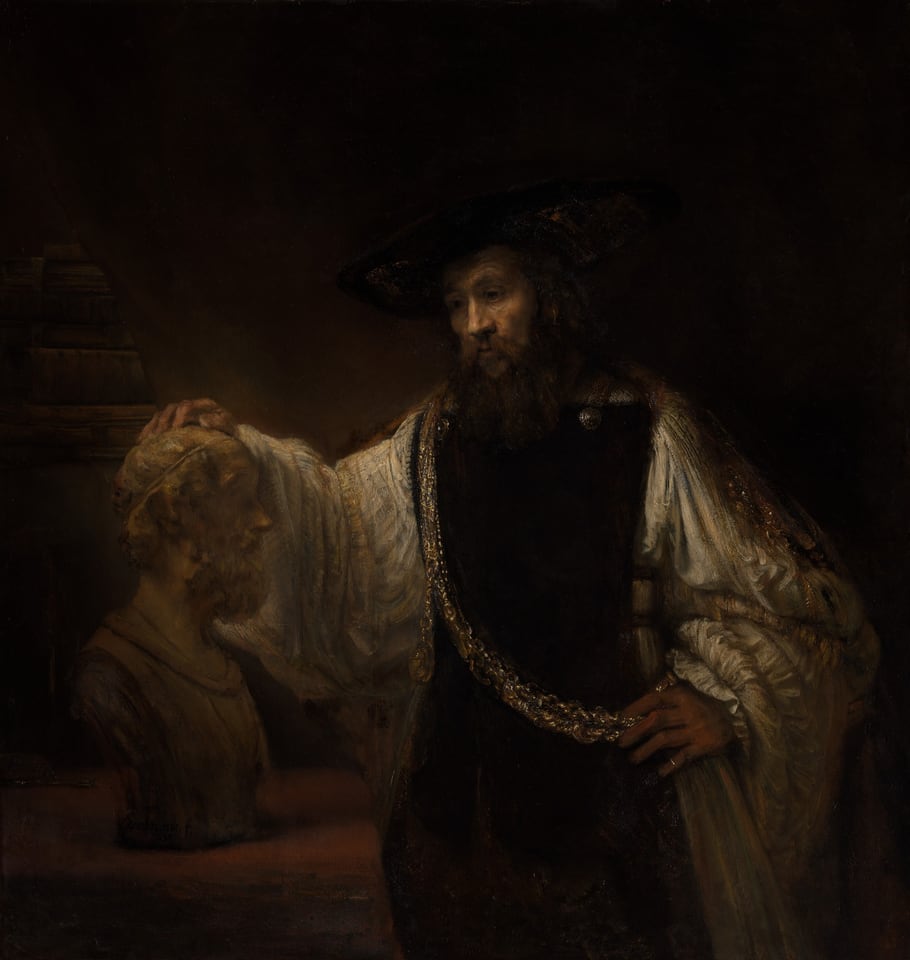
Aristotle with a Bust of Homer1653
A philosopher in a broad black hat rests his hand on a marble bust of the blind poet Homer, while a heavy gold chain falls across his chest, carrying a medallion that bears the image of Alexander the Great, Aristotle’s most famous pupil. More about this work
About this work
A philosopher in a broad black hat rests his hand on a marble bust of the blind poet Homer, while a heavy gold chain falls across his chest, carrying a medallion that bears the image of Alexander the Great, Aristotle’s most famous pupil. Rembrandt sets up a quiet triangle of thought: the thinker, the poet he admires and the worldly reward of a royal patron. The broad white sleeves are built up in thick, almost sculpted paint, while the face stays in half shadow, the gaze turned inward. The canvas was painted for the Sicilian collector Don Antonio Ruffo.
Written by Ochre Editions.
How it was made
- Oil paint
- Pigment ground in a drying oil, usually linseed. It dries slowly, so painters could blend on the canvas, build up thin translucent glazes, and rework a picture over weeks. Canvas replaced wooden panels in the 1500s because it is lighter and can be rolled.
Rembrandt van Rijn
Dutch, 1606–1669 · Born in Leiden; died in Amsterdam.
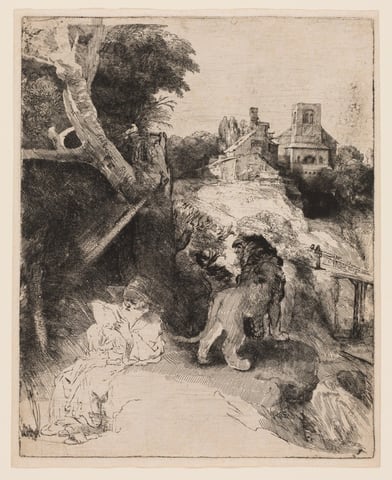
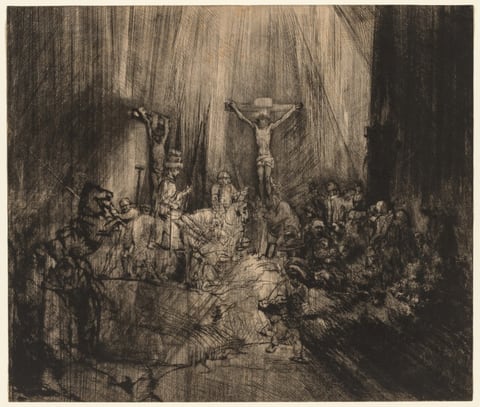
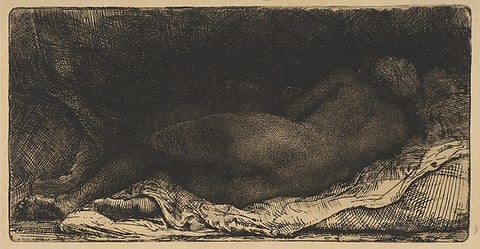
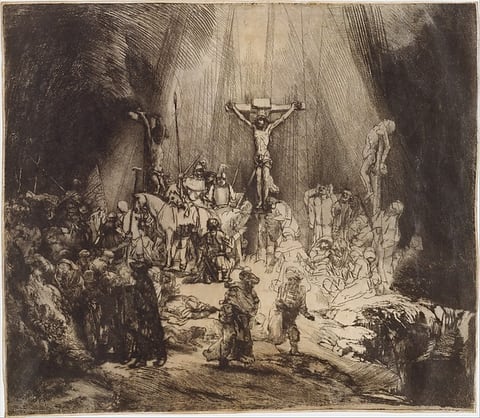
Rembrandt trained in Leiden and Amsterdam, settled in Amsterdam in the early 1630s and became the city’s most sought-after portraitist. His later work grows rougher and more searching, with thick paint, deep shadow and faces that seem lost in thought, as in Aristotle with a Bust of Homer, painted for a Sicilian collector. He was also the leading etcher of his age, reworking plates through many states and making the medium as expressive as painting.
Written by Ochre Editions.
Rights and the museum’s record
Public domain. The Met has dedicated this image to the public domain under CC0, so anyone may copy, adapt and use it, for any purpose, without asking. Our prints and files are reproductions made from the museum’s image; the museum doesn’t endorse them.
- Object number
- 61.198
- Credit
- Courtesy of The Metropolitan Museum of Art
- Type
- Paintings
- Department
- European Paintings
- Licence
- CC0 1.0 Universal
- Museum record
- See it on the museum’s site
Report this work
More by Rembrandt van Rijn
All their works