Neoclassicism
Europe turns back to Greece and Rome: clear line, calm figures and civic virtue.
First room, north wall
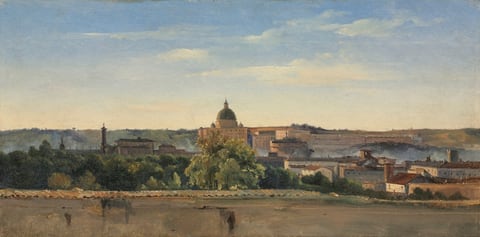
View of RomePierre Henri de Valenciennes, c. 1782–84Courtesy of the Cleveland Museum of Art 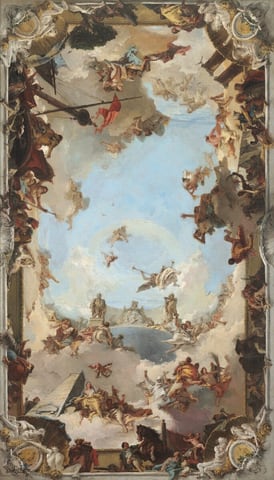
Wealth and Benefits of the Spanish Monarchy under Charles IIIGiovanni Battista Tiepolo, 1762Courtesy National Gallery of Art, Washington 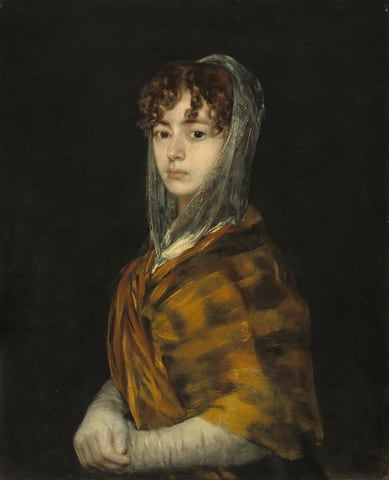
Señora Sabasa GarciaFrancisco Goya, c. 1806/1811Courtesy National Gallery of Art, Washington 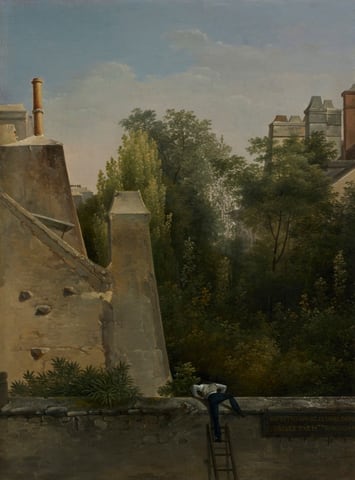
The Curious OneAntoine Pierre Mongin, 1823Courtesy of the Cleveland Museum of Art
First room, south wall
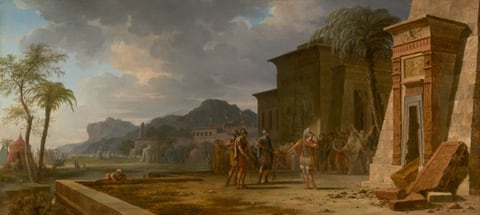
Alexander at the Tomb of Cyrus the GreatPierre Henri de Valenciennes, 1796Courtesy of the Art Institute of Chicago 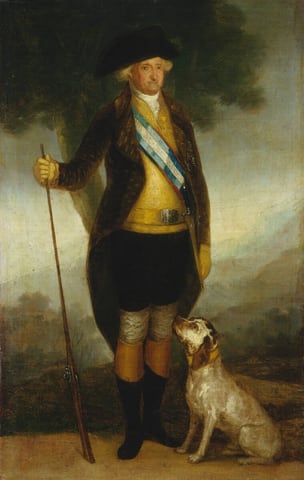
Charles IV of Spain as HuntsmanUnrecorded Spanish maker, c. 1799/1800Courtesy National Gallery of Art, Washington 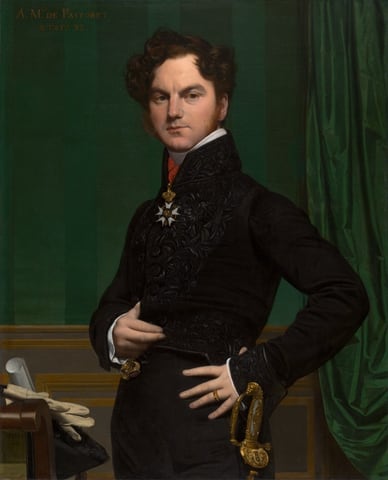
Amédée-David, the Comte de PastoretJean Auguste Dominique Ingres, 1823–26Courtesy of the Art Institute of Chicago 
Portrait of Le Roi MaratViller, c. 1795Courtesy of the Art Institute of Chicago
Second room, south wall
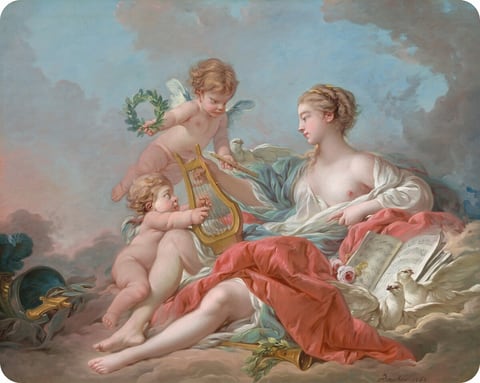
Allegory of MusicFrançois Boucher, 1764Courtesy National Gallery of Art, Washington 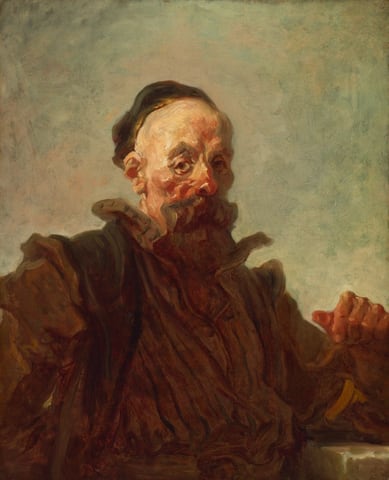
Portrait of a Man in CostumeJean Honoré Fragonard, c. 1767–68Courtesy of the Art Institute of Chicago 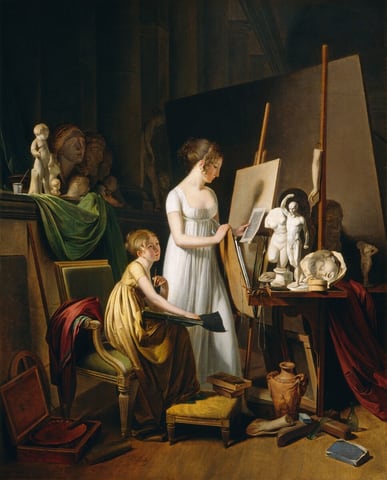
A Painter's StudioLouis-Léopold Boilly, c. 1800Courtesy National Gallery of Art, Washington
Second room, north wall
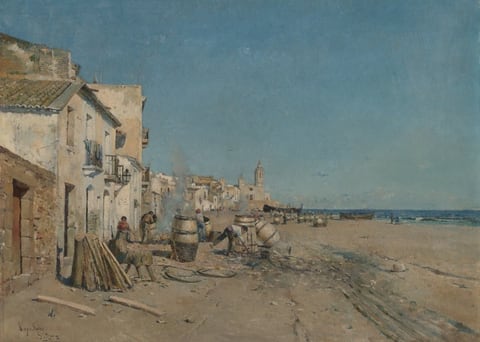
SitgesJuan Roig y Soler, 19th centuryCourtesy of the Art Institute of Chicago 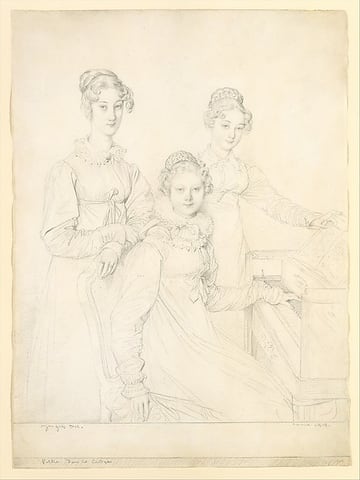
The Kaunitz Sisters (Leopoldine, Caroline, and Ferdinandine)Jean Auguste Dominique Ingres, 1818Courtesy of The Metropolitan Museum of Art 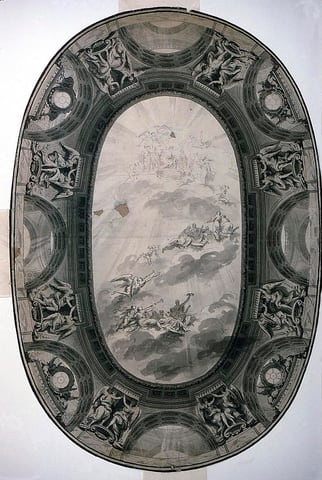
Project for the Painted Decoration of the Ceiling of a Hall (Painted Oval Ceiling)Jean Baptiste Marie Pierre, 1761Courtesy of Cooper Hewitt, Smithsonian Design Museum
Third room, north wall
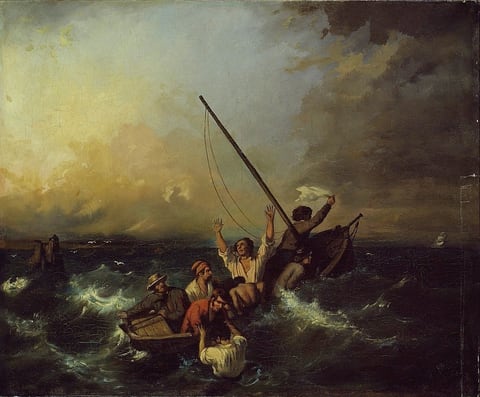
ShipwreckAfter Eugène Isabey, 19th centuryCourtesy of the Art Institute of Chicago 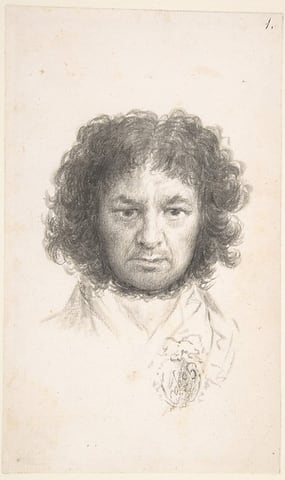
Self-PortraitFrancisco Goya, ca. 1796Courtesy of The Metropolitan Museum of Art