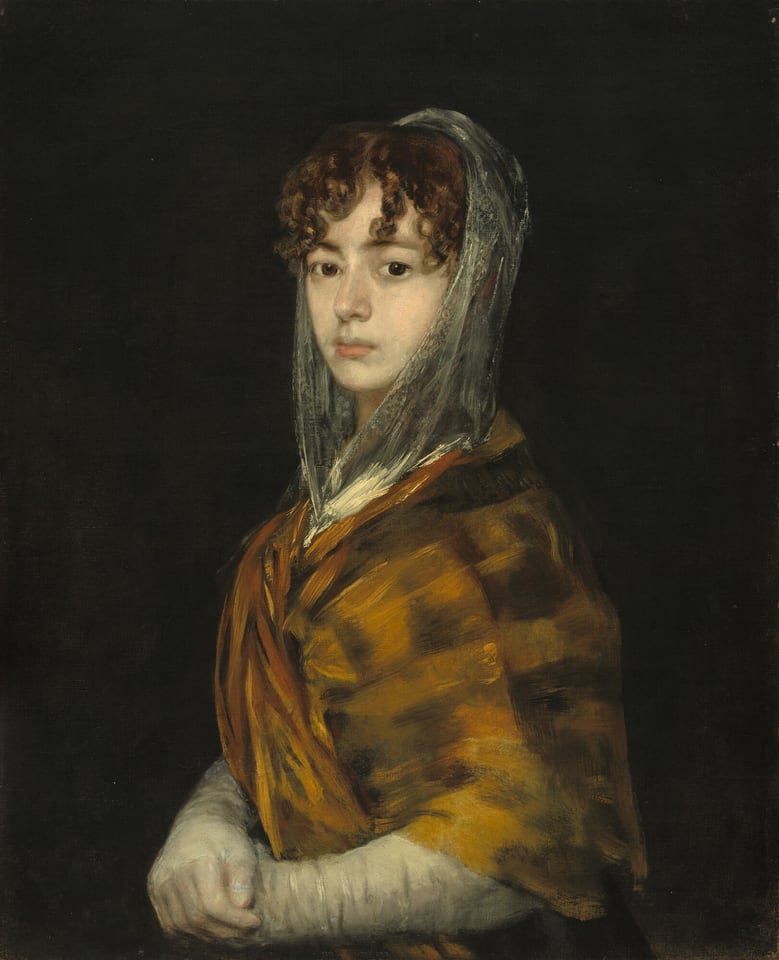
Señora Sabasa Garciac. 1806/1811
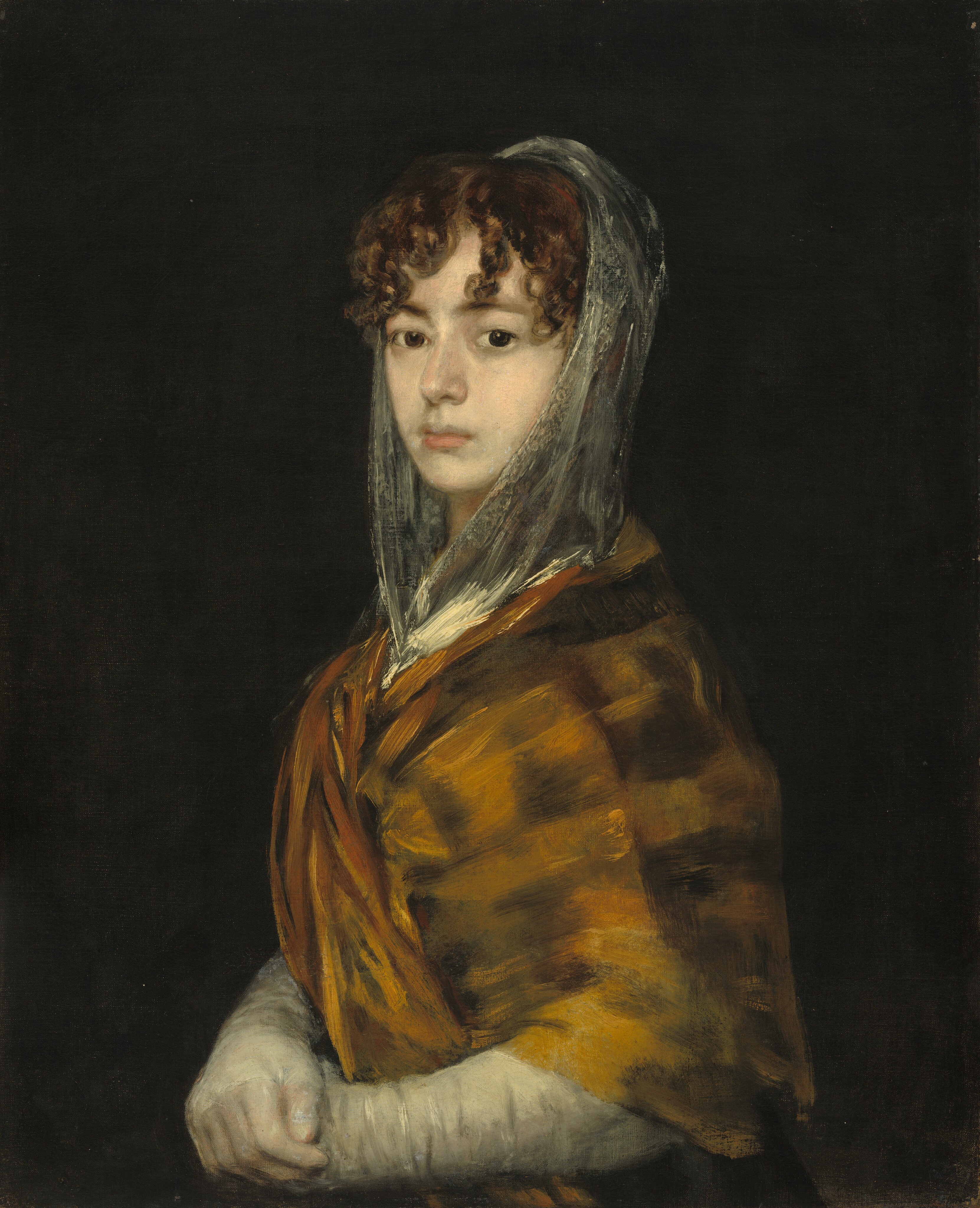
A young woman looks over her shoulder directly at us, her curly brown hair half hidden under a white lace mantilla and a wide orange and black shawl wrapped about her shoulders, her gloved hands clasped at her waist. More about this work
About this work
A young woman looks over her shoulder directly at us, her curly brown hair half hidden under a white lace mantilla and a wide orange and black shawl wrapped about her shoulders, her gloved hands clasped at her waist. Goya sets her against a plain dark background, so that everything depends on the face and the bold pattern of the shawl. Painted in the first decade of the nineteenth century, it is among his most direct portraits, quick and loosely brushed yet vividly present.
Written by Ochre Editions.
What you’re looking at
Shown from the waist up in front of a black background, a young woman with pale white skin and curly brown hair looks directly out at us over her shoulder with her body angled to our left in this vertical portrait. She has dark brown eyes, a straight nose, smooth skin, and her pink lips are closed. Curls fall across her forehead but the rest of her hair is pulled up under a white lace scarf, called a mantilla. The mantilla is tucked under the wide orange and black shawl wrapped around her shoulders. She clasps her hands at her waist, and her hands and forearms are covered with long white gloves that disappear under the shawl.
Description from the National Gallery of Art.
How it was made
- Oil paint
- Pigment ground in a drying oil, usually linseed. It dries slowly, so painters could blend on the canvas, build up thin translucent glazes, and rework a picture over weeks. Canvas replaced wooden panels in the 1500s because it is lighter and can be rolled.
Francisco Goya
Spanish, 1746–1828 · Born in Fuendetodos; died in Bordeaux.
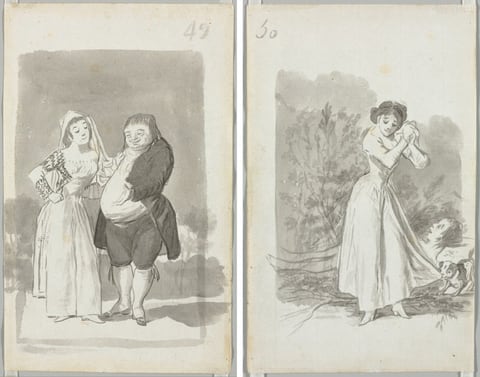
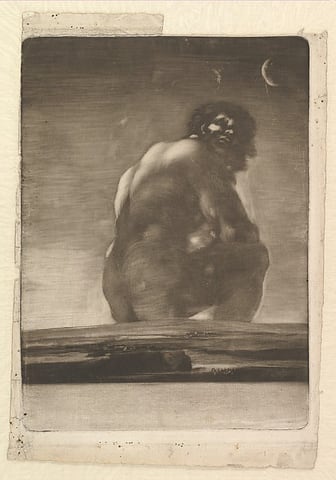
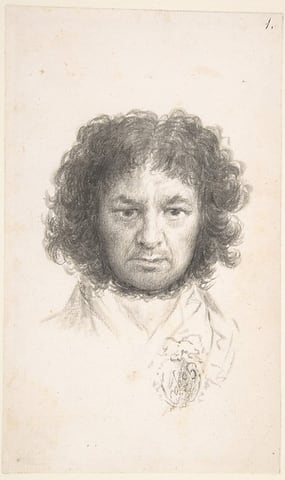
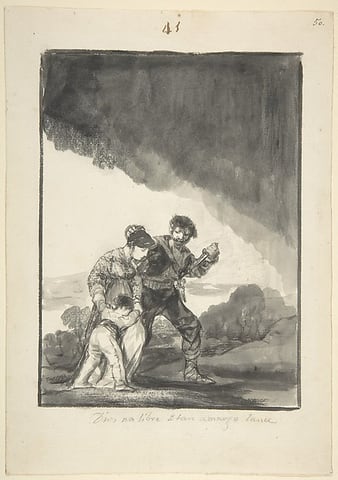
Goya began with tapestry designs for the royal factory in Madrid and rose to become first painter to the Spanish court under Charles IV. After a serious illness left him deaf in the 1790s, his work grew darker and more personal. His etched series, Los Caprichos and The Disasters of War, satirise folly and record the atrocities of the Peninsular War, and he painted the Black Paintings directly on the walls of his own house. He spent his last years in exile in Bordeaux.
Written by Ochre Editions.
Rights and the museum’s record
Public domain. The National Gallery of Art has dedicated this image to the public domain under CC0, so anyone may copy, adapt and use it, for any purpose, without asking. Our prints and files are reproductions made from the museum’s image; the museum doesn’t endorse them.
- Object number
- 1937.1.88
- Credit
- Courtesy National Gallery of Art, Washington
- Type
- Painting
- Licence
- CC0 1.0 Universal
- Museum record
- See it on the museum’s site
Report this work
More by Francisco Goya
All their works