Portrait of a Woman1646
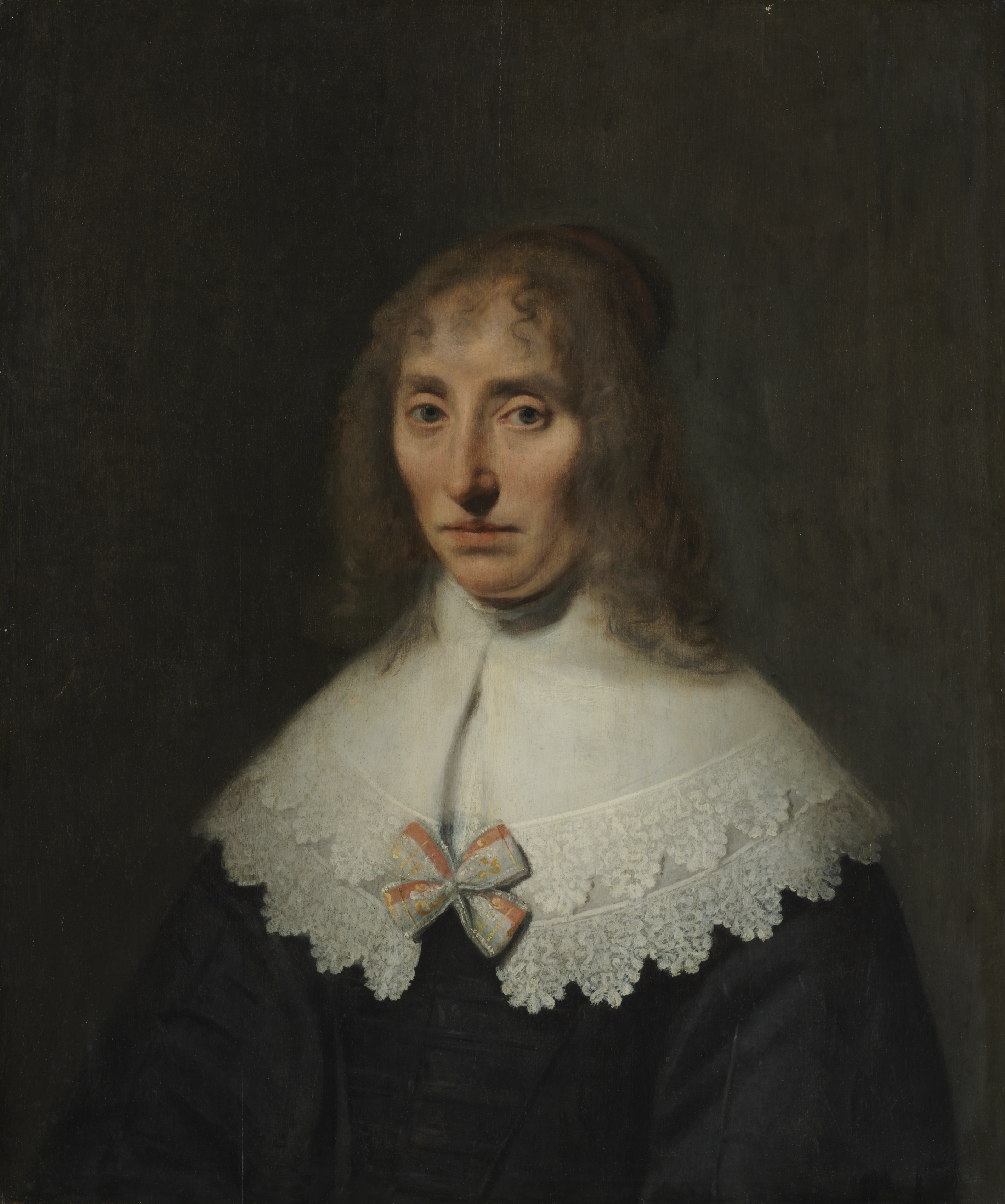
Because of an inscription on the back, this painting was long considered a portrait of Anna Maria van Schurman, a prominent Dutch scholar and artist. More about this work
About this work
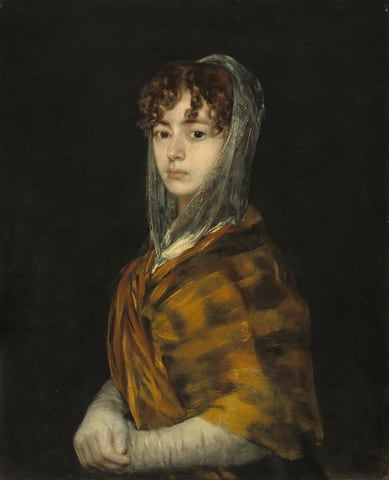
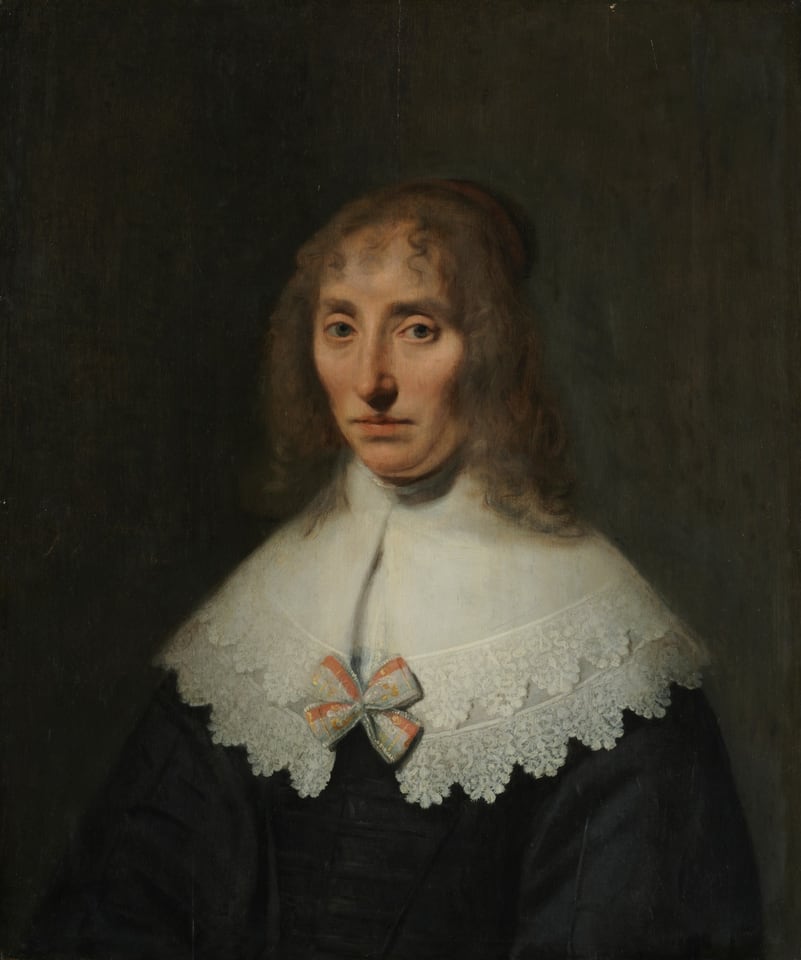
Because of an inscription on the back, this painting was long considered a portrait of Anna Maria van Schurman, a prominent Dutch scholar and artist. These words, however, were added much later and incorrectly state that Anna Maria was 42 years old, when in reality she would have been 39. Furthermore, Flinck's likeness does not resemble other known portraits of this famous woman. Although her identity remains unknown, his sitter has an austere dignity and emotional complexity that captures her individuality through the careful description of her expression and dress. Due to this naturalism and elegant formality, Flinck achieved wealth and a high social standing throughout the 1640s as one of Amsterdam's most popular portraitists, rivaling his former master, Rembrandt. Joachim Sandrart, a contemporary German painter, once commented that compared to Rembrandt's portraits, Flinck's "were more felicitous in the exactness and in the pleasing quality of the portrayal."
Text from the Cleveland Museum of Art.
How it was made
- Oil on panel
- Oil paint on prepared wooden boards, usually oak in the north and poplar in Italy. The rigid, smooth surface suits fine detail and thin, glowing glazes.
- Oil paint
- Pigment ground in a drying oil, usually linseed. It dries slowly, so painters could blend on the canvas, build up thin translucent glazes, and rework a picture over weeks. Canvas replaced wooden panels in the 1500s because it is lighter and can be rolled.
Govaert Flinck
Dutch, 1615–1660
Dutch Golden Age
Seventeenth-century painting from the Dutch Republic: still lifes, interiors, portraits and flat, wide skies.
Rights and the museum’s record
Public domain. The Cleveland Museum of Art has dedicated this image to the public domain under CC0, so anyone may copy, adapt and use it, for any purpose, without asking. Our prints and files are reproductions made from the museum’s image; the museum doesn’t endorse them.
- Object number
- 1977.117
- Credit
- Courtesy of the Cleveland Museum of Art
- Type
- Painting
- Department
- European Painting and Sculpture
- Licence
- CC0 1.0 Universal
- Museum record
- See it on the museum’s site