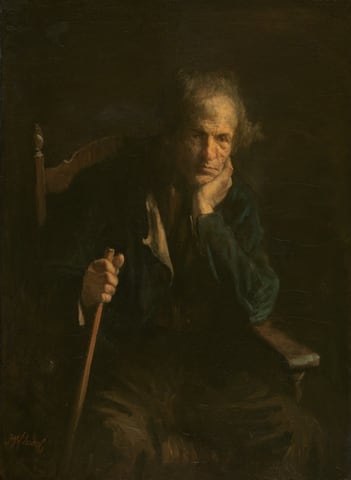
Portrait of an Old Manmid-1500s
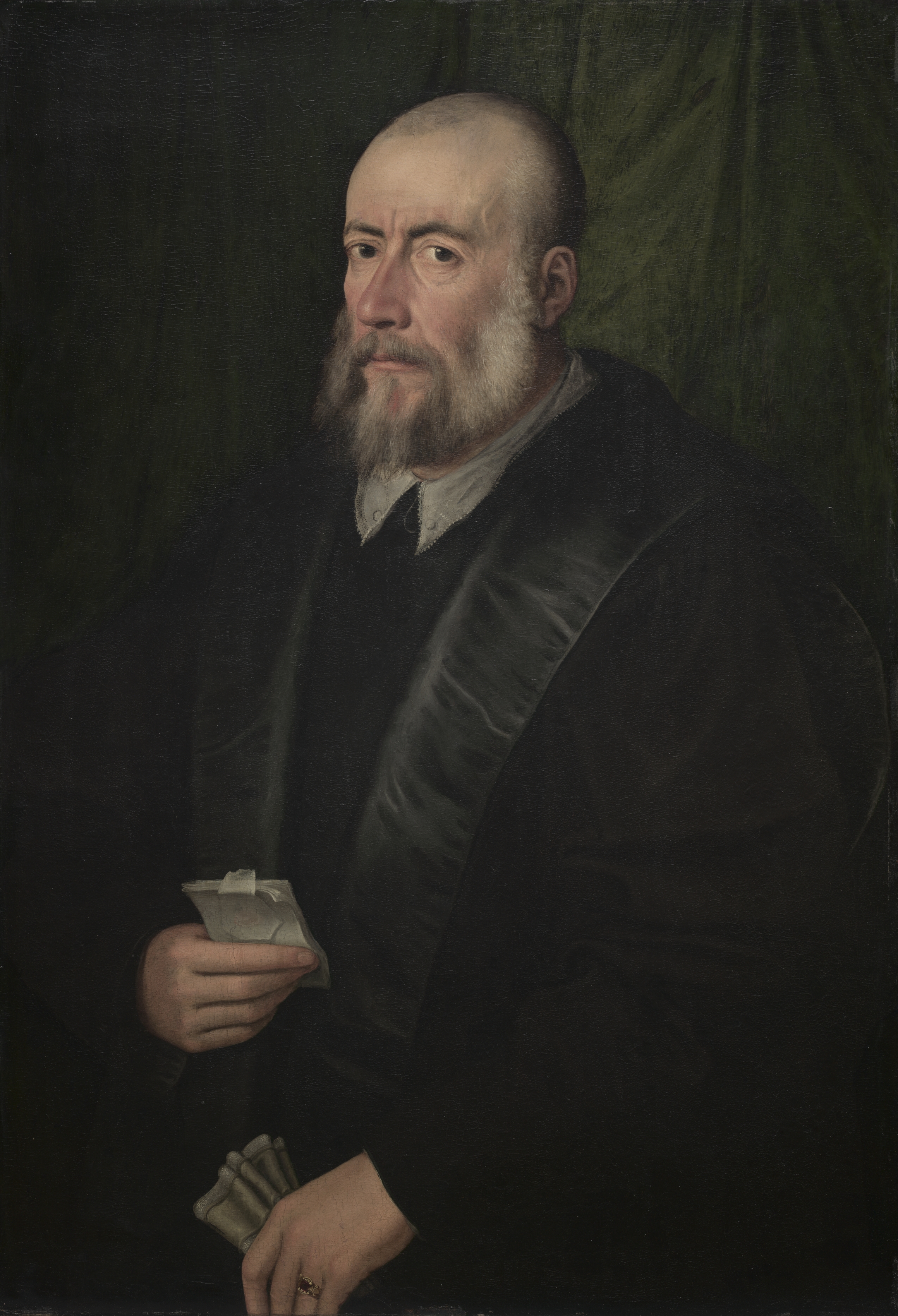
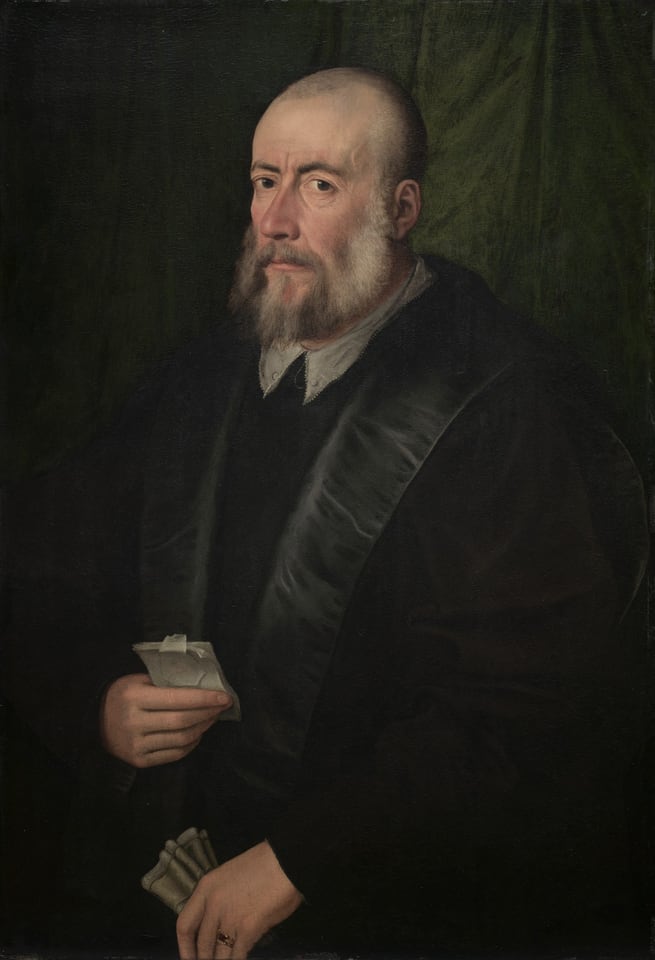
Part of a distinguished family of Northern northern Italian painters, Campi depicts his sitter with an unidealized face dominated by carefully observed wrinkles. More about this work
About this work
Part of a distinguished family of Northern northern Italian painters, Campi depicts his sitter with an unidealized face dominated by carefully observed wrinkles. He stares out intently while grasping what may be a letter with its paper seal broken in his right hand. Despite this intense gaze the figure does not establish a lively connection with the viewer, and his mood remains distant and reserved, in keeping with Renaissance ideas about elegant comportment. Though his costume appears plain, the sumptuous black fabric was indicative of high status in some parts of Europe. --Michele Frederick (December 2011)
Text from the Cleveland Museum of Art.
How it was made
- Oil on panel
- Oil paint on prepared wooden boards, usually oak in the north and poplar in Italy. The rigid, smooth surface suits fine detail and thin, glowing glazes.
- Oil paint
- Pigment ground in a drying oil, usually linseed. It dries slowly, so painters could blend on the canvas, build up thin translucent glazes, and rework a picture over weeks. Canvas replaced wooden panels in the 1500s because it is lighter and can be rolled.
Giulio Campi
Italian, c. 1500–1572
Renaissance
European art from about 1400 to 1600, when painters rediscovered perspective and the classical past.
Rights and the museum’s record
Public domain. The Cleveland Museum of Art has dedicated this image to the public domain under CC0, so anyone may copy, adapt and use it, for any purpose, without asking. Our prints and files are reproductions made from the museum’s image; the museum doesn’t endorse them.
- Object number
- 1916.794
- Credit
- Courtesy of the Cleveland Museum of Art
- Type
- Painting
- Department
- European Painting and Sculpture
- Licence
- CC0 1.0 Universal
- Museum record
- See it on the museum’s site