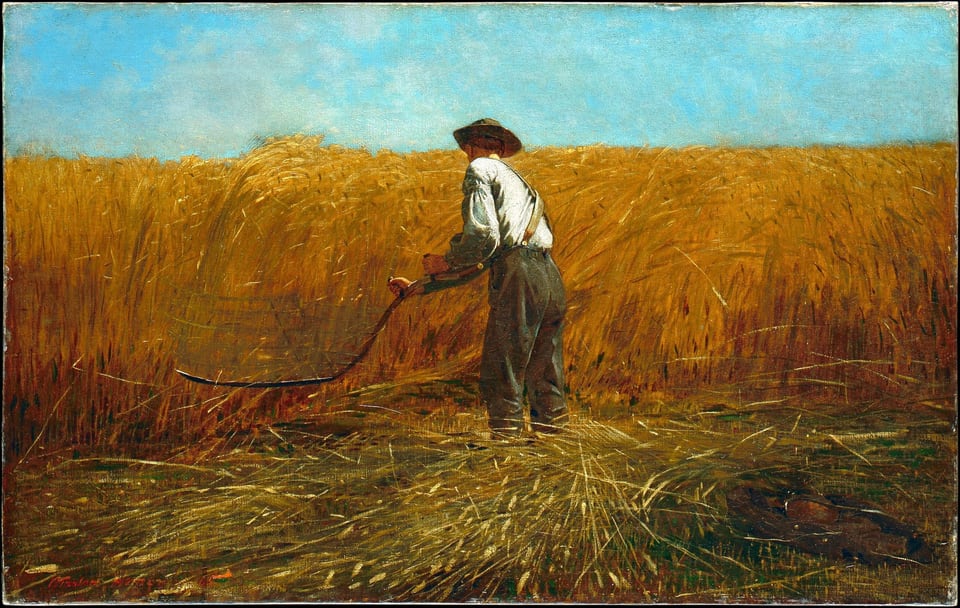
The Veteran in a New Field1865
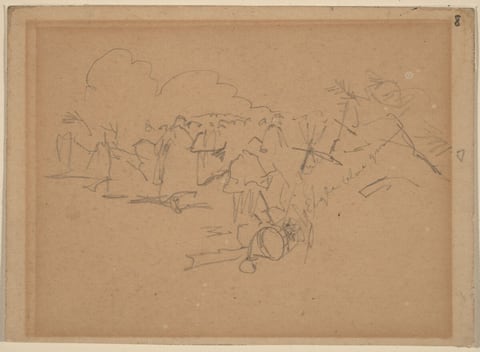
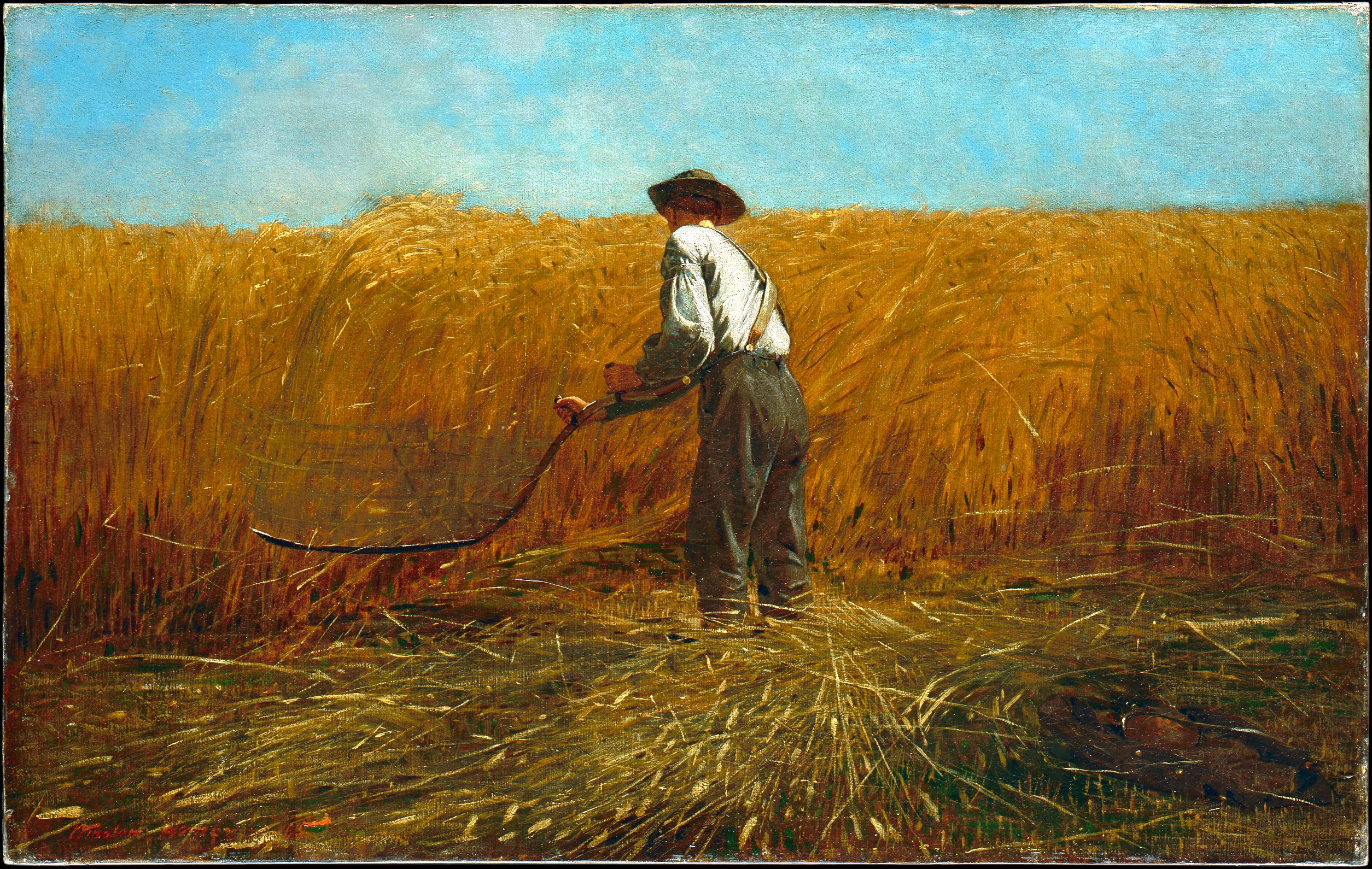
A Union veteran, his army jacket and canteen thrown down at the lower right, swings a scythe through a vast field of ripe wheat, his back to us. More about this work
About this work
A Union veteran, his army jacket and canteen thrown down at the lower right, swings a scythe through a vast field of ripe wheat, his back to us. Winslow Homer painted the picture in 1865, the year the Civil War ended, and it captures the hope that soldiers could return to peaceful work. Yet the scythe also recalls the Grim Reaper, and the harvest of wheat echoes the harvest of death on the battlefield. Homer simplified the tool, painting out the cradle of a farmer’s scythe, perhaps to strengthen that association.
Written by Ochre Editions.
How it was made
- Oil paint
- Pigment ground in a drying oil, usually linseed. It dries slowly, so painters could blend on the canvas, build up thin translucent glazes, and rework a picture over weeks. Canvas replaced wooden panels in the 1500s because it is lighter and can be rolled.
Winslow Homer
American, 1836–1910 · Born in Boston, Massachusetts; died in Prouts Neck, Maine.
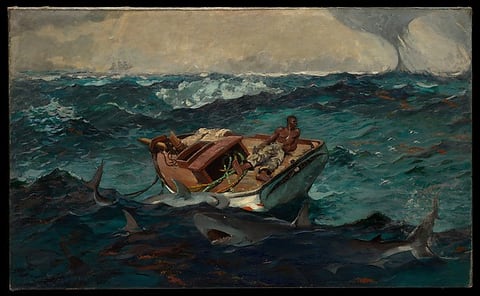
Homer began as an illustrator, covering the Civil War for Harper’s Weekly, and first made his name in painting with scenes of soldiers and country life. A stay at the fishing village of Cullercoats on the English coast in 1881–82 turned him towards the sea, and from 1883 he lived at Prouts Neck, Maine, painting the Atlantic in all weathers. He was also a fluent watercolourist in the Adirondacks, Canada and the Caribbean, and The Gulf Stream draws on those southern journeys.
Written by Ochre Editions.
Rights and the museum’s record
Public domain. The Met has dedicated this image to the public domain under CC0, so anyone may copy, adapt and use it, for any purpose, without asking. Our prints and files are reproductions made from the museum’s image; the museum doesn’t endorse them.
- Object number
- 67.187.131
- Credit
- Courtesy of The Metropolitan Museum of Art
- Type
- Painting
- Department
- The American Wing
- Licence
- CC0 1.0 Universal
- Museum record
- See it on the museum’s site
Report this work
More by Winslow Homer
All their works
Close in colour