The Dancing Lesson1878
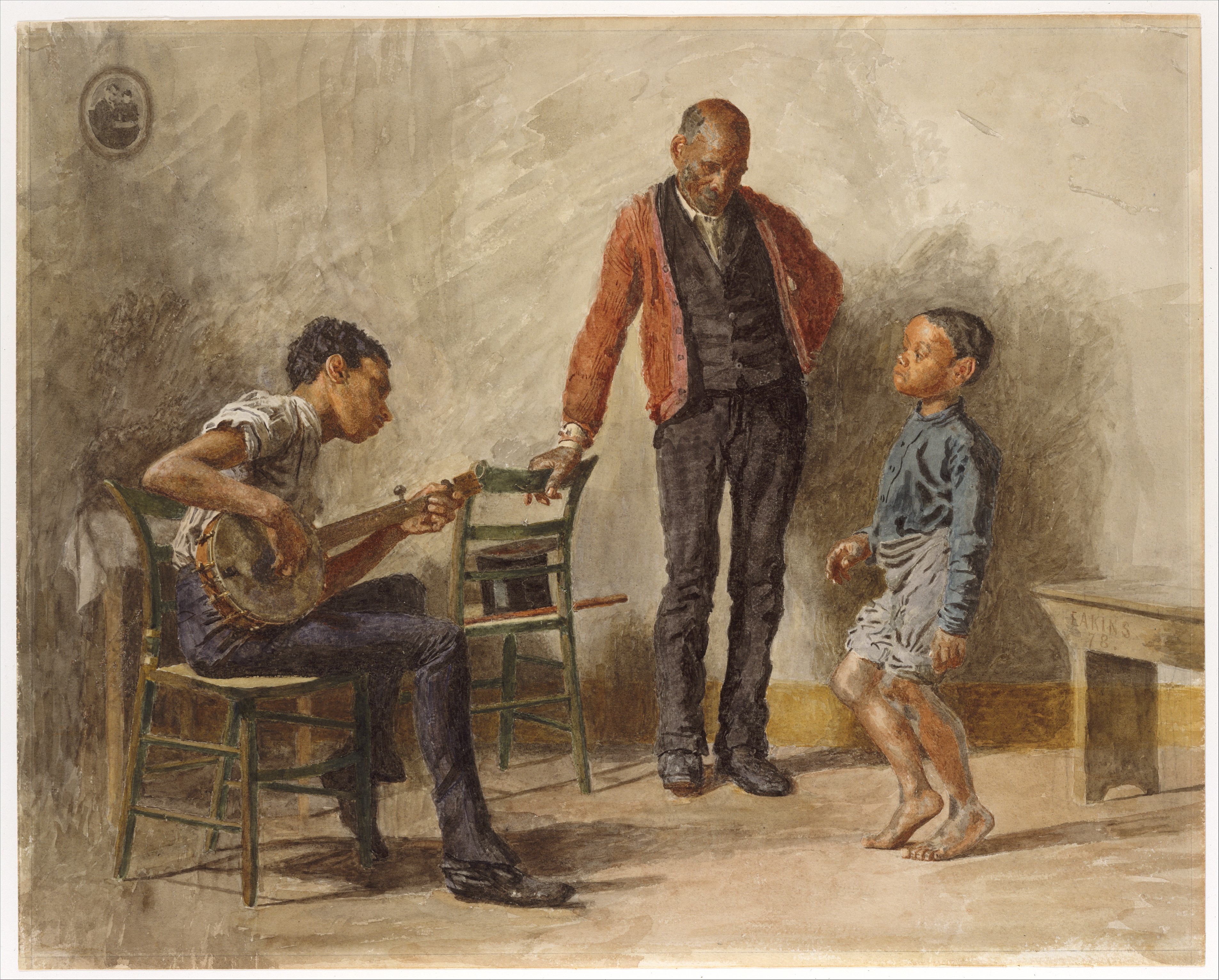
In a plain interior, an elderly man sits watching as a young man plays the banjo and a small boy dances, his face set in concentration. More about this work
About this work
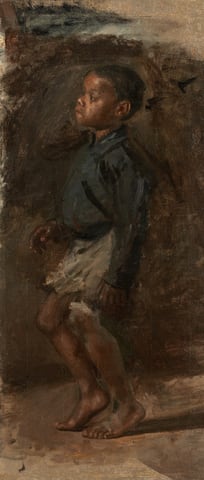
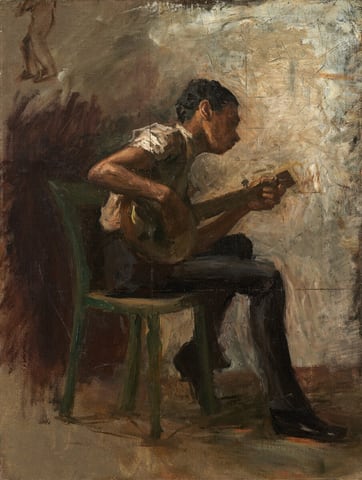
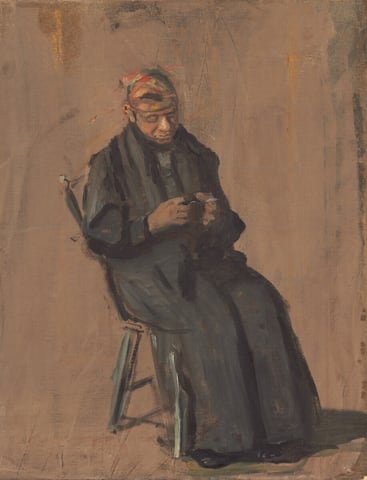
In a plain interior, an elderly man sits watching as a young man plays the banjo and a small boy dances, his face set in concentration. Thomas Eakins made this watercolour in 1878, preparing it with careful oil studies of individual figures, two of which are in the National Gallery of Art, and exhibited it under the title Negro Boy Dancing. Unlike the caricatures of Black Americans common at the time, Eakins presents the family with dignity, and the passing of music and dance from one generation to the next is at the heart of the scene.
Written by Ochre Editions.
How it was made
- Watercolour
- Pigment in gum arabic, thinned with water and laid in transparent washes. Nothing white is painted: the light is the paper showing through.
Thomas Eakins
American, 1844–1916 · Born and died in Philadelphia, Pennsylvania.
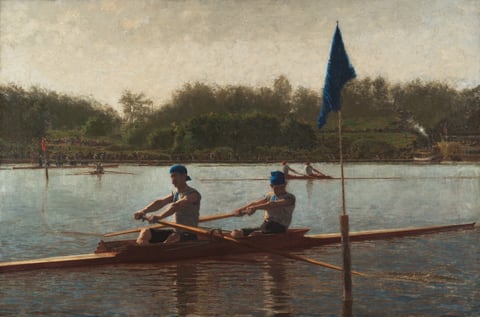
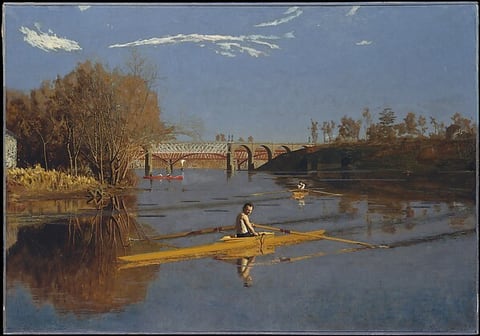
Eakins studied in Paris under Jean-Léon Gérôme and was impressed in Spain by Velázquez and Ribera, then returned to Philadelphia, where he spent his life. He painted rowers, boxers and his city’s doctors and scholars with a frank realism grounded in anatomy, perspective and, later, photography. A demanding teacher at the Pennsylvania Academy of the Fine Arts, he was forced to resign in 1886 over his use of nude models. Max Schmitt in a Single Scull was the first of his rowing pictures.
Written by Ochre Editions.
Rights and the museum’s record
Public domain. The Met has dedicated this image to the public domain under CC0, so anyone may copy, adapt and use it, for any purpose, without asking. Our prints and files are reproductions made from the museum’s image; the museum doesn’t endorse them.
- Object number
- 25.97.1
- Credit
- Courtesy of The Metropolitan Museum of Art
- Type
- Watercolor
- Department
- The American Wing
- Licence
- CC0 1.0 Universal
- Museum record
- See it on the museum’s site