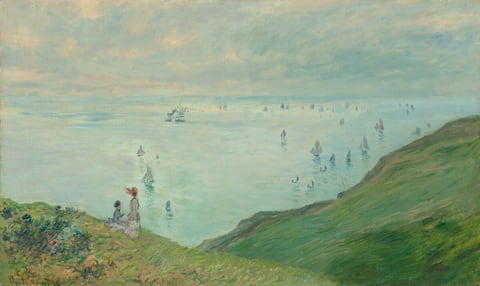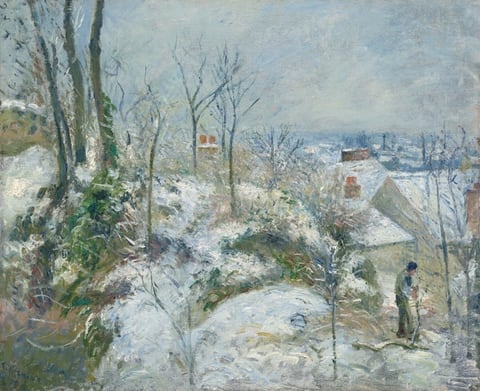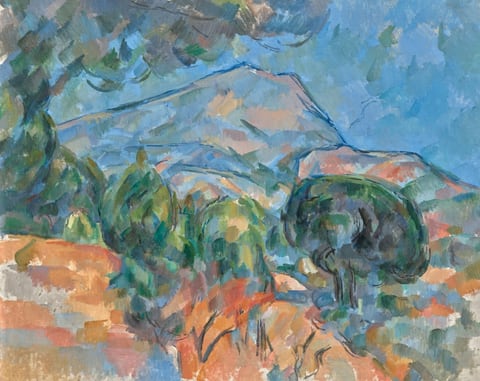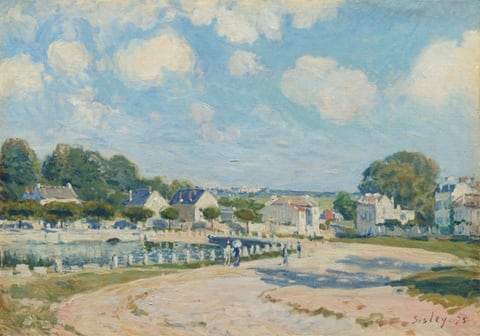
The Beach at Sainte-Adresse1867
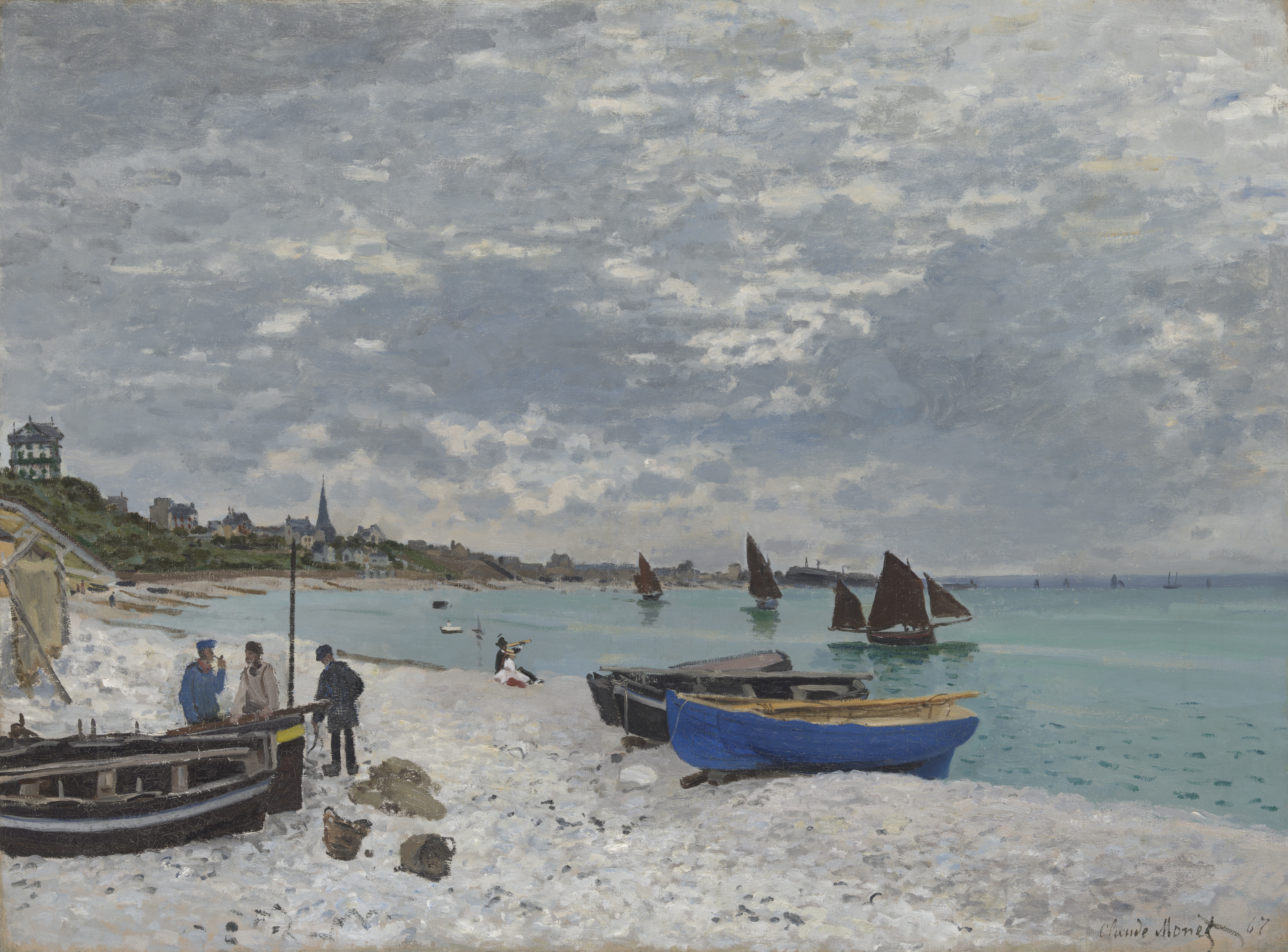
In 1867 Monet stayed with his aunt in Sainte-Adresse, a suburb of the port city of Le Havre in Normandy, where the artist grew up. More about this work
About this work
In 1867 Monet stayed with his aunt in Sainte-Adresse, a suburb of the port city of Le Havre in Normandy, where the artist grew up. Monet began the painting outdoors but likely revised it in his studio. Technical analysis of the work revealed that it started as a beach scene of yachts and tourists but ultimately became a view of sailboats and local fishermen.
Text from the Art Institute of Chicago.
What you’re looking at
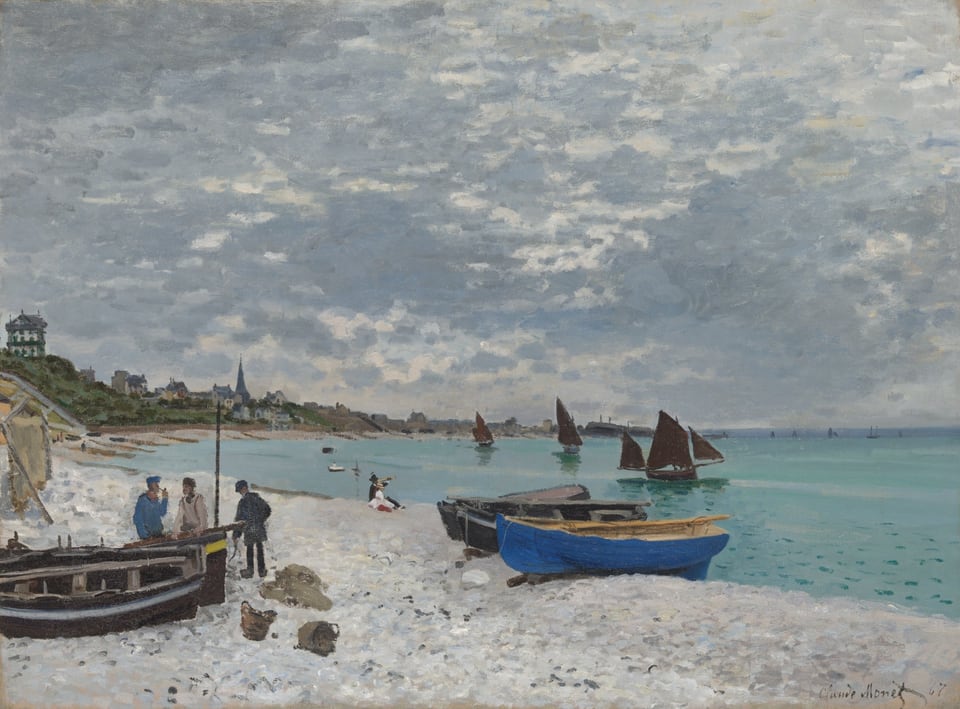
Painting of a beach on a cloudy day with several sailboats on the water, a few rowboats on the shore, and two groupings of people on the sand.
Description from the Art Institute of Chicago.
How it was made
- Oil paint
- Pigment ground in a drying oil, usually linseed. It dries slowly, so painters could blend on the canvas, build up thin translucent glazes, and rework a picture over weeks. Canvas replaced wooden panels in the 1500s because it is lighter and can be rolled.
Claude Monet
French, 1840–1926
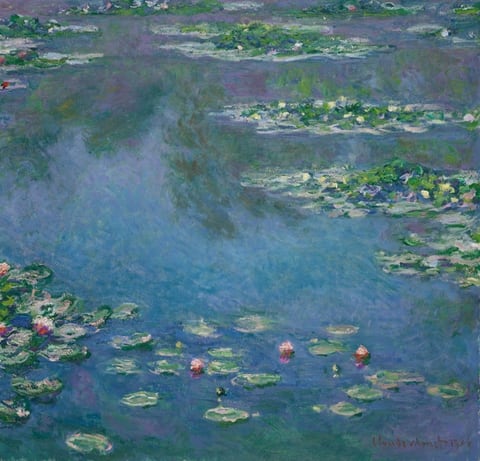
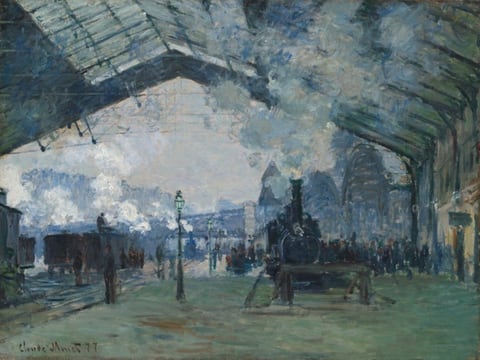
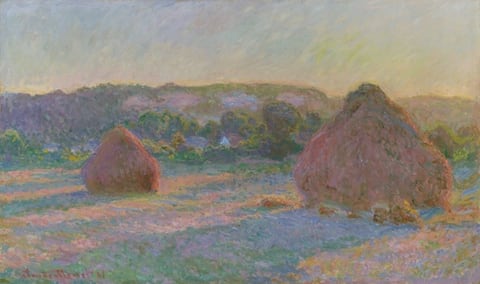
Monet grew up in Le Havre, where Eugène Boudin encouraged him to paint outdoors. In Paris he met Renoir, Sisley and Bazille, and his Impression, Sunrise gave the Impressionist movement its name in 1874. He made a lifelong study of changing light, painting the Gare Saint-Lazare, haystacks, poplars and Rouen Cathedral in series. From 1883 he lived at Giverny, where he built the water garden that filled the last three decades of his work.
Written by Ochre Editions.
Impressionism
Painters in 1870s Paris who worked quickly, often outdoors, to catch light as it changed.
Rights and the museum’s record
Public domain. The Art Institute of Chicago has dedicated this image to the public domain under CC0, so anyone may copy, adapt and use it, for any purpose, without asking. Our prints and files are reproductions made from the museum’s image; the museum doesn’t endorse them.
- Object number
- 1933.439
- Credit
- Courtesy of the Art Institute of Chicago
- Type
- Painting
- Department
- Painting and Sculpture of Europe
- Licence
- CC0 1.0 Universal
- Museum record
- See it on the museum’s site