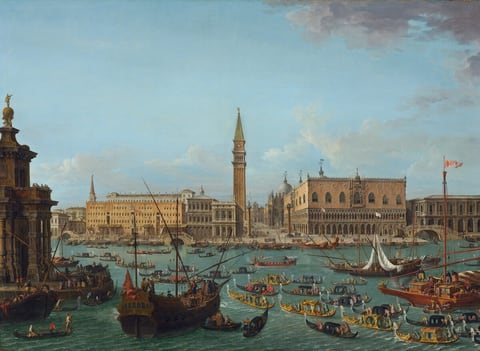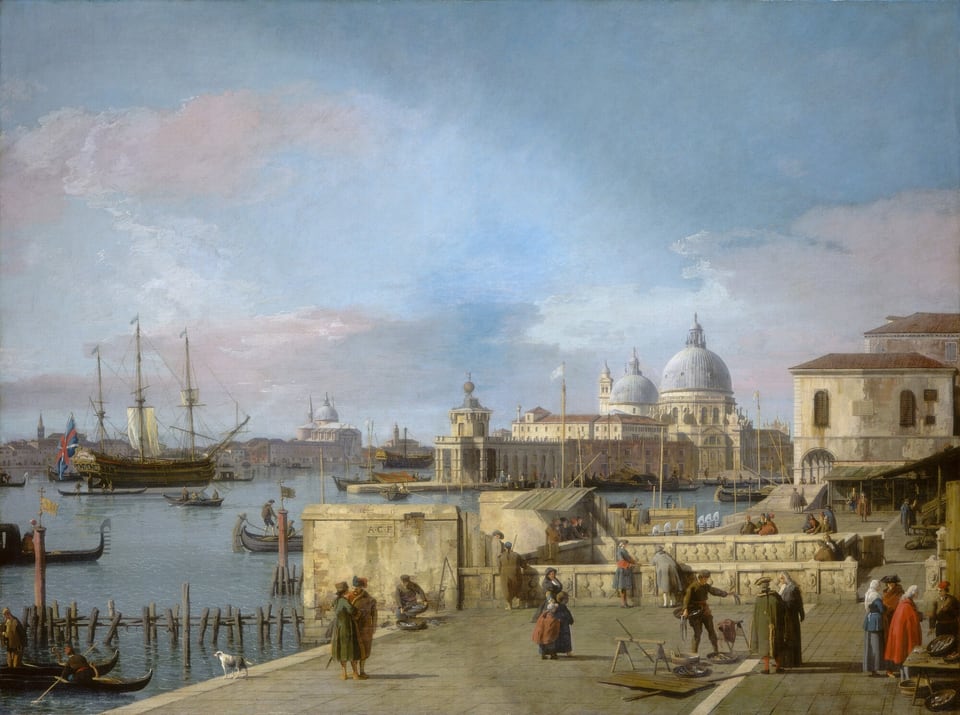
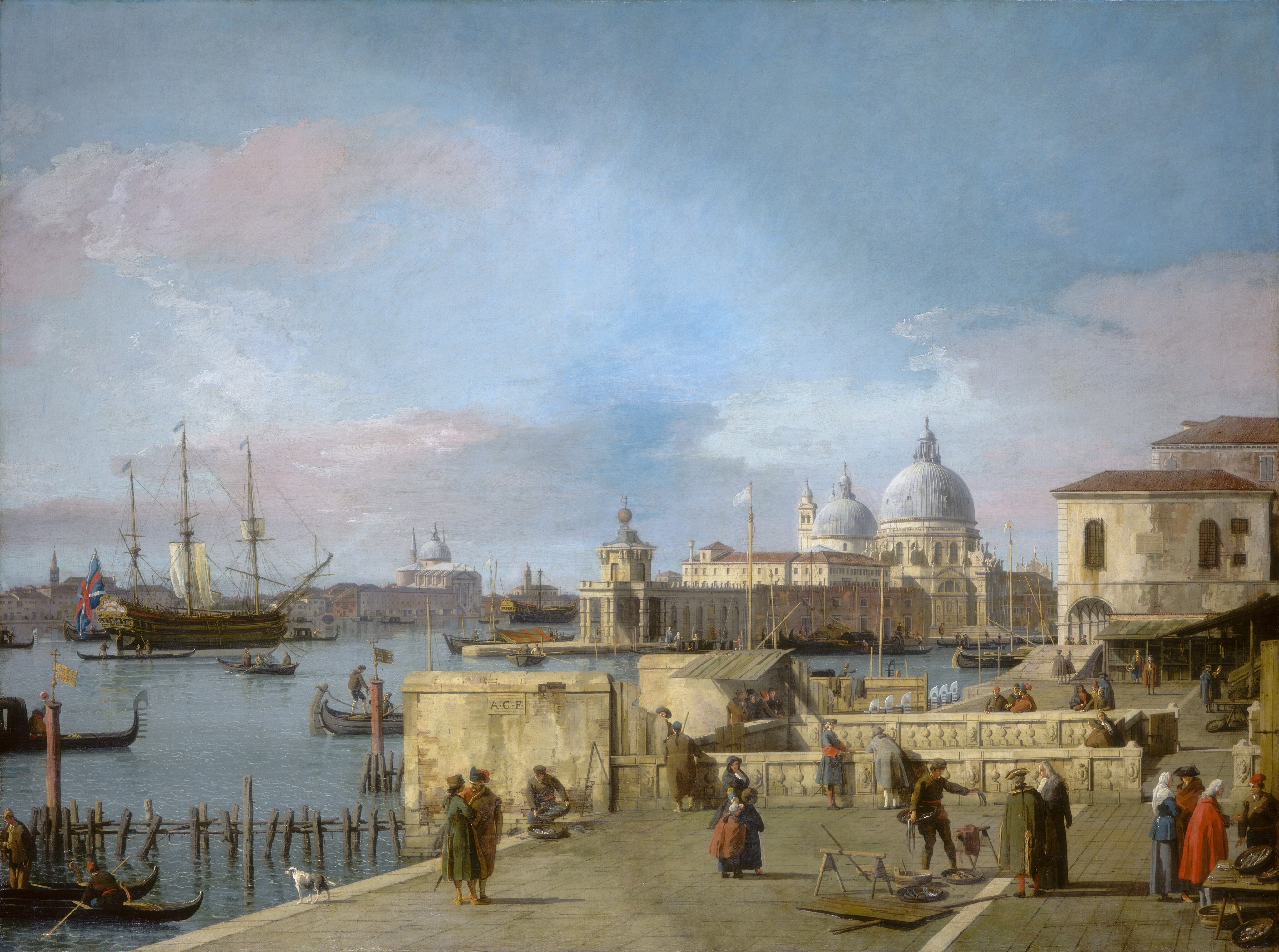
Entrance to the Grand Canal from the Molo, Venice1742/1744
From the Molo, the stone waterfront beside the Doge’s Palace, we look across the busy mouth of the Grand Canal to the domes of Santa Maria della Salute on the far bank. More about this work
About this work
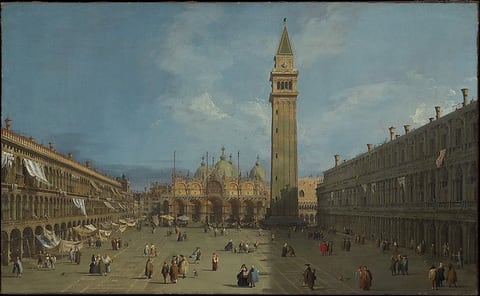
From the Molo, the stone waterfront beside the Doge’s Palace, we look across the busy mouth of the Grand Canal to the domes of Santa Maria della Salute on the far bank. A three-masted ship rides among dozens of black gondolas, while strollers in red, green and blue walk the quay past a row of stalls towards an arcaded building in the distance. Painted in the early 1740s, at the same time as Canaletto’s view of the Piazza San Marco in the same collection, it shows his mature manner: a high, airy sky of billowing cloud above a crisp, orderly record of the city’s life.
Written by Ochre Editions.
What you’re looking at
We look slightly down onto a port-side town along a canal, with a church across the water from us in this horizontal landscape painting. A bright blue sky with billowing white, pink, and gray clouds fills the top two-thirds of the painting. Below, a three-masted ship with all but one sail furled is surrounded by a couple dozen black long, low boats, gondolas, and one or two other sailboats. People stand and walk mostly in pairs and trios along the stone walkway under us, which extends into the distance to our right. The women all wear long dresses and most of the men wear suits with knee-length jackets with tails or capes, and hats. The clothing is painted in shades of brick and terracotta red, pine green, royal blue, and gray. The walkway is interrupted by two low walls that partition off an area near us. The angled roofs of stalls line the walkway in the farther distance before it is again interrupted, this time by a two-story, cream-colored building. The walkway continues as a narrower path under an arched arcade on the lower level of that building, alongside the water. On the far side of the canal, to our left and in the distance, a cluster of ivory-white buildings includes a structure with two stone-blue domes. More buildings extend into the deep distance to our left.
Description from the National Gallery of Art.
How it was made
- Oil paint
- Pigment ground in a drying oil, usually linseed. It dries slowly, so painters could blend on the canvas, build up thin translucent glazes, and rework a picture over weeks. Canvas replaced wooden panels in the 1500s because it is lighter and can be rolled.
Canaletto
Italian, 1697–1768 · Born and died in Venice.
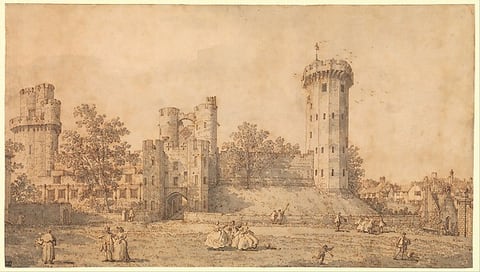
Canaletto, the son of a Venetian painter of theatre scenery, turned in the 1720s to painting views of his native city and became its leading vedutista. British travellers on the Grand Tour were his most eager patrons, many through the merchant and consul Joseph Smith. When war cut off that trade he went to England, working there from 1746 to the mid-1750s on views of London and country houses such as Warwick Castle. He also made a set of etchings that includes imaginary views.
Written by Ochre Editions.
Rights and the museum’s record
Public domain. The National Gallery of Art has dedicated this image to the public domain under CC0, so anyone may copy, adapt and use it, for any purpose, without asking. Our prints and files are reproductions made from the museum’s image; the museum doesn’t endorse them.
- Object number
- 1945.15.4
- Credit
- Courtesy National Gallery of Art, Washington
- Type
- Painting
- Licence
- CC0 1.0 Universal
- Museum record
- See it on the museum’s site
Report this work
More by Canaletto
All their works
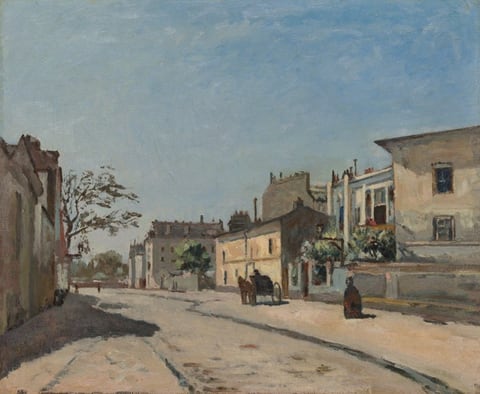
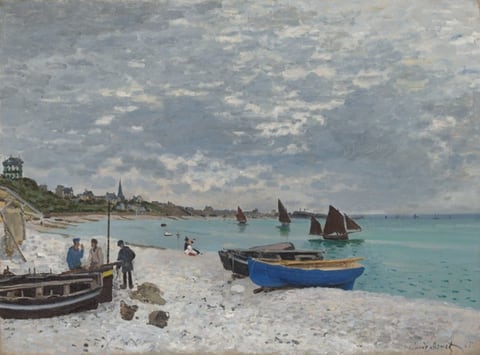
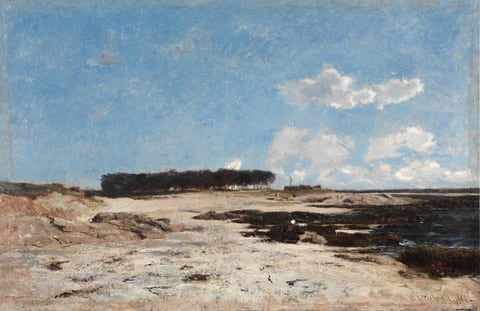
Close in colour