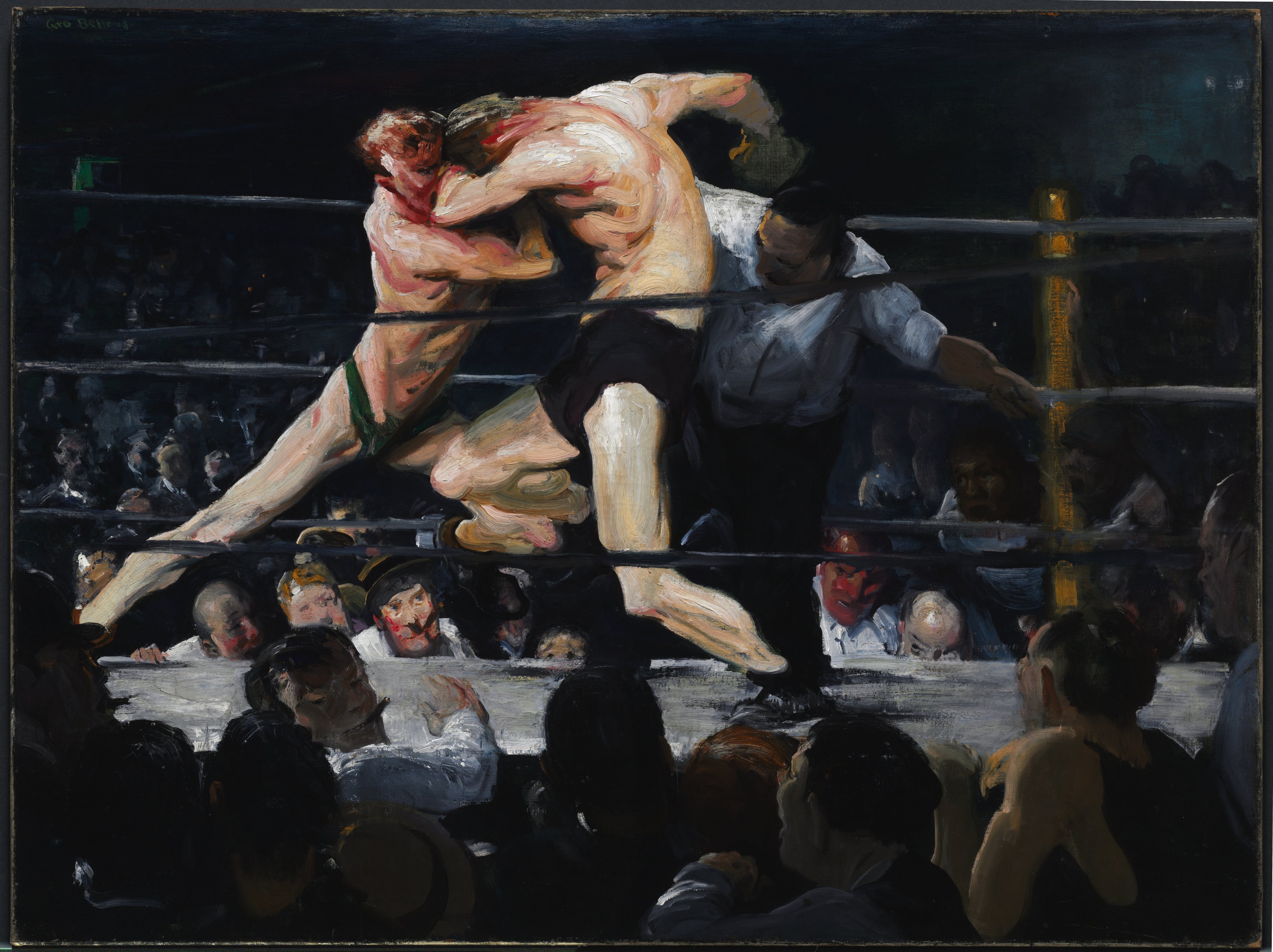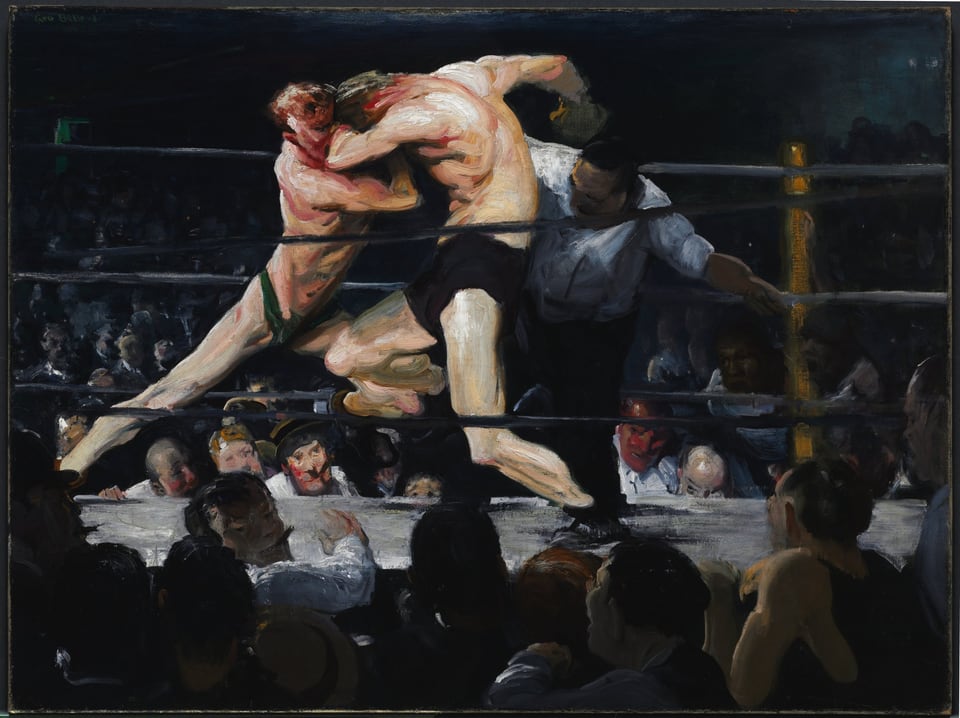
Stag at Sharkey's1909
Bellows was no stranger to Sharkey’s Athletic Club, a raucous saloon with a backroom boxing ring, located near his studio. More about this work
About this work
Bellows was no stranger to Sharkey’s Athletic Club, a raucous saloon with a backroom boxing ring, located near his studio. Founded by Tom “Sailor” Sharkey, an ex-fighter who had also served in the US Navy, the club attracted men seeking to watch or participate in matches. Because public boxing was illegal in New York at the time, a private event had to be arranged in order for a bout to take place. Participation was usually limited to members of a particular club, but whenever an outsider competed, he was given temporary membership and known as a “stag.” Although boxing had its share of detractors who considered it uncouth at best or barbaric at worst, its proponents—among them President Theodore Roosevelt—regarded it a healthy manifestation of manliness. Around the time Bellows painted Stag at Sharkey’s, boxing was moving from a predominantly working-class enterprise to one with greater genteel appeal. For some contemporaries, boxing was a powerful analogy for the notion that only the strongest and fittest would flourish in modern society.
Text from the Cleveland Museum of Art.
How it was made
- Oil paint
- Pigment ground in a drying oil, usually linseed. It dries slowly, so painters could blend on the canvas, build up thin translucent glazes, and rework a picture over weeks. Canvas replaced wooden panels in the 1500s because it is lighter and can be rolled.
George Bellows
American, 1882–1925
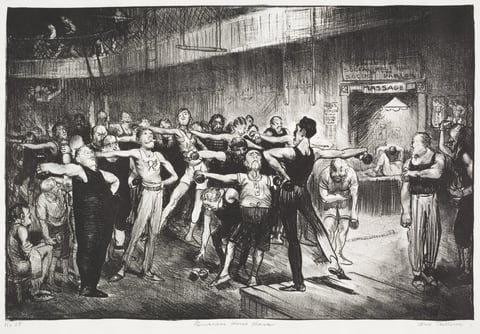
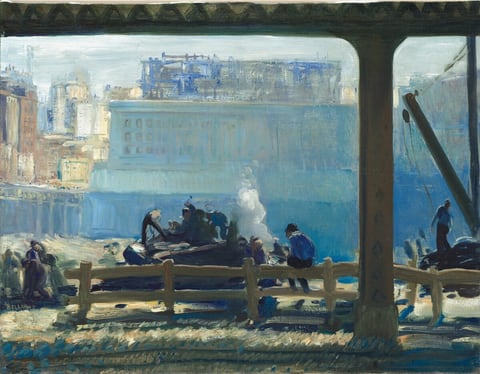
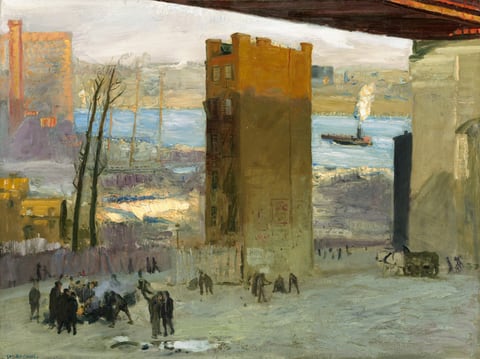
Bellows left Ohio State University to study in New York with Robert Henri and became the most celebrated of the younger realists around him. He painted the city with vigorous brushwork: tenement children, the excavation for Pennsylvania Station, Hudson River docks and, most famously, illegal prize fights such as Stag at Sharkey’s. He took up lithography in 1916 and became one of its leading American practitioners. He died at forty-two of a ruptured appendix.
Written by Ochre Editions.
Rights and the museum’s record
Public domain. The Cleveland Museum of Art has dedicated this image to the public domain under CC0, so anyone may copy, adapt and use it, for any purpose, without asking. Our prints and files are reproductions made from the museum’s image; the museum doesn’t endorse them.
- Object number
- 1922.1133
- Credit
- Courtesy of the Cleveland Museum of Art
- Type
- Painting
- Department
- American Painting and Sculpture
- Licence
- CC0 1.0 Universal
- Museum record
- See it on the museum’s site