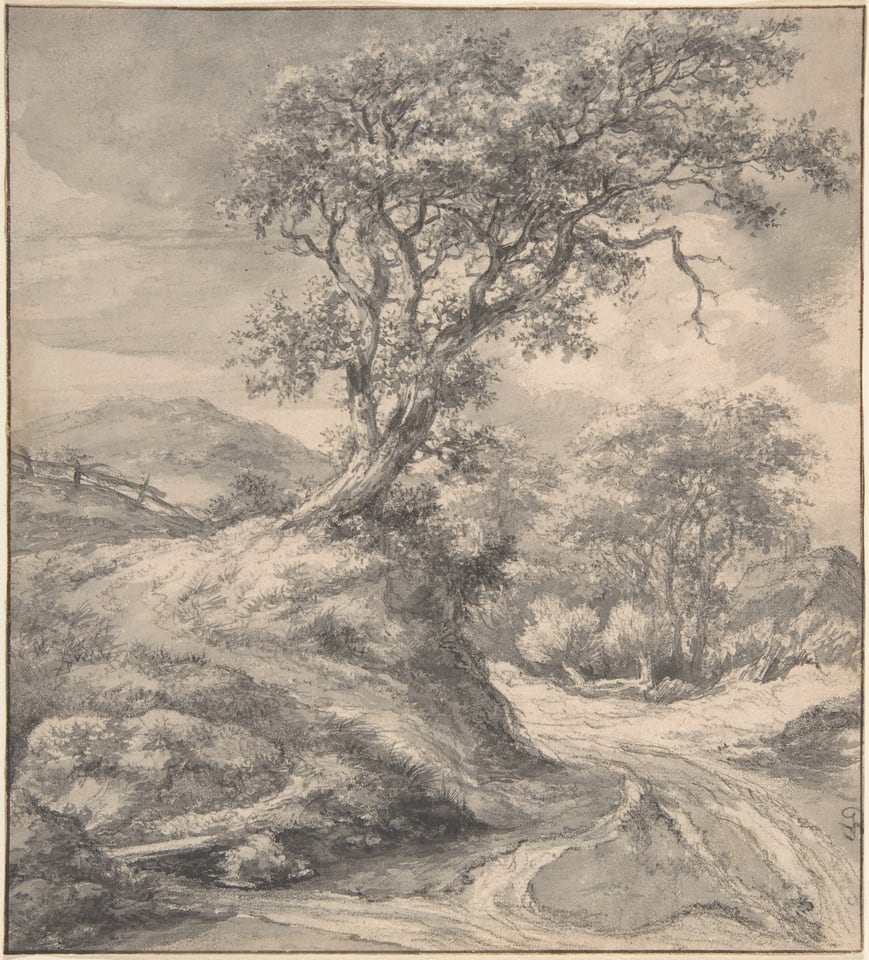
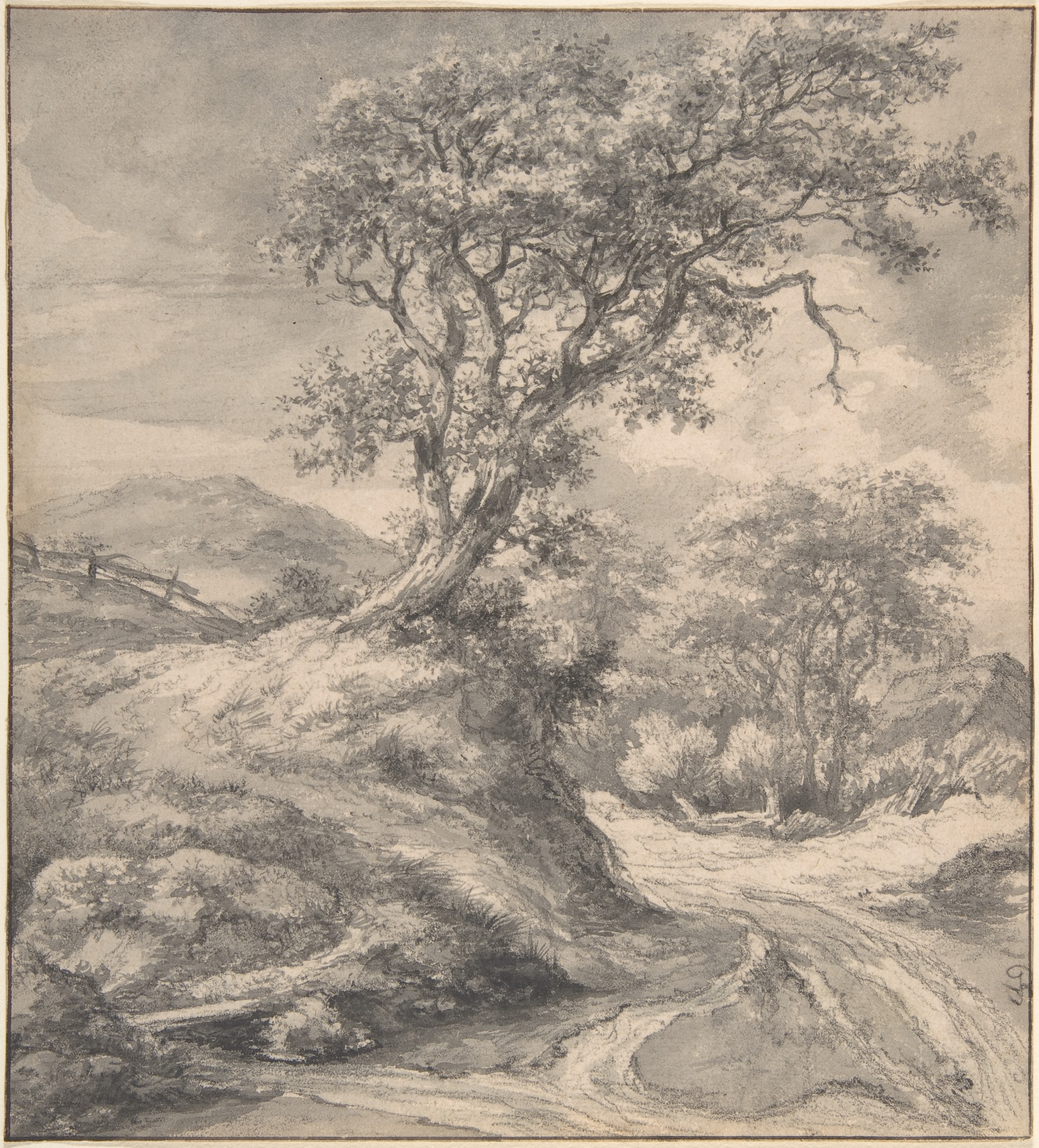
Dune Landscape with Oak Tree1650–55
Jacob van Ruisdael painted this in 1650–55, aged about 22. It is now at The Met in New York. More about this work
About this work
Jacob van Ruisdael painted this in 1650–55, aged about 22. It is now at The Met in New York.
How it was made
- Opaque watercolour
- Watercolour made opaque with white or chalk and laid in flat, even layers. Persian and Indian painters ground their colours from minerals, applied them with the finest brushes and burnished the finished page.
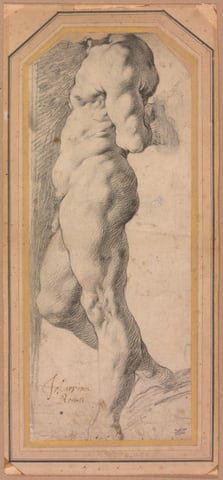
- Chalk
- Natural black, red and white chalks. Used together on toned paper they could give the warmth of flesh with very little effort, and they were favourites for studies from life.
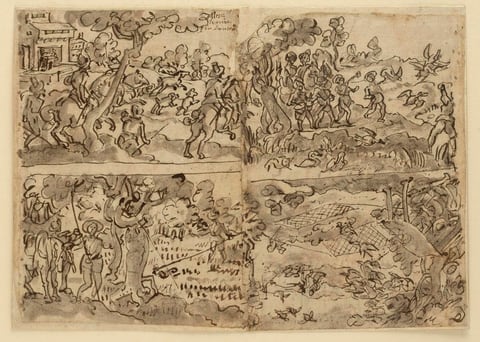
- Pen and ink
- Drawn with a quill or reed pen, often with wash added by brush to model light and shadow.
Jacob van Ruisdael
Dutch, 1628/29–1682 · Born in Haarlem; died in Amsterdam.
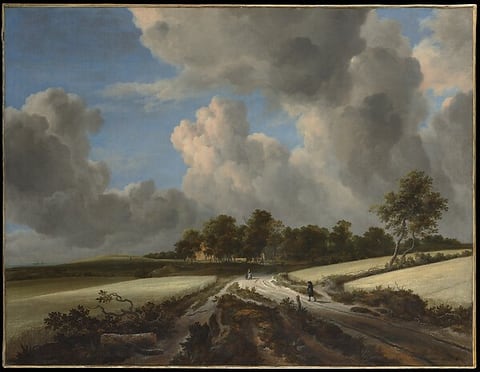
Ruisdael was the leading Dutch landscape painter of the seventeenth century. Probably trained by his father Isaack and his uncle Salomon van Ruysdael in Haarlem, he painted dunes, woods, waterfalls, beaches and wheat fields under towering skies, giving familiar scenery a dramatic, sometimes melancholy weight. He moved to Amsterdam around 1656, and Meindert Hobbema was his pupil. Views such as Wheat Fields show his gift for the low Dutch horizon and the moving clouds above it.
Written by Ochre Editions.
Rights and the museum’s record
Public domain. The Met has dedicated this image to the public domain under CC0, so anyone may copy, adapt and use it, for any purpose, without asking. Our prints and files are reproductions made from the museum’s image; the museum doesn’t endorse them.
- Object number
- 1995.196
- Credit
- Courtesy of The Metropolitan Museum of Art
- Type
- Drawings
- Department
- Drawings and Prints
- Licence
- CC0 1.0 Universal
- Museum record
- See it on the museum’s site
Report this work
More by Jacob van Ruisdael
All their works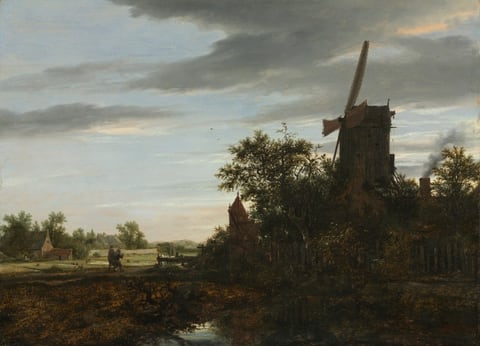
Close in colour