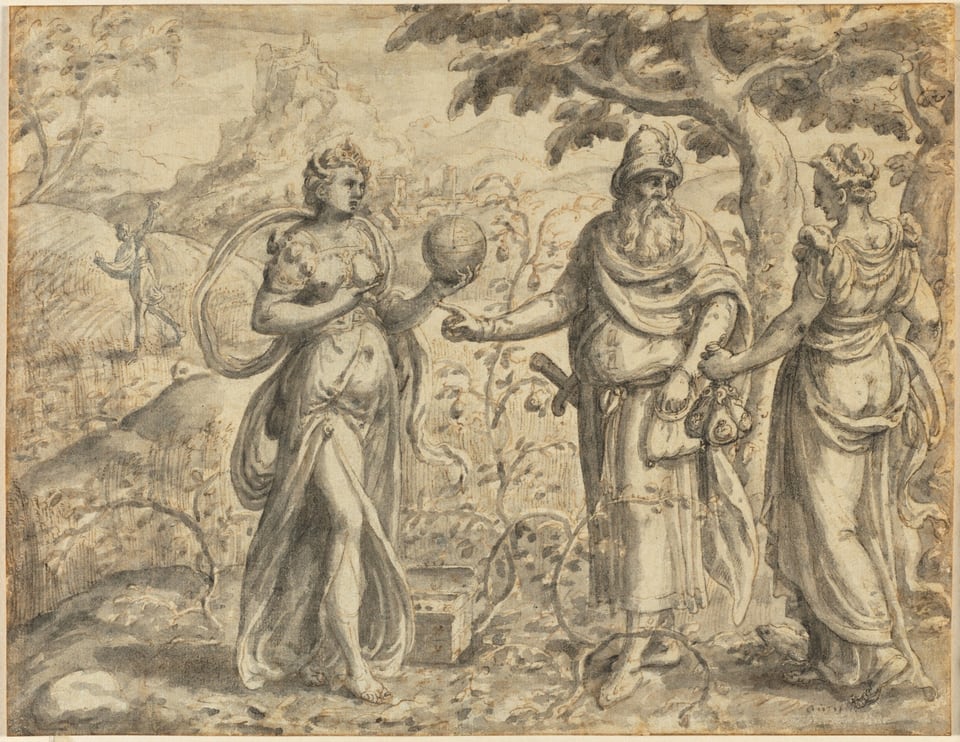
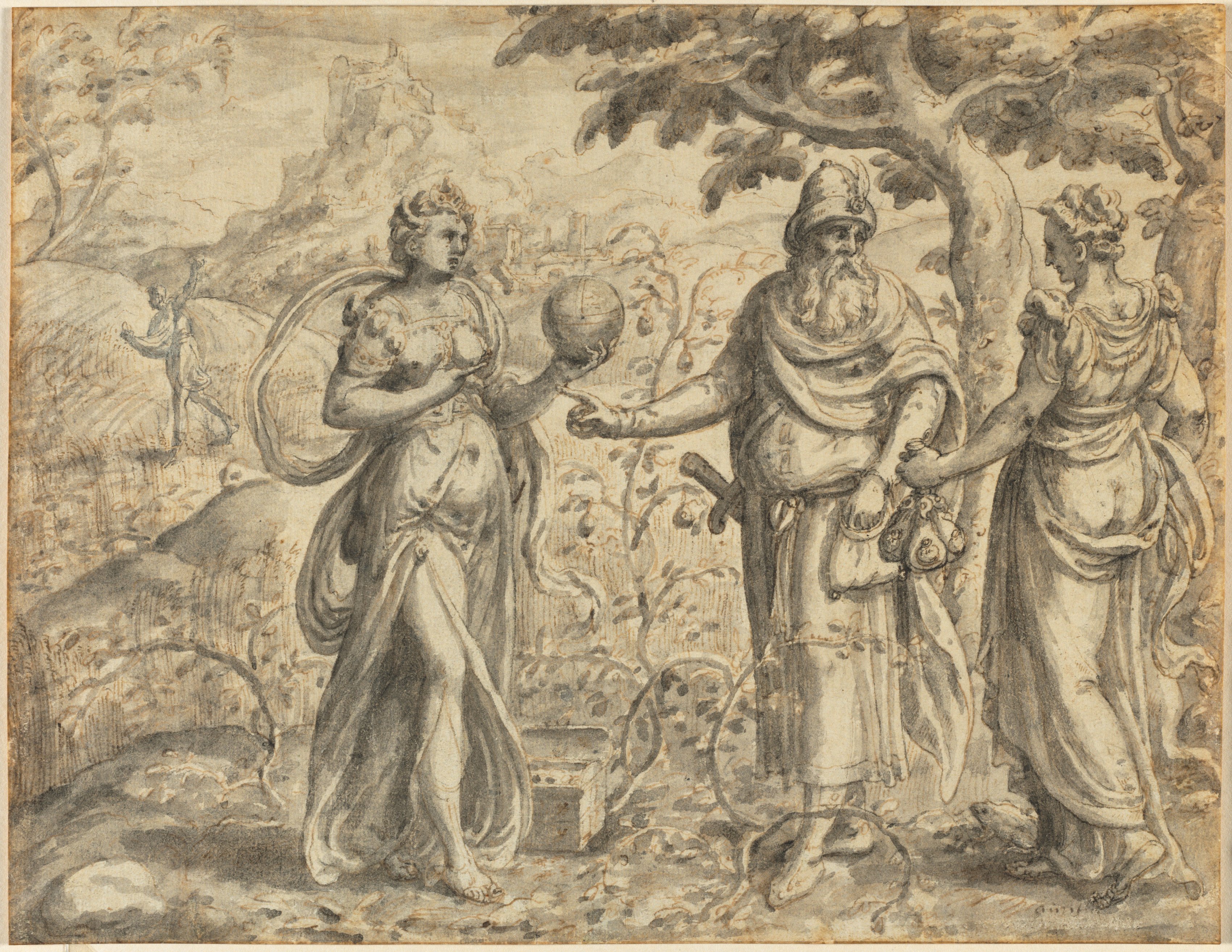
The Seed Received among the Thorns, from the Parable of the Sowerc. 1573
This design for a print is from a suite portraying the biblical parable of the sower. More about this work
About this work
This design for a print is from a suite portraying the biblical parable of the sower. The parable compares types of soil to people in the world: one hardened; one fickle; one distracted by things of the world; and one with an open heart, ready to accept God. The third sower (here, a pilgrim) distractedly throws his seeds among thorns. He is surrounded by two female personifications—Cares of the World, and Avarice (extreme greed for money). Behind them, the fourth sower successfully plants his crop. The content and its presentation exemplify the instructive tone of the period’s moral discourse.
Text from the Cleveland Museum of Art.
How it was made
- Chalk
- Natural black, red and white chalks. Used together on toned paper they could give the warmth of flesh with very little effort, and they were favourites for studies from life.
- Pen and ink
- Drawn with a quill or reed pen, often with wash added by brush to model light and shadow.
- Laid paper
- Handmade on a mould of close-set wires, which leave fine parallel lines you can see when the sheet is held to the light.
Gerard P. van Groningen
Netherlandish, active late 1500s
Rights and the museum’s record
Public domain. The Cleveland Museum of Art has dedicated this image to the public domain under CC0, so anyone may copy, adapt and use it, for any purpose, without asking. Our prints and files are reproductions made from the museum’s image; the museum doesn’t endorse them.
- Object number
- 2012.4
- Credit
- Courtesy of the Cleveland Museum of Art
- Type
- Drawing
- Department
- Drawings
- Licence
- CC0 1.0 Universal
- Museum record
- See it on the museum’s site
Report this work
Close in colour