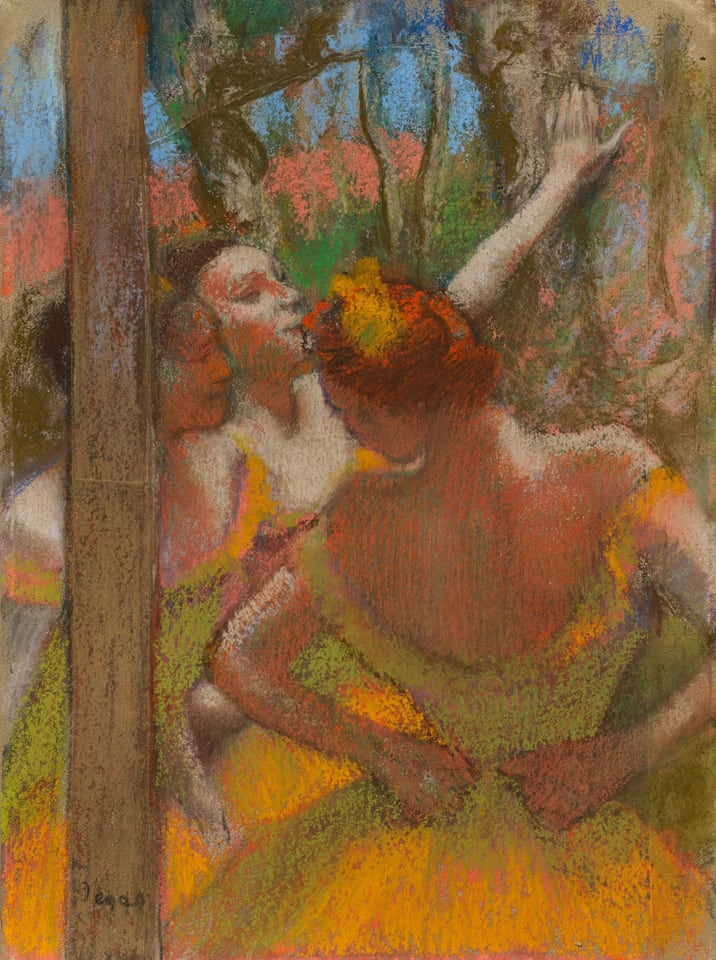
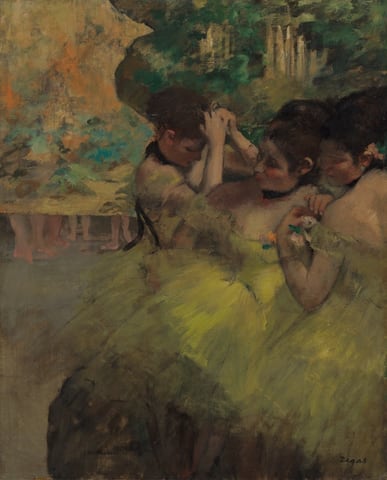
Dancersc. 1896
Degas depicted the ballet in more than 1,000 paintings, prints, pastels, and sculptures. He preferred private, offstage moments to glamorous curtain calls or artfully constructed compositions. More about this work
About this work
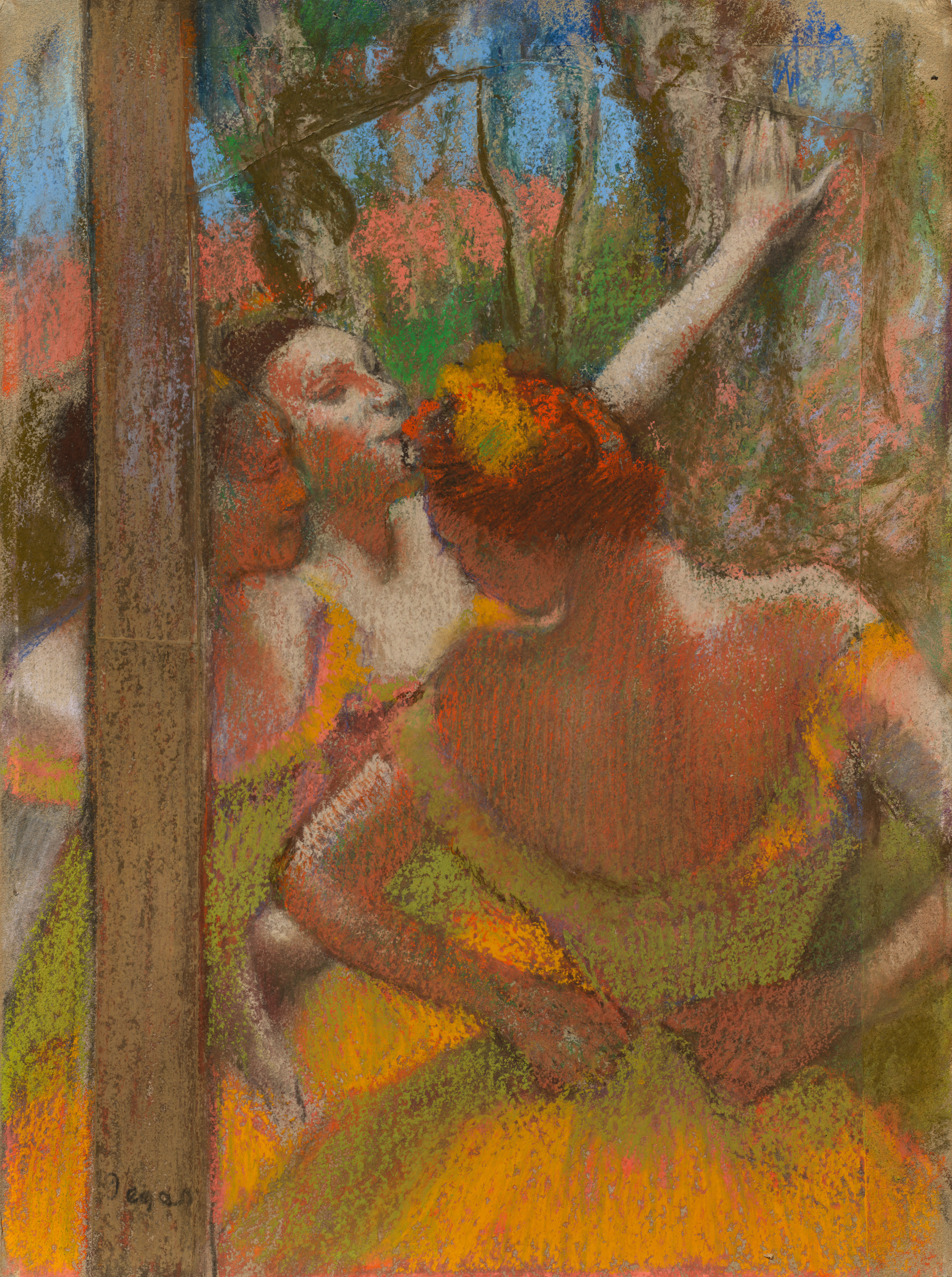
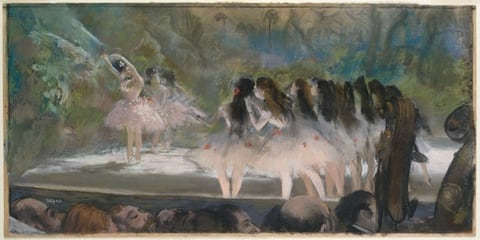
Degas depicted the ballet in more than 1,000 paintings, prints, pastels, and sculptures. He preferred private, offstage moments to glamorous curtain calls or artfully constructed compositions. Here, three dancers stretch together in the wings, unaware of the viewer’s presence. Powdery layers of yellow, orange, and pink pastel create a rough surface characteristic of Degas’s late work in the medium. He invented special techniques that allowed him to build layer upon layer of color with varying degrees of opacity and transparency. This pastel’s rich surface and intense, vibrating palette is the result of such innovative methods.
Text from the Cleveland Museum of Art.
How it was made
- Pastel
- Sticks of almost pure pigment with very little binder. The colour sits on the paper as powder: bright, matte and fragile.
- Charcoal
- Burnt willow or vine. It smudges and wipes away easily, which made it the natural tool for working out a composition.
Edgar Degas
French, 1834–1917 · Born and died in Paris.
Degas trained in the academic tradition, admired Ingres and spent three years in Italy copying earlier art, but turned to modern Paris for his subjects: dancers, racecourses, laundresses, milliners and café singers. He helped organise the Impressionist exhibitions and showed in all but one, yet preferred to call himself a realist. Working from drawing and memory rather than outdoors, he composed with unexpected cropping and viewpoints, and in later years worked mostly in pastel as his eyesight failed.
Written by Ochre Editions.
Impressionism
Painters in 1870s Paris who worked quickly, often outdoors, to catch light as it changed.
Rights and the museum’s record
Public domain. The Cleveland Museum of Art has dedicated this image to the public domain under CC0, so anyone may copy, adapt and use it, for any purpose, without asking. Our prints and files are reproductions made from the museum’s image; the museum doesn’t endorse them.
- Object number
- 1916.1043
- Credit
- Courtesy of the Cleveland Museum of Art
- Type
- Drawing
- Department
- Drawings
- Licence
- CC0 1.0 Universal
- Museum record
- See it on the museum’s site
Report this work
More by Edgar Degas
All their works
Close in colour