The Italian Settecento
Venetian views, Roman ruins and grand decoration in eighteenth-century Italy.
First room, north wall
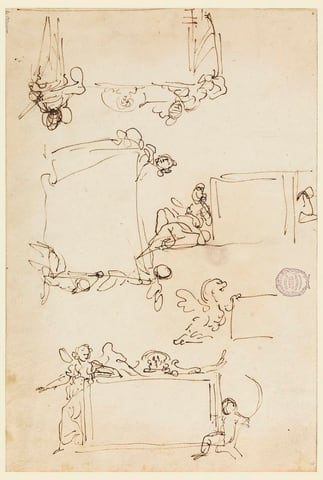
Sketches for a tabletCarlo Marchionni, ca. 1750Courtesy of Cooper Hewitt, Smithsonian Design Museum 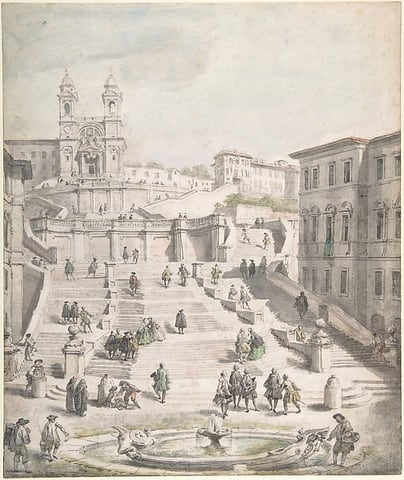
Scalinata della Trinità dei MontiGiovanni Paolo Panini, ca. 1756–58Courtesy of The Metropolitan Museum of Art 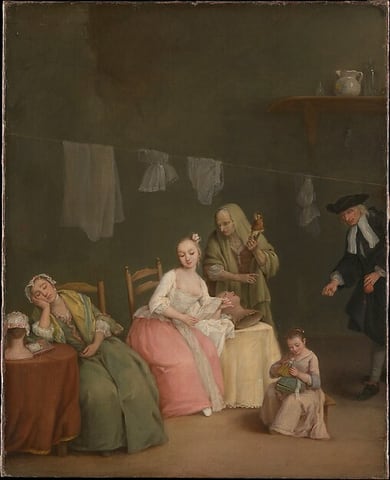
The LetterPietro Longhi, 1746Courtesy of The Metropolitan Museum of Art
First room, south wall
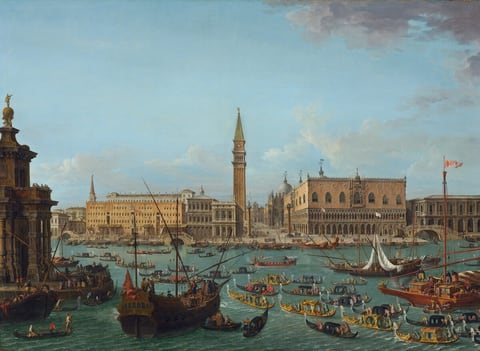
Procession of Gondolas in the Bacino di San Marco, VeniceAntonio Joli, 1742 or afterCourtesy National Gallery of Art, Washington 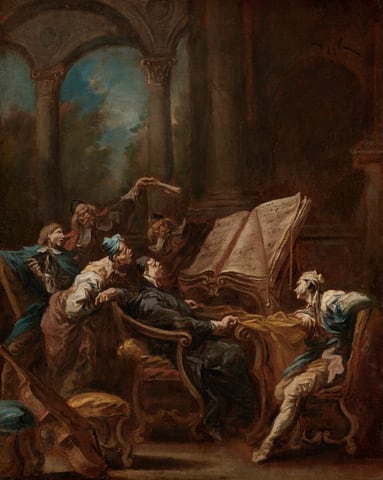
The ChoristersAlessandro Magnasco, c. 1740/1745Courtesy National Gallery of Art, Washington 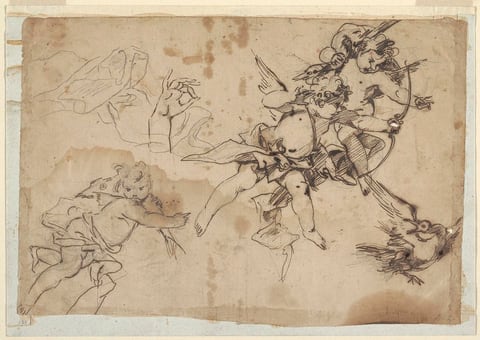
Study for a Painting on Theme of CallistoFilippo Falciatore, ca. 1750Courtesy of Cooper Hewitt, Smithsonian Design Museum
Second room, south wall
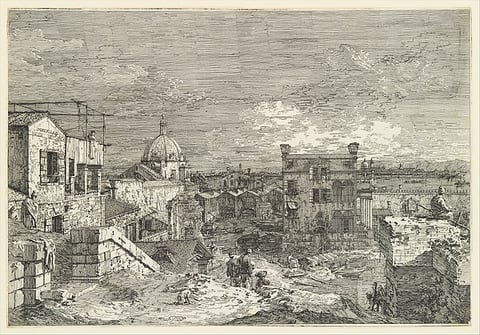
Imaginary View of Venice, houses at left with figures on terraces, a domed church at center in the background, boats and boat-sheds below, and a seated man observing from a wall at right in the foreground, from "Views" (Vedute altre prese da i luoghi altre ideate da Antonio Canal)Canaletto, 1741Courtesy of The Metropolitan Museum of Art 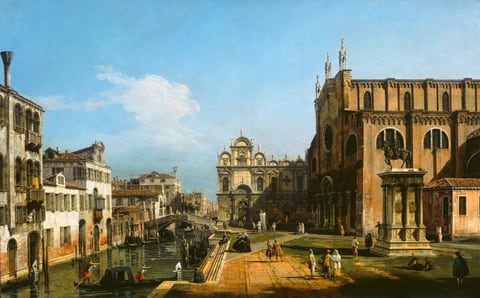
The Campo di SS. Giovanni e Paolo, VeniceBernardo Bellotto, 1743/1747Courtesy National Gallery of Art, Washington 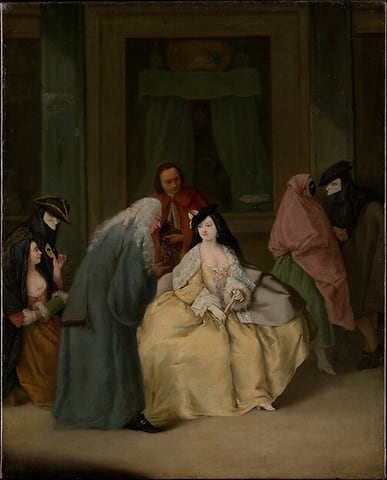
The MeetingPietro Longhi, 1746Courtesy of The Metropolitan Museum of Art
Second room, north wall
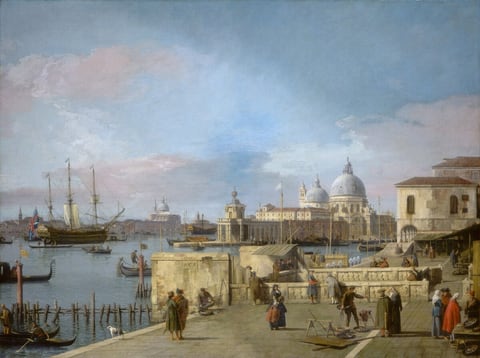
Entrance to the Grand Canal from the Molo, VeniceCanaletto, 1742/1744Courtesy National Gallery of Art, Washington 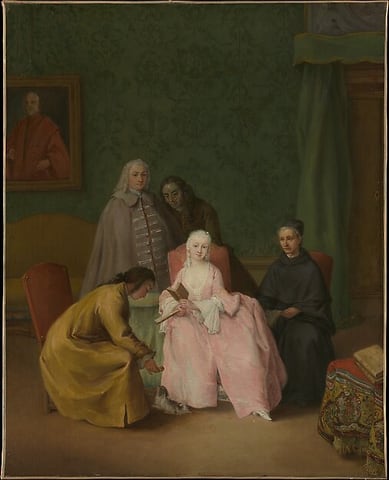
The VisitPietro Longhi, 1746Courtesy of The Metropolitan Museum of Art
Third room, north wall
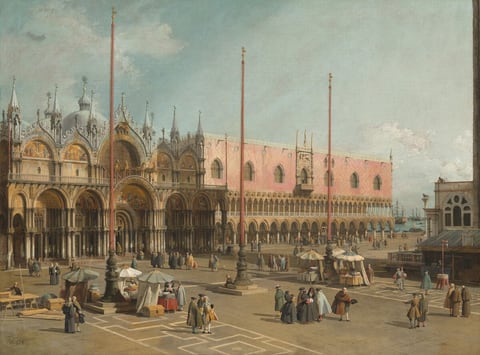
The Square of Saint Mark's, VeniceCanaletto, 1742/1744Courtesy National Gallery of Art, Washington 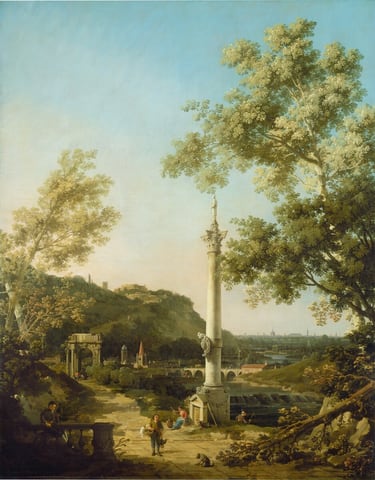
English Landscape Capriccio with a ColumnCanaletto, c. 1754Courtesy National Gallery of Art, Washington 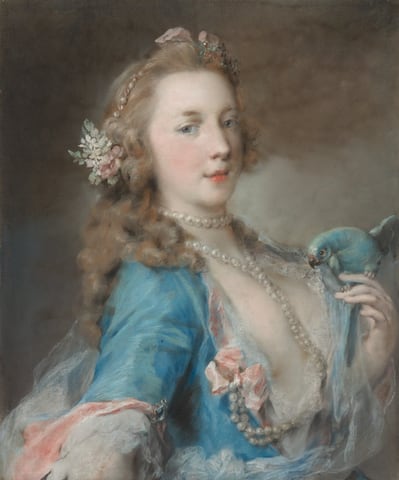
A Young Lady with a ParrotRosalba Carriera, c. 1730Courtesy of the Art Institute of Chicago
Third room, south wall
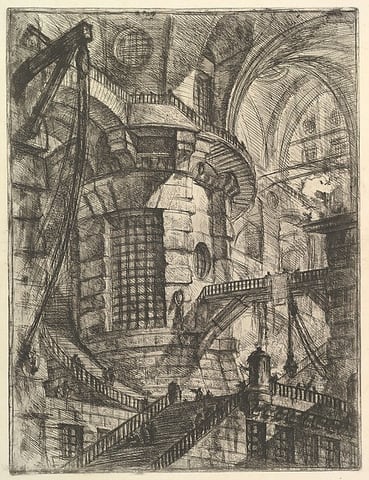
The Round Tower, from "Carceri d'invenzione" (Imaginary Prisons)Giovanni Battista Piranesi, ca. 1749–50Courtesy of The Metropolitan Museum of Art 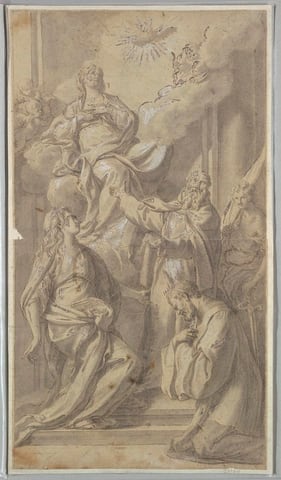
Madonna and SaintsSebastiano Conca, ca. 1730Courtesy of Cooper Hewitt, Smithsonian Design Museum