Skip to content
Ochre Editions
ArtArtistsCollectionsGalleriesDrops
SearchSign inCart (0)
The galleries · Style galleries

Drawings of the 16th century

Drawings made in the 16th century, from every museum.

35 works · hang 992 ·

Share Drawings of the 16th century, in the galleries

The rooms are imagined; every work on their walls is real.

Walk this roomRehang this room

Section 1, north wall

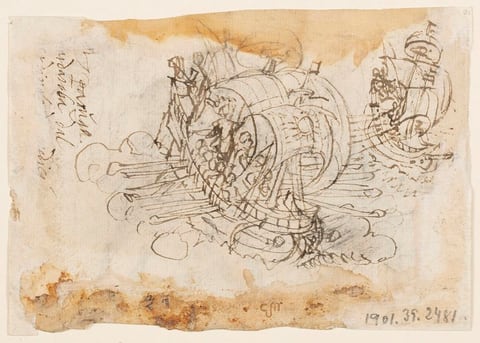
  1. TWO GALLEYS AT SEA
    Two Galleys at SeaJan van der Straet, called Stradanus, ca. 1587 – 1590Courtesy of Cooper Hewitt, Smithsonian Design Museum
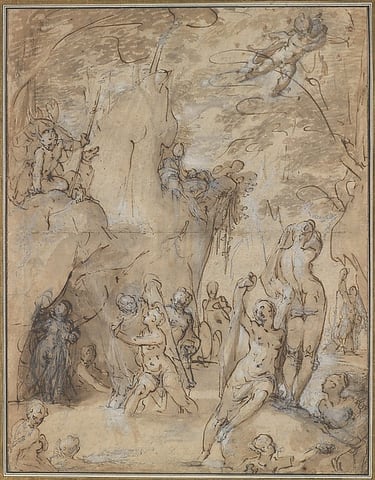
  2. Diana and Actaeon, by Bartholomeus Spranger, ca. 1580–85
    Diana and ActaeonBartholomeus Spranger, ca. 1580–85Courtesy of The Metropolitan Museum of Art
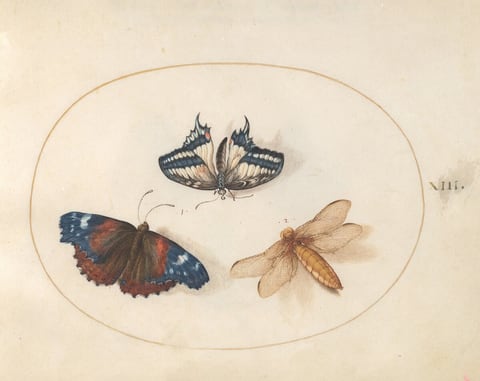
  3. Three insects are depicted in the image: a butterfly with dark blue and red wings on the bottom left, a larger butterfly with white, black, and blue patterns at the top center, and a dragonfly with brown and gold tones on the bottom right. The color palette includes rich blues, reds, browns, and golds against a neutral background. The central butterfly is positioned higher than the other two insects, with the left butterfly and right dragonfly symmetrically arranged below.
    Plate 13: Yellow Swallowtail and Red Admiral Butterflies with a Dragonfly (Broad-Bodied Chaser?)Joris Hoefnagel, c.1575/1590sCourtesy National Gallery of Art, Washington

Section 1, south wall
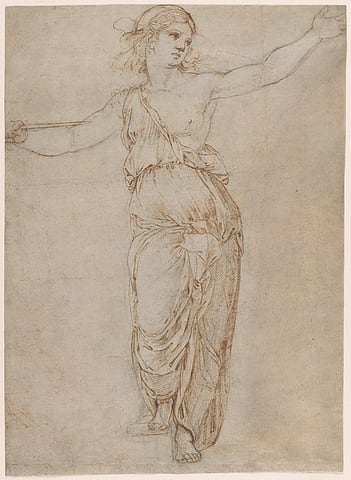
  1. Lucretia, by Raphael, 1508–10
    LucretiaRaphael, 1508–10Courtesy of The Metropolitan Museum of Art
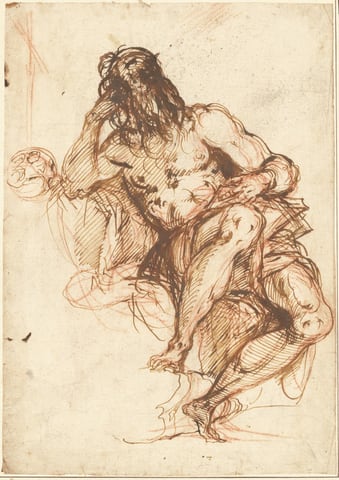
  2. The image shows a sketch of a seated bearded figure holding an orb. The figure appears muscular, with a beard merging into long hair. The face is not detailed, and draped fabric covers part of the body. There is no jewelry, and the background is plain.
    Saint JeromeAlessandro Vittoria, 1565/1570Courtesy National Gallery of Art, Washington
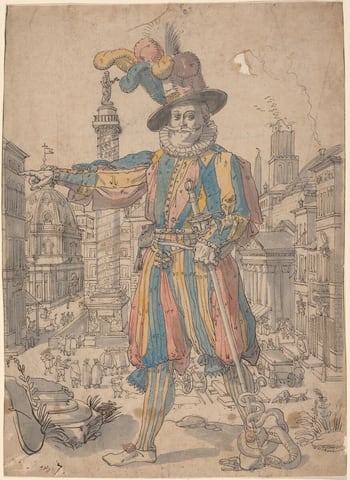
  3. The artwork features a person standing prominently in front of an architectural scene. The individual has one arm extended out to the side, pointing with a gloved hand. The other hand holds a staff with a snake wrapped around it. The person has a stern facial expression, a beard and mustache, and wears a large hat with colorful feathers. They are dressed in a colorful suit with vertical stripes in red, blue, and yellow, paired with a ruffled collar and cuffs. The person also has an oversized sword at their hip. In the background, there is a Renaissance-style cityscape with architectural elements, people, and horse-drawn carriages.
    Giovanni Grosso of the Swiss Guards Standing before a View of RomeUnrecorded Swiss makerCourtesy National Gallery of Art, Washington

Section 2, south wall
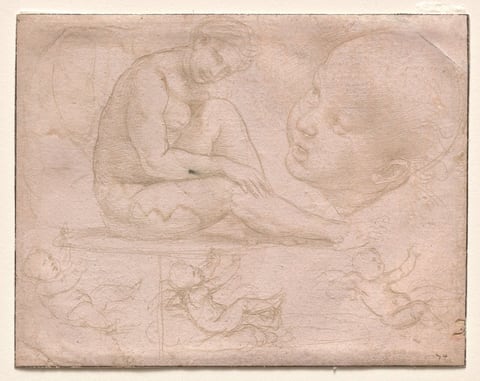
  1. Studies of a Seated Female, Child's Head, and Three Studies of a Baby, by Raphael, c. 1507–8
    Studies of a Seated Female, Child's Head, and Three Studies of a BabyRaphael, c. 1507–8Courtesy of the Cleveland Museum of Art
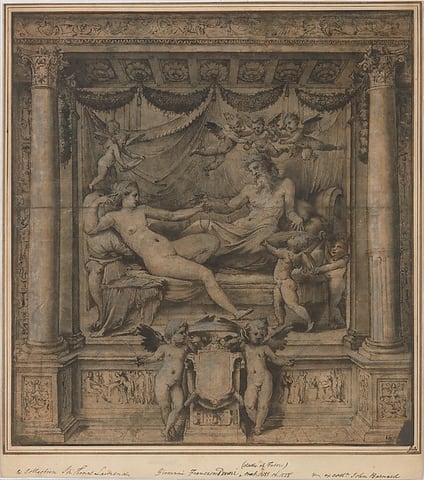
  2. Jupiter and Juno: Study for the "Furti di Giove" Tapestries, by Perino del Vaga (Pietro Buonaccorsi), ca. 1532–35
    Jupiter and Juno: Study for the "Furti di Giove" TapestriesPerino del Vaga (Pietro Buonaccorsi), ca. 1532–35Courtesy of The Metropolitan Museum of Art
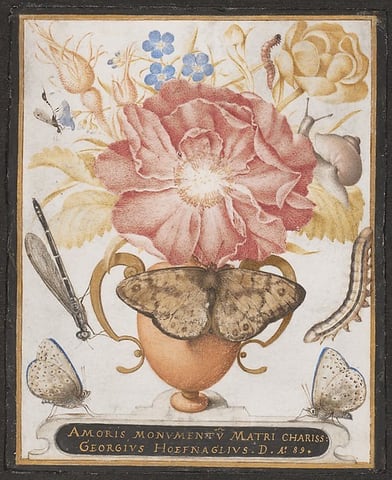
  3. Still Life with Flowers, a Snail and Insects, by Joris Hoefnagel, 1589
    Still Life with Flowers, a Snail and InsectsJoris Hoefnagel, 1589Courtesy of The Metropolitan Museum of Art

Section 2, north wall
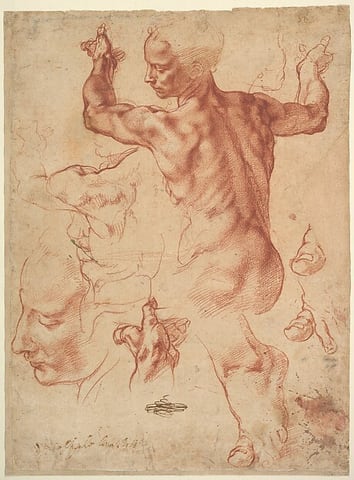
  1. Studies for the Libyan Sibyl (recto); Studies for the Libyan Sibyl and a small Sketch for a Seated Figure (verso), by Michelangelo Buonarroti, ca. 1510–11
    Studies for the Libyan Sibyl (recto); Studies for the Libyan Sibyl and a small Sketch for a Seated Figure (verso)Michelangelo Buonarroti, ca. 1510–11Courtesy of The Metropolitan Museum of Art
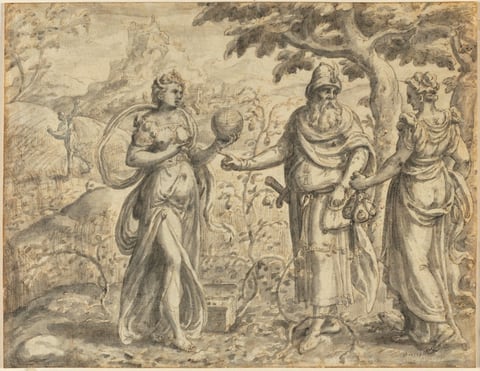
  2. The Seed Received among the Thorns, from the Parable of the Sower, by Gerard P. van Groningen, c. 1573
    The Seed Received among the Thorns, from the Parable of the SowerGerard P. van Groningen, c. 1573Courtesy of the Cleveland Museum of Art
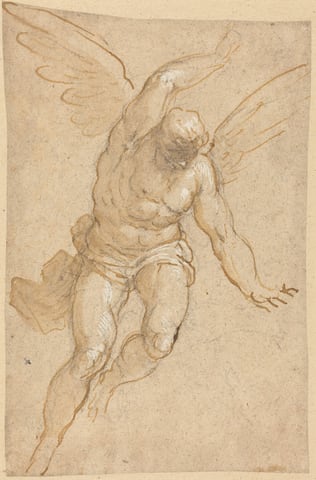
  3. The image shows a human figure with wings positioned as though in flight. The figure is captured from a slightly frontal perspective, with the head turned downwards and the right arm outstretched. The facial features are undefined, focusing more on the body's muscular structure. The figure wears a cloth or drapery around the waist and has well-defined muscles on the chest, arms, and legs. Large wings extend out behind the figure, adding to the sense of flight. The background is plain with a light texture.
    A Flying AngelJacopo Palma il Giovane, 1580/1590Courtesy National Gallery of Art, Washington

Section 3, north wall
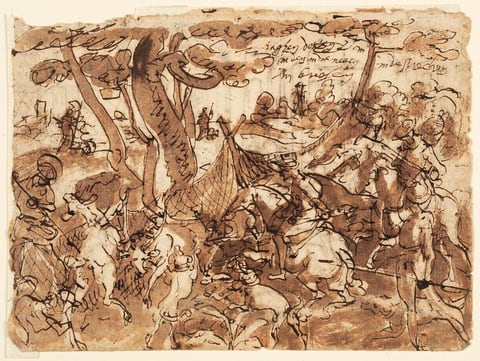
  1. DEER HUNT WITH NETS
    Deer Hunt with NetsJan van der Straet, called Stradanus, ca. 1590 – 1599Courtesy of Cooper Hewitt, Smithsonian Design Museum
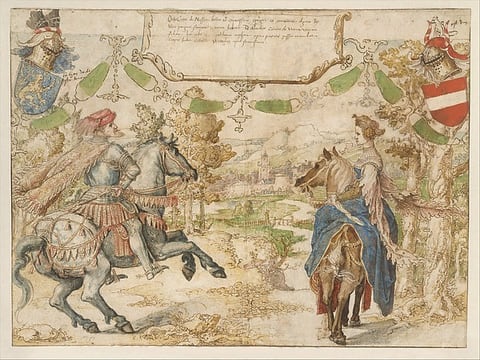
  2. Otto, Count of Nassau and his Wife Adelheid van Vianen, by Bernard van Orley, 1530–35
    Otto, Count of Nassau and his Wife Adelheid van VianenBernard van Orley, 1530–35Courtesy of The Metropolitan Museum of Art

Section 3, south wall
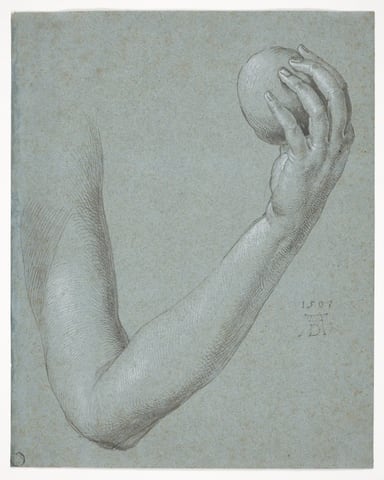
  1. Arm of Eve, by Albrecht Dürer, 1507
    Arm of EveAlbrecht Dürer, 1507Courtesy of the Cleveland Museum of Art
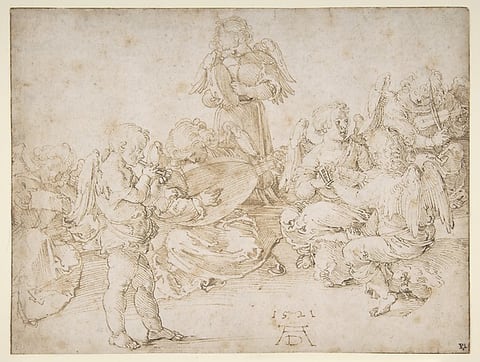
  2. Music-Making Angels, by Albrecht Dürer, 1521
    Music-Making AngelsAlbrecht Dürer, 1521Courtesy of The Metropolitan Museum of Art

Walk on

  • Drawings of the 16th century, room 2
  • More by Albrecht Dürer 8 works
  • 16th-century Germany 28 works
Ochre Editions

The world's museums, on your wall. Every work here is a reproduction of a public-domain original, credited to the museum that holds it.

Shop

All artCollectionsLimited dropsPrints and framing

Help

Find an orderShippingReturnsVerify a certificate

About

About Ochre EditionsMuseum creditsFor agentsDevelopers

Legal

Terms of UseTerms of SaleLimited Editions and CertificatesPrivacy PolicyCookie PolicyAcceptable Use PolicyAgent & API TermsCopyright and DMCA PolicyPrinting Your Own PhotoVulnerability Disclosure PolicyAccessibility StatementOpen-Access Credits
© 2026 Ochre EditionsPrices in US dollars. Prints ship within the United States.