Lucretia1508–10
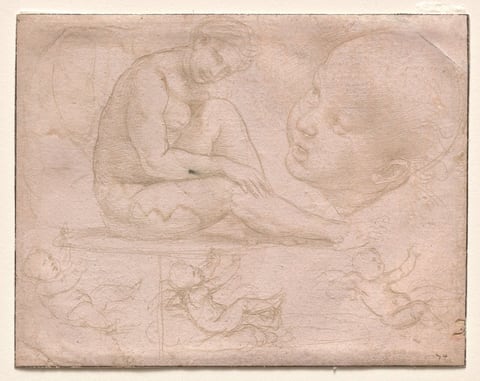
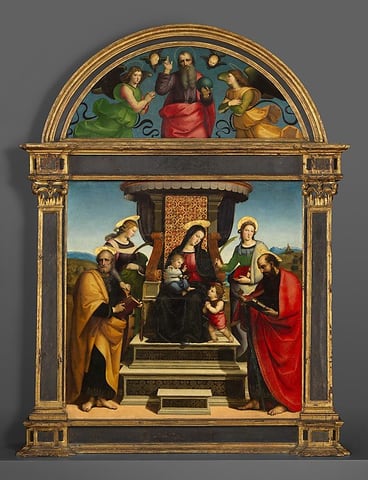
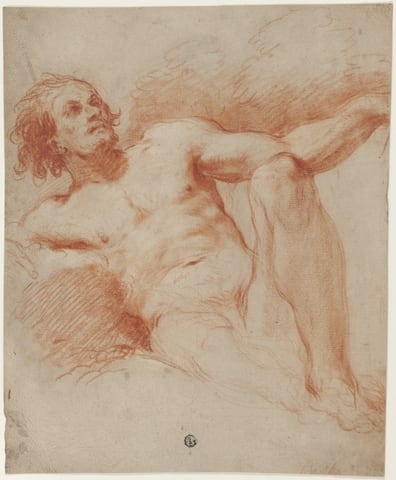
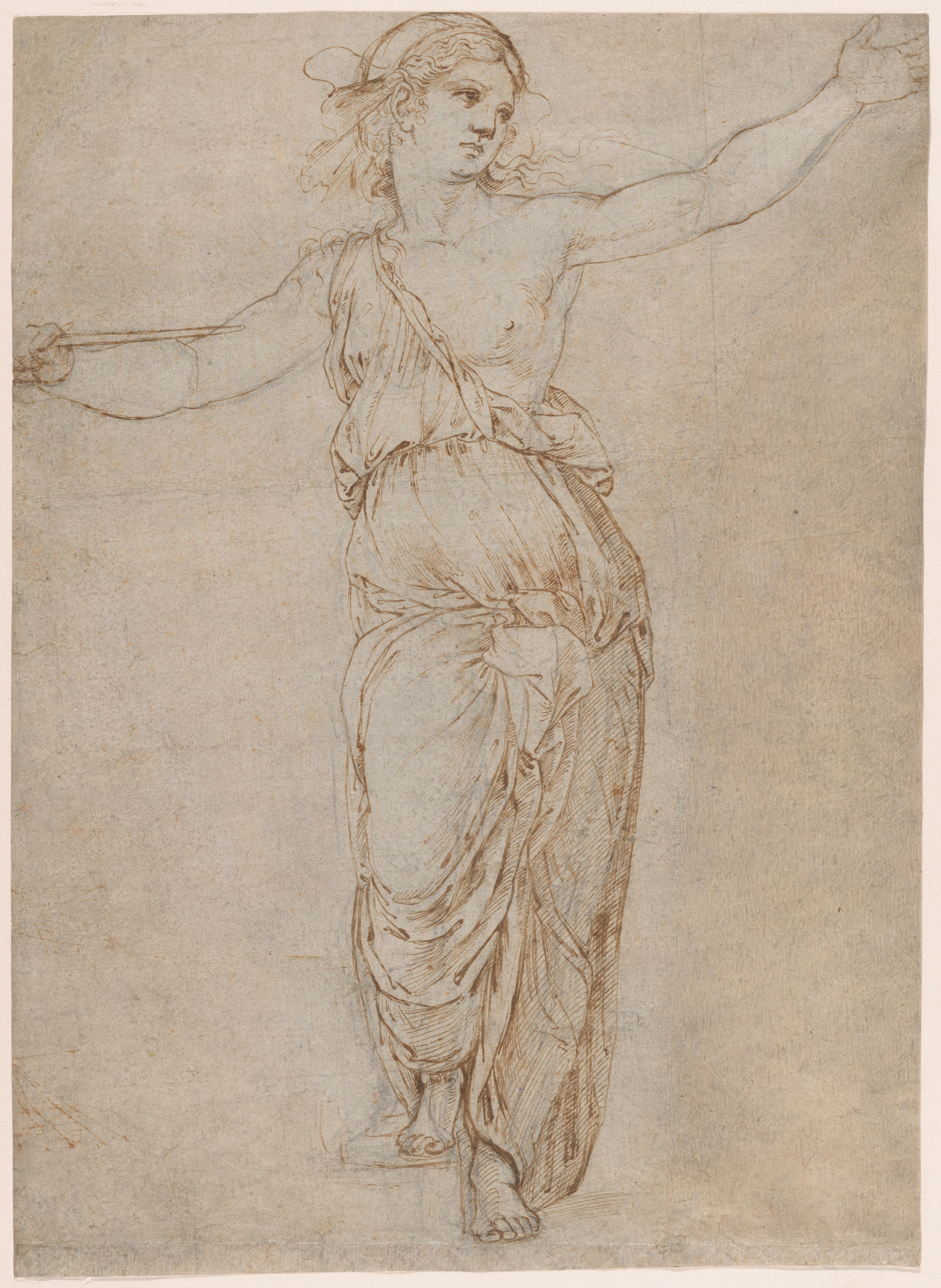
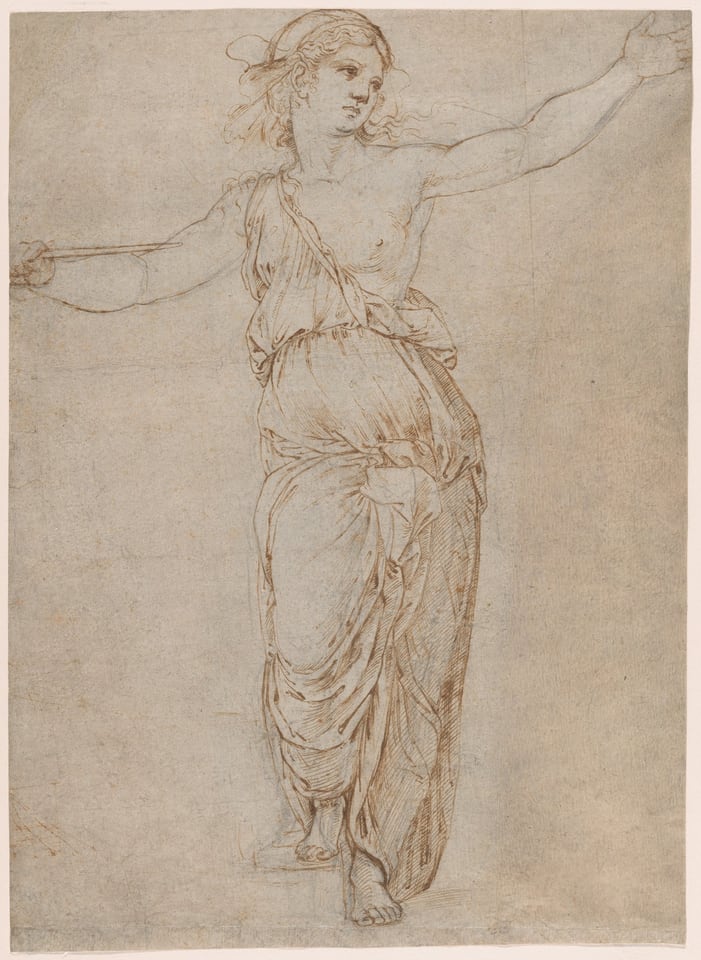
Lucretia, the Roman noblewoman who took her own life after being raped by the king’s son, an act that led to the founding of the Roman Republic, raises a dagger to her breast. More about this work
About this work
Lucretia, the Roman noblewoman who took her own life after being raped by the king’s son, an act that led to the founding of the Roman Republic, raises a dagger to her breast. Raphael drew her in pen and ink over black chalk around 1508–10, soon after arriving in Rome, basing the figure on ancient sculpture. The outlines are incised with a stylus and the back of the sheet is rubbed with chalk, showing that the design was transferred, most likely for the engraver Marcantonio Raimondi, whose print after it helped spread Raphael’s inventions across Europe.
Written by Ochre Editions.
How it was made
- Chalk
- Natural black, red and white chalks. Used together on toned paper they could give the warmth of flesh with very little effort, and they were favourites for studies from life.
- Pen and ink
- Drawn with a quill or reed pen, often with wash added by brush to model light and shadow.
Raphael
Italian, 1483–1520 · Born in Urbino; died in Rome.
Raphael trained in Urbino and in Perugino’s orbit, absorbed the lessons of Leonardo and Michelangelo in Florence from 1504, and in 1508 was called to Rome by Pope Julius II. There he painted the frescoes of the papal apartments, including The School of Athens, and under Leo X directed the decoration of the Vatican Loggia, designed tapestries for the Sistine Chapel and took charge of building St Peter’s. His balanced compositions became the model of classical art for centuries. He died at thirty-seven.
Written by Ochre Editions.
Rights and the museum’s record
Public domain. The Met has dedicated this image to the public domain under CC0, so anyone may copy, adapt and use it, for any purpose, without asking. Our prints and files are reproductions made from the museum’s image; the museum doesn’t endorse them.
- Object number
- 1997.153
- Credit
- Courtesy of The Metropolitan Museum of Art
- Type
- Drawings
- Department
- Drawings and Prints
- Licence
- CC0 1.0 Universal
- Museum record
- See it on the museum’s site