Renaissance
European art from about 1400 to 1600, when painters rediscovered perspective and the classical past.
Section 1, north wall
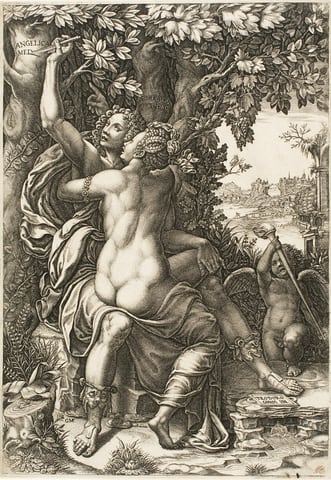
Angelica and MedoroGiorgio Ghisi, c. 1570Courtesy of the Art Institute of Chicago 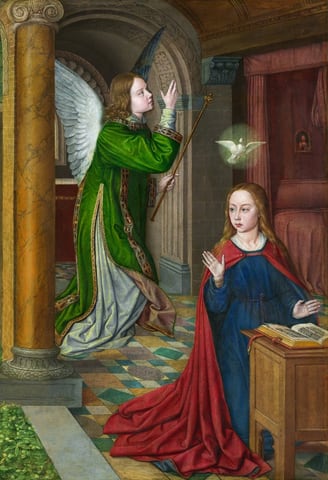
The AnnunciationJean Hey (called Master of Moulins), 1490–95Courtesy of the Art Institute of Chicago 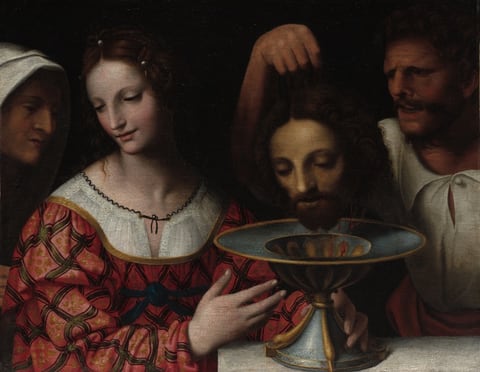
Salome with the Head of Saint John the BaptistBernardino Luini, 1500s or laterCourtesy of the Cleveland Museum of Art 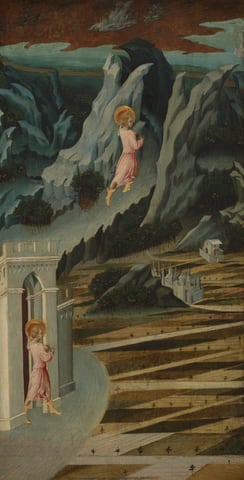
Saint John the Baptist Entering the WildernessGiovanni di Paolo, 1455–60Courtesy of the Art Institute of Chicago
Section 1, south wall
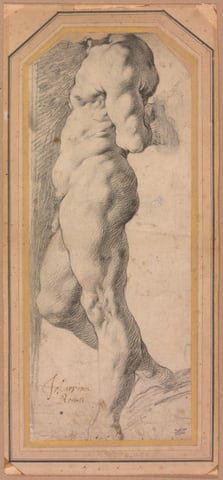
Study of a Standing Male NudeGiuseppe Cesari, called Cavaliere d'Arpino, 1595/96Courtesy of the Art Institute of Chicago 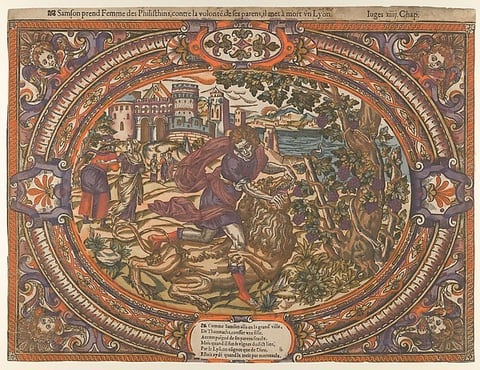
Samson and the Lion, from "The Story of Samson"Unrecorded French maker, ca. 1560–80Courtesy of The Metropolitan Museum of Art 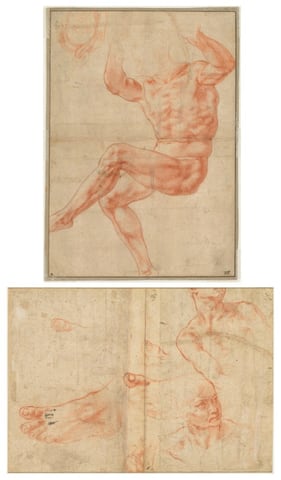
Study for the Nude Youth over the Prophet Daniel (recto); Figure Studies for the Sistine Ceiling (verso)Michelangelo Buonarroti, 1510–11Courtesy of the Cleveland Museum of Art 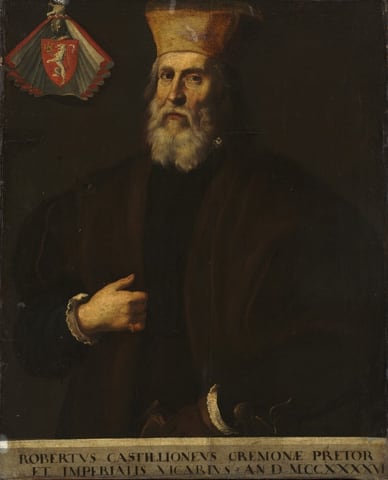
Portrait of Roberto CastiglioneUnrecorded Italian maker, early 1600sCourtesy of the Cleveland Museum of Art
Section 2, south wall
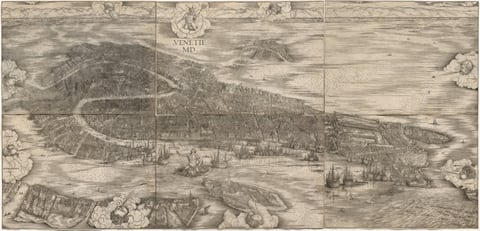
View of VeniceJacopo de' Barbari, 1500Courtesy of the Cleveland Museum of Art 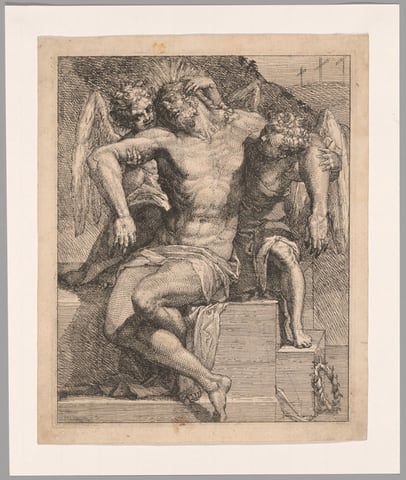
Dead Christ Held by AngelsOrazio Samacchini, 1580/1620Courtesy of the Art Institute of Chicago 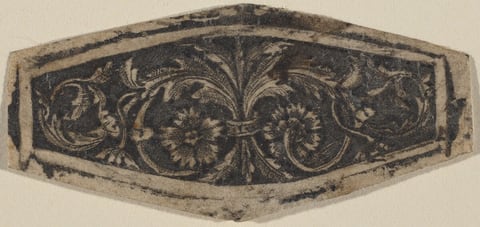
Ornament in Hexagonal ShapeUnrecorded Italian maker, c. 1480/1510Courtesy National Gallery of Art, Washington
Section 2, north wall
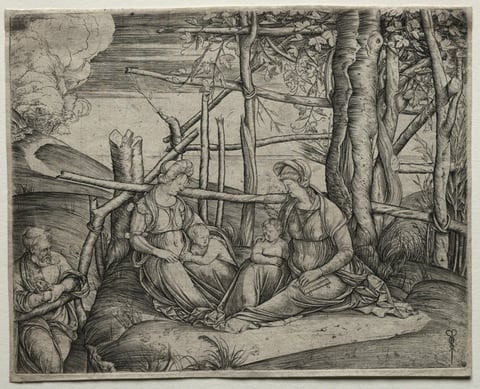
The Holy Family with Saint ElizabethJacopo de' Barbari, c. 1503Courtesy of the Cleveland Museum of Art 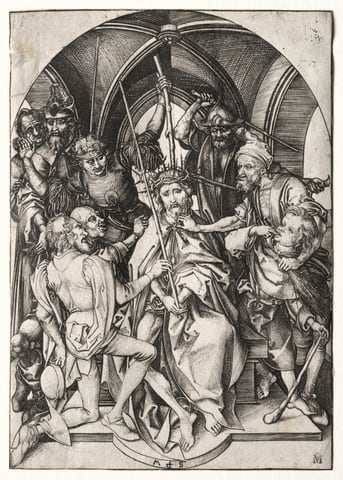
Christ Crowned with ThornsMartin Schongauer, 1470–82Courtesy of the Cleveland Museum of Art 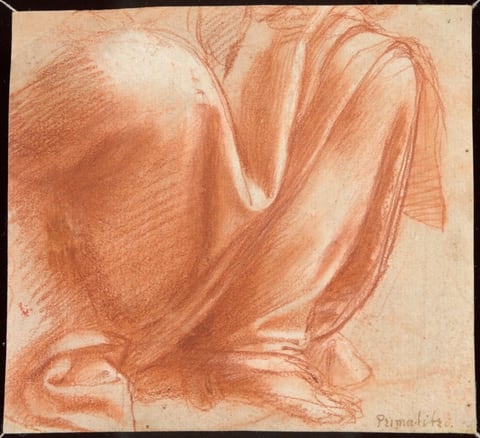
A Drapery Study for the Knees of a Seated Allegorical Figure of Charity (recto); Bust of a Naked Allegorical Figure of Charity with Two Putti (verso)Giovanni Antonio di Francesco Sogliani, 1520/30Courtesy of the Art Institute of Chicago
Section 3, north wall
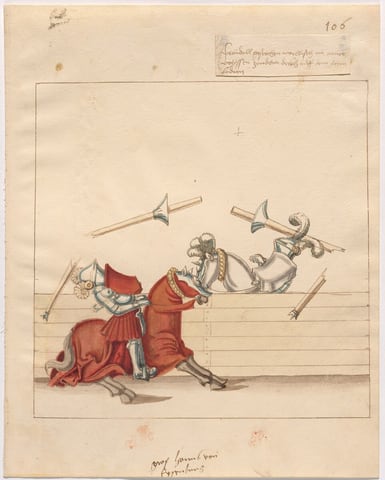
Italian Joust of PeaceUnrecorded German maker, c.1512-1515Courtesy National Gallery of Art, Washington 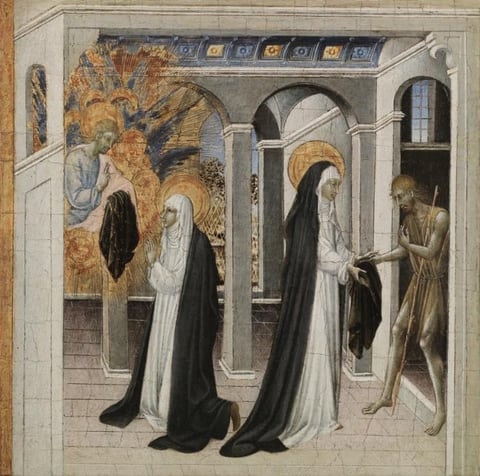
St. Catherine of Siena and the BeggarGiovanni di Paolo, 1460sCourtesy of the Cleveland Museum of Art