Unknown maker
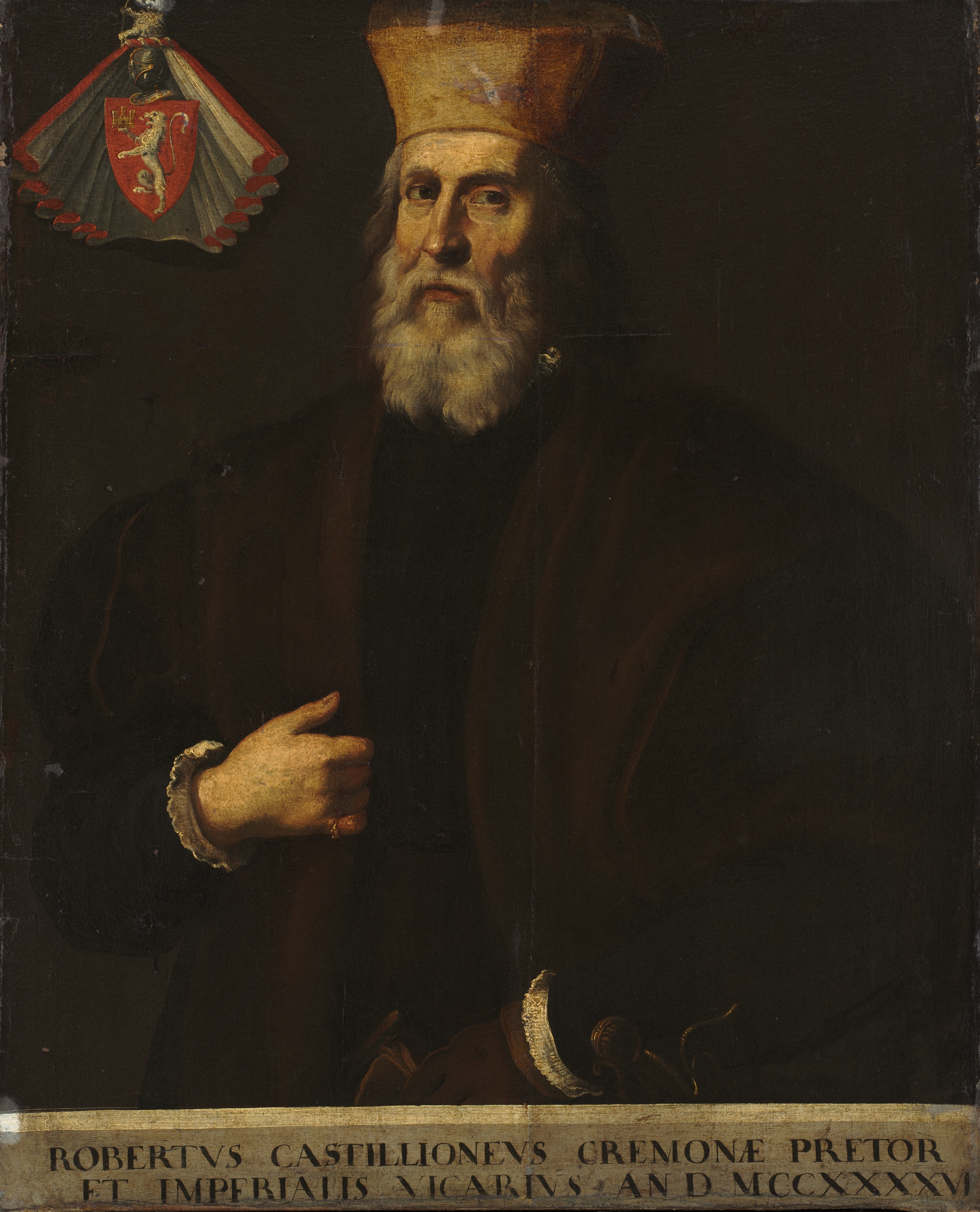
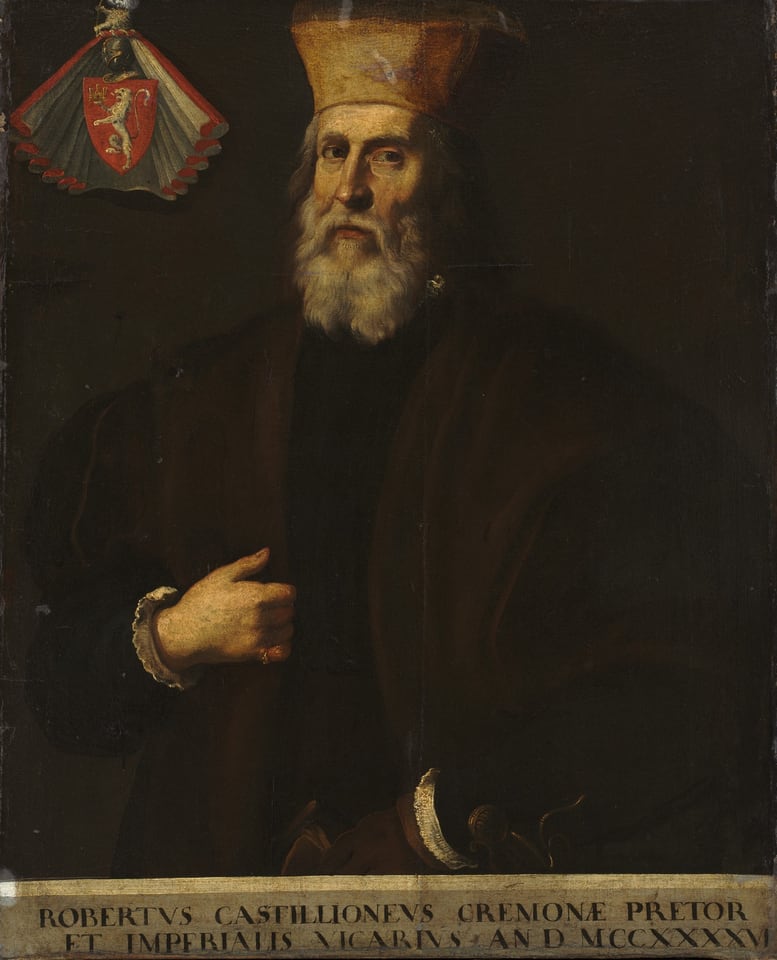
Portrait of Roberto Castiglioneearly 1600s
The inscription on the bottom of this painting identifies the sitter of this commemorative portrait as Roberto Castiglione, a magistrate and imperial vicar for the Spanish empire in the 1200s. More about this work
About this work
The inscription on the bottom of this painting identifies the sitter of this commemorative portrait as Roberto Castiglione, a magistrate and imperial vicar for the Spanish empire in the 1200s. His identity is further supported by the coat of arms in the upper left. A red shield ornamented by a lion holding a castle with three towers in his right paw, the crest belongs to the Castiglione family, which was primarily based in Milan, but had branches in Cremona as well. His gloved left hand holds a prayer book and the glove for his bare right hand, which holds back the fur trim of his mantle.
Text from the Cleveland Museum of Art.
How it was made
- Oil paint
- Pigment ground in a drying oil, usually linseed. It dries slowly, so painters could blend on the canvas, build up thin translucent glazes, and rework a picture over weeks. Canvas replaced wooden panels in the 1500s because it is lighter and can be rolled.
Renaissance
European art from about 1400 to 1600, when painters rediscovered perspective and the classical past.
Rights and the museum’s record
Public domain. The Cleveland Museum of Art has dedicated this image to the public domain under CC0, so anyone may copy, adapt and use it, for any purpose, without asking. Our prints and files are reproductions made from the museum’s image; the museum doesn’t endorse them.
- Object number
- 1916.804
- Credit
- Courtesy of the Cleveland Museum of Art
- Type
- Painting
- Department
- European Painting and Sculpture
- Licence
- CC0 1.0 Universal
- Museum record
- See it on the museum’s site