St. Catherine of Siena and the Beggar1460s
Saint Catherine (1347-1380) was the daughter of a prosperous Sienese cloth dyer. At the age of six, she saw a vision of Christ and thereafter dedicated herself to chastity, penance, and good works. More about this work
About this work
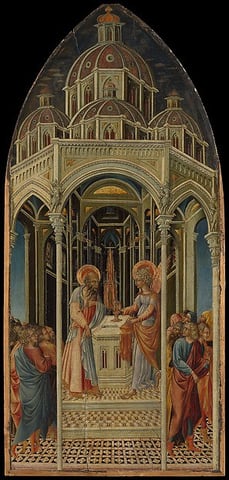
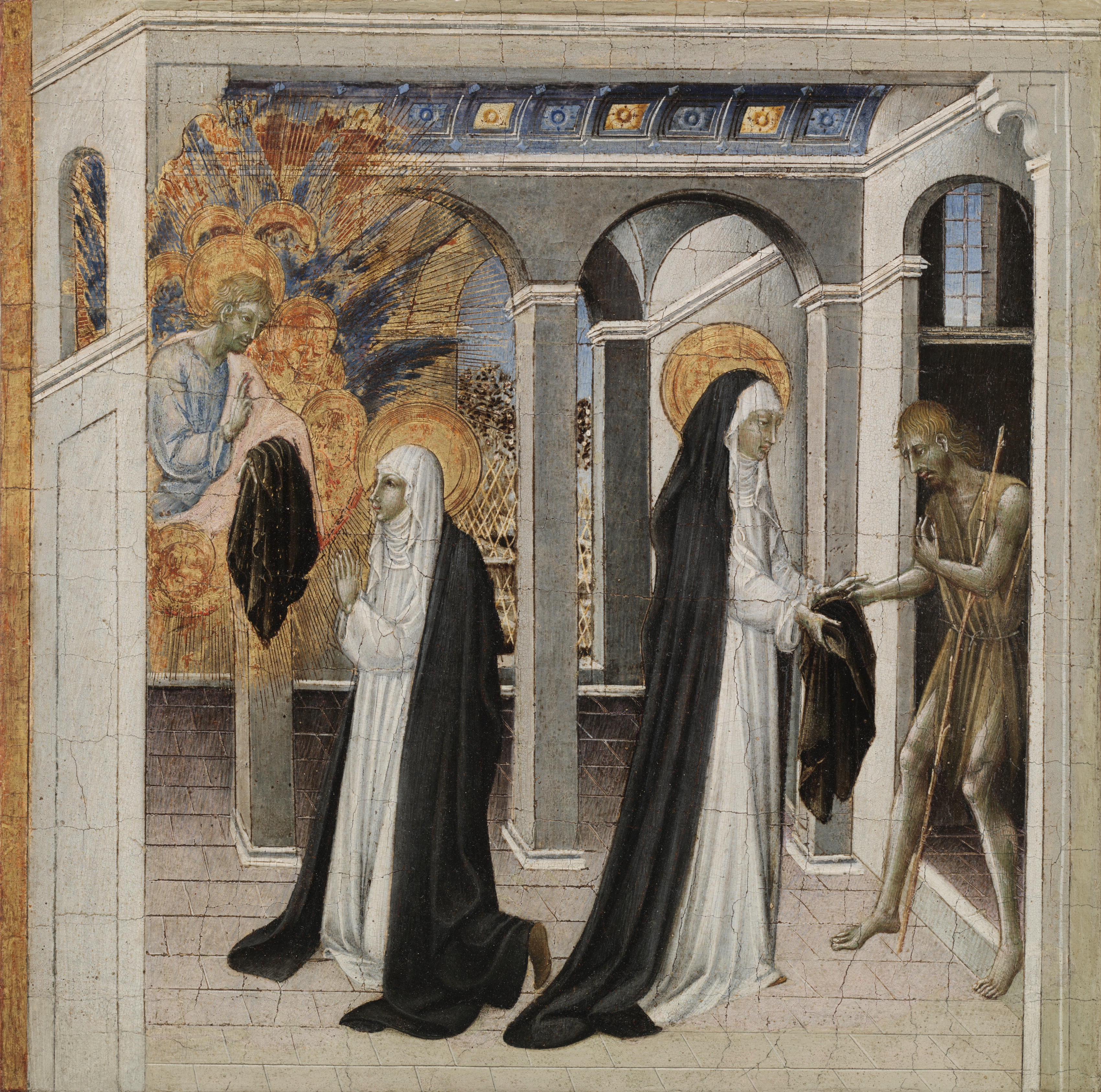
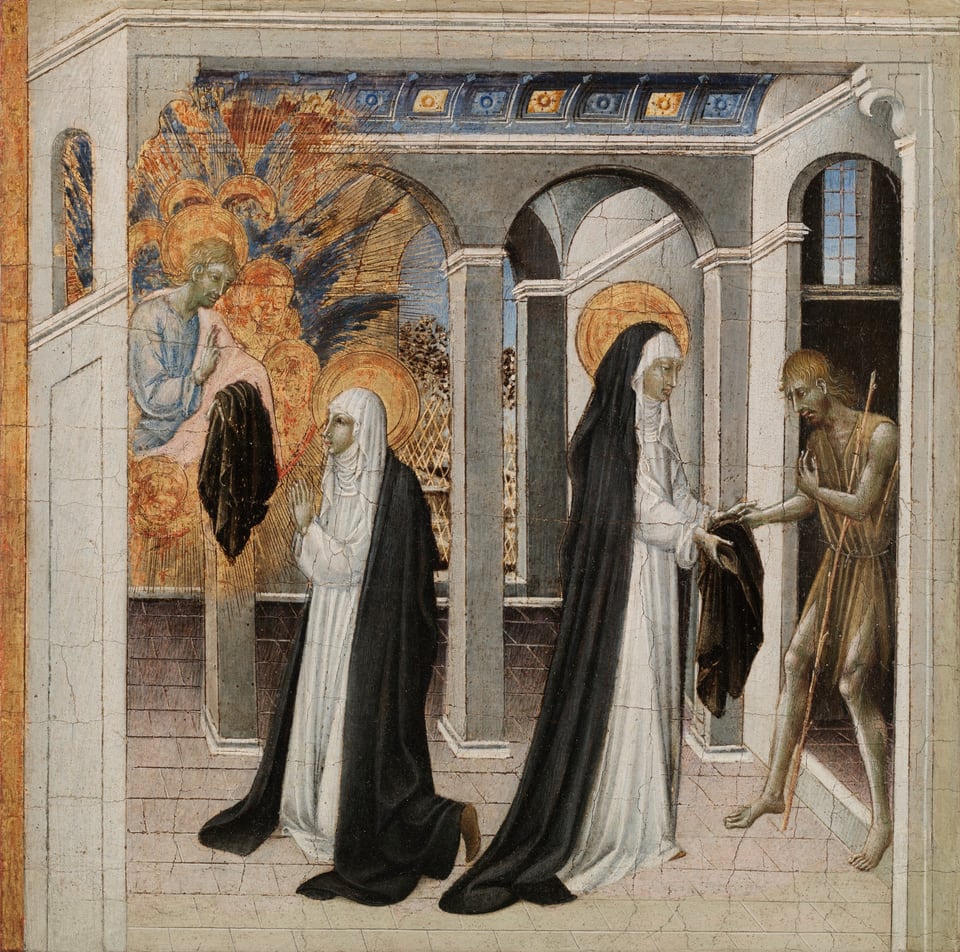
Saint Catherine (1347-1380) was the daughter of a prosperous Sienese cloth dyer. At the age of six, she saw a vision of Christ and thereafter dedicated herself to chastity, penance, and good works. She became much beloved in Siena for selflessly caring for victims of the Black Death. This panel, with 1966.2, was once part of a predella (or pedestal) of a large altarpiece painted for the Hospital Church of Siena. The main scene of this altarpiece, showing the Presentation of Christ in the Temple (now preserved in Siena) was ordered by the Pork Butchers Guild (the Pizzicaiuoli) in 1447. The predella was added later when Catherine was canonized in 1461. In the first panel, she kneels before an altar and reaches up to choose from the monastic garments offered by Saints Dominic, Augustine, and Francis, all founders of religious orders. Catherine takes the habit of Saint Dominic, which she wore as the founder of the Sisters of Penance. The second panel shows, at the right, Saint Catherine giving her cloak to a beggar. The beggar was really Christ in disguise, and at the left returns the cloak to her. For this act of charity, the cloak perpetually protected its wearer from the cold.
Text from the Cleveland Museum of Art.
How it was made
- Gold ground
- Gold leaf laid over a red clay and burnished to a mirror shine, often tooled with punches so it flickers in candlelight. Behind sacred figures it stands for heavenly light.
- Tempera
- Pigment bound with egg yolk. It dries in minutes and can’t be blended wet, so painters built up form with fine, hatched strokes. It was Europe’s main panel technique before oil.
Giovanni di Paolo
Italian, 1398–1482 · Born and died in Siena.
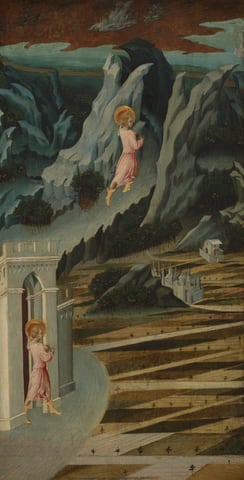
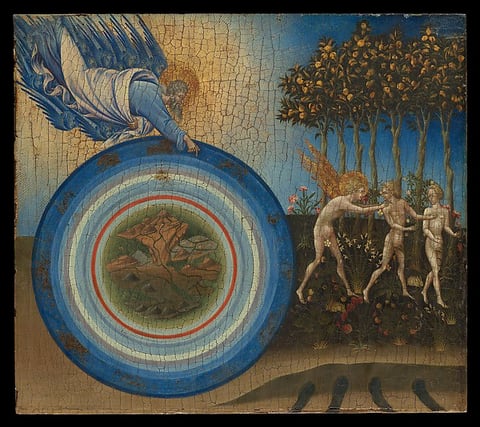
Giovanni di Paolo spent his long career in Siena, where he was one of the city’s leading painters through the fifteenth century. Holding to the Sienese tradition of gold grounds and graceful line, he created a highly personal world of slender figures, steep, patterned landscapes and vivid storytelling, seen in narrative panels such as Saint John the Baptist Entering the Wilderness and The Creation of the World and the Expulsion from Paradise.
Written by Ochre Editions.
Renaissance
European art from about 1400 to 1600, when painters rediscovered perspective and the classical past.
Rights and the museum’s record
Public domain. The Cleveland Museum of Art has dedicated this image to the public domain under CC0, so anyone may copy, adapt and use it, for any purpose, without asking. Our prints and files are reproductions made from the museum’s image; the museum doesn’t endorse them.
- Object number
- 1966.3
- Credit
- Courtesy of the Cleveland Museum of Art
- Type
- Painting
- Department
- Medieval Art
- Licence
- CC0 1.0 Universal
- Museum record
- See it on the museum’s site