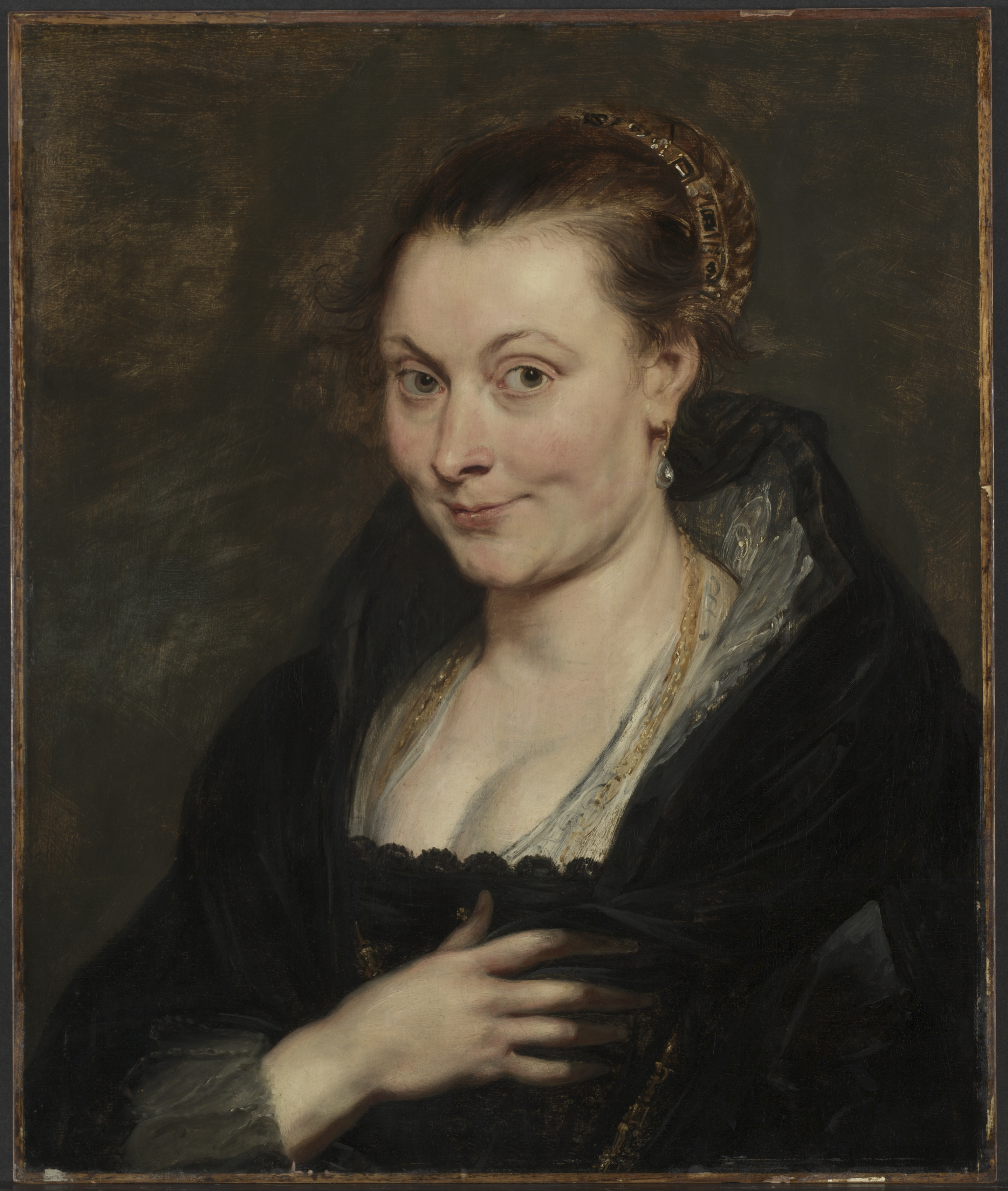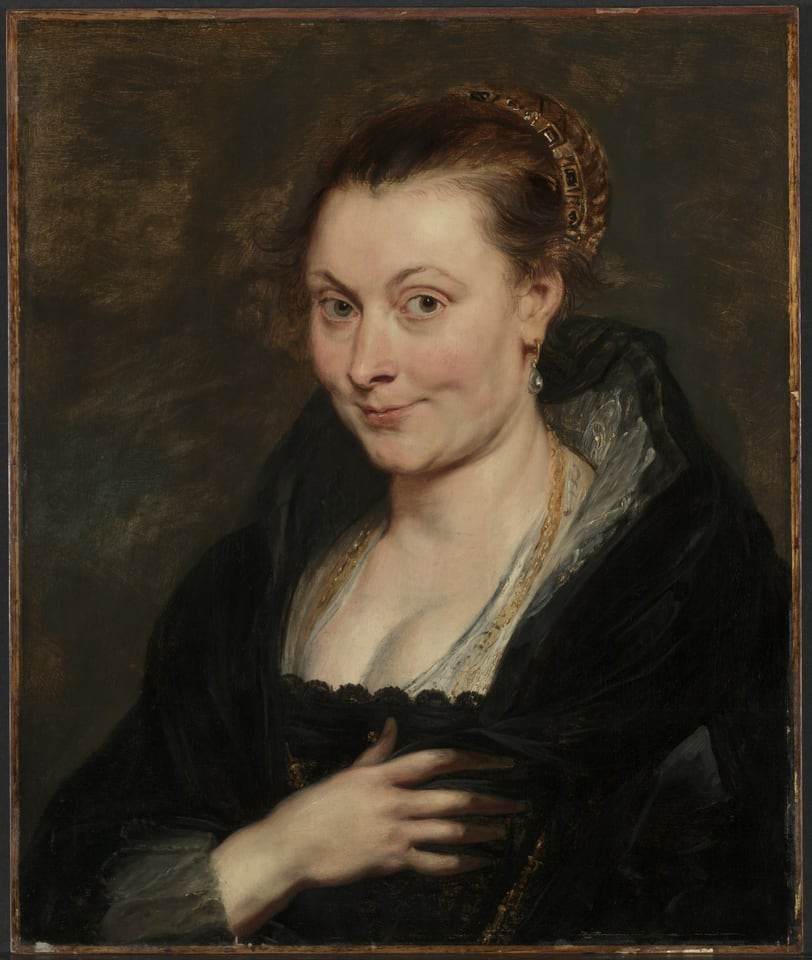
Portrait of Isabella Brantc. 1620–25
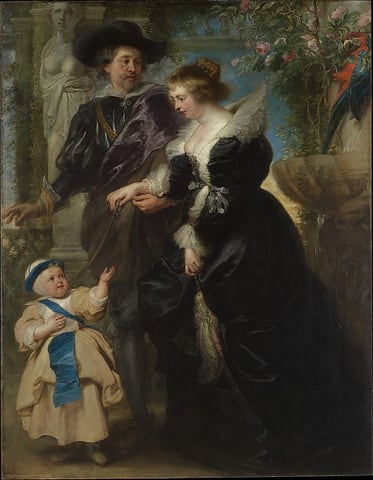
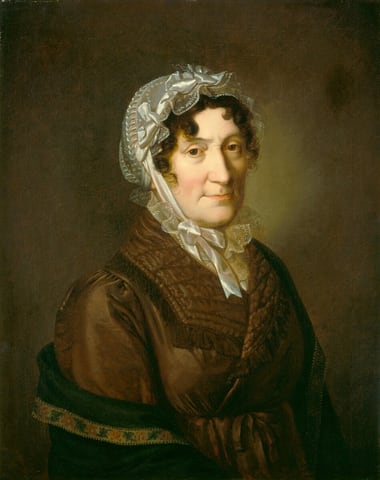
Isabella Brant was Rubens’s first wife. He painted her many times in many different ways before she died at the age of 35 (she is a model for a nymph in the other work by Rubens in this room). More about this work
About this work
Isabella Brant was Rubens’s first wife. He painted her many times in many different ways before she died at the age of 35 (she is a model for a nymph in the other work by Rubens in this room). This intimate portrait, painted at least five years before her death, suggests the close relationship between the painter and sitter through the warm palette, the luscious brushstrokes, and her lively expression.
Text from the Cleveland Museum of Art.
How it was made
- Oil on panel
- Oil paint on prepared wooden boards, usually oak in the north and poplar in Italy. The rigid, smooth surface suits fine detail and thin, glowing glazes.
- Oil paint
- Pigment ground in a drying oil, usually linseed. It dries slowly, so painters could blend on the canvas, build up thin translucent glazes, and rework a picture over weeks. Canvas replaced wooden panels in the 1500s because it is lighter and can be rolled.
Peter Paul Rubens
Flemish, 1577–1640 · Born in Siegen; died in Antwerp.
Rubens was born in Siegen, raised in Antwerp and spent eight formative years in Italy, mainly in the service of the Duke of Mantua. Settling in Antwerp in 1608, he ran a large, efficient studio that produced altarpieces, ceilings and tapestry designs for courts across Europe, from the Medici cycle in Paris to the Banqueting House ceiling in London. He also served as a diplomat. Isabella Brant and later Helena Fourment, his two wives, appear often in his work.
Written by Ochre Editions.
Rights and the museum’s record
Public domain. The Cleveland Museum of Art has dedicated this image to the public domain under CC0, so anyone may copy, adapt and use it, for any purpose, without asking. Our prints and files are reproductions made from the museum’s image; the museum doesn’t endorse them.
- Object number
- 1947.207
- Credit
- Courtesy of the Cleveland Museum of Art
- Type
- Painting
- Department
- European Painting and Sculpture
- Licence
- CC0 1.0 Universal
- Museum record
- See it on the museum’s site