Unknown maker
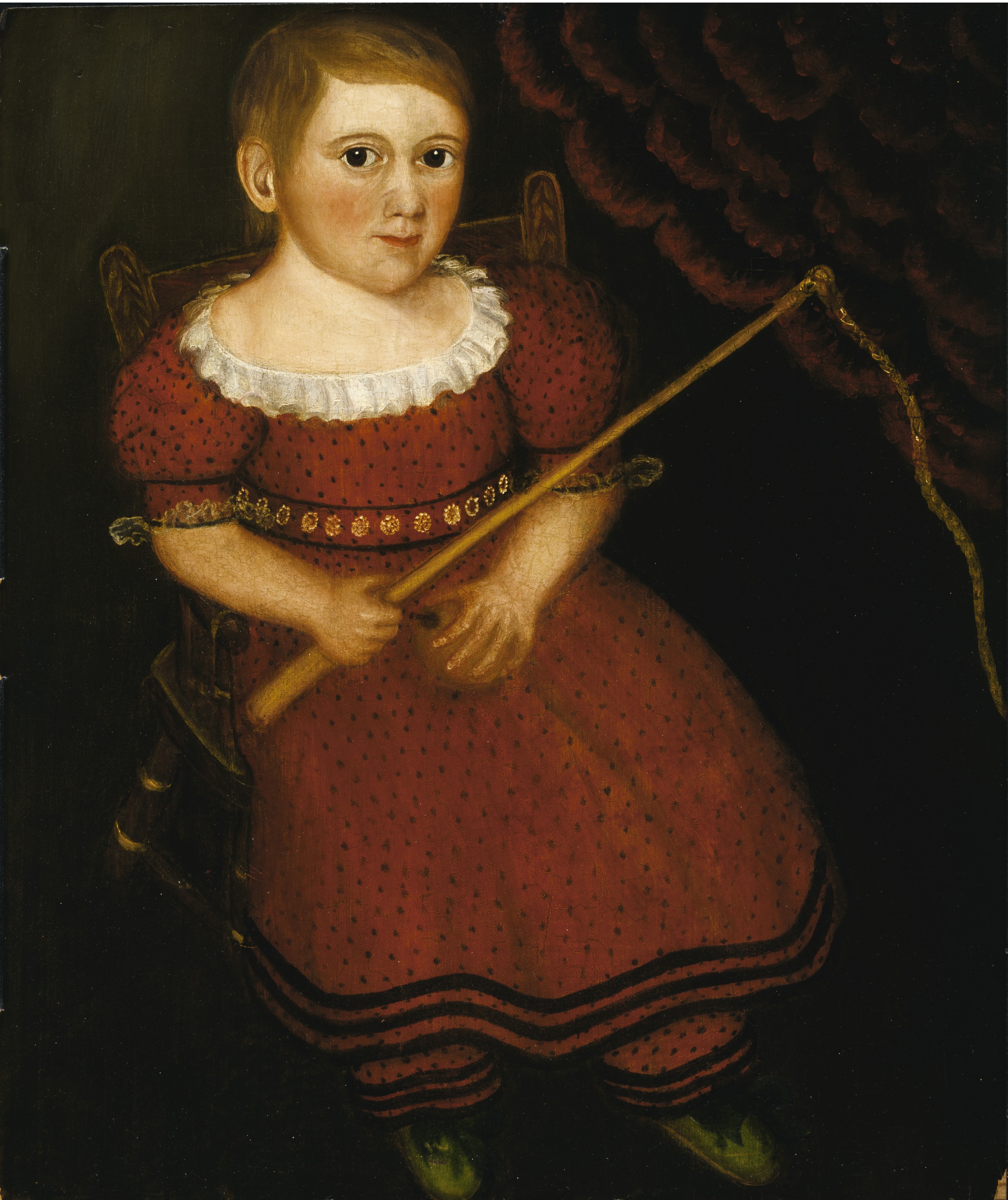
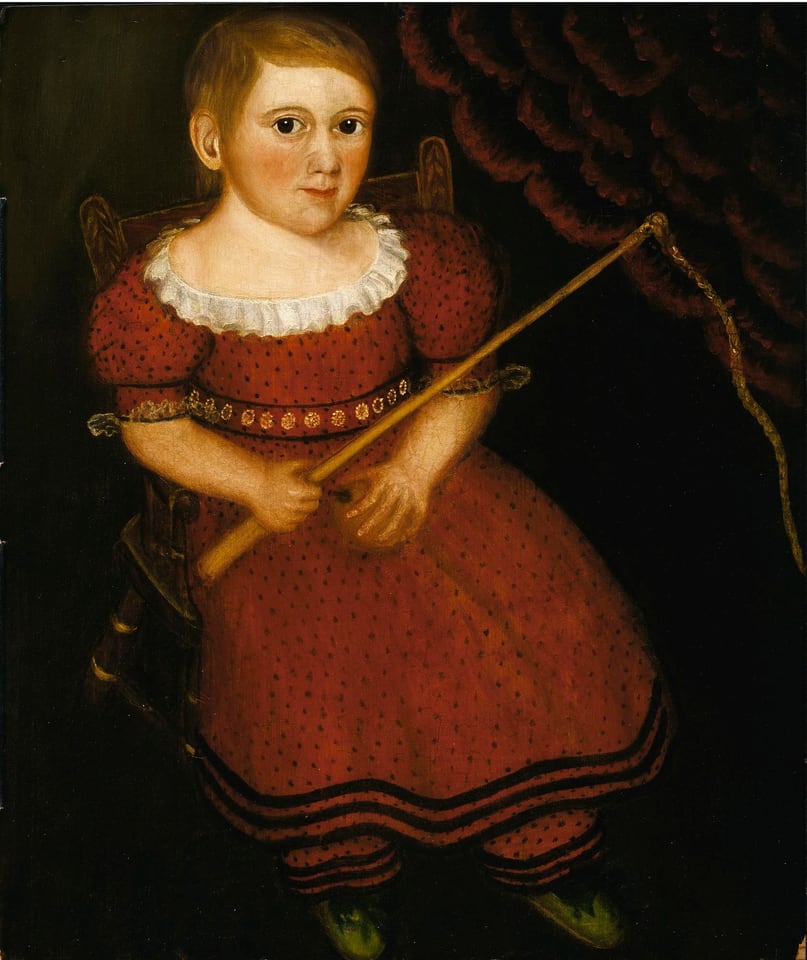
Samuel Warren Holland, Aged Two Years19th century
This image of a young boy has been attributed to the artist Milton Hopkins, who painted portraits in New York State and Ohio during the first half of the nineteenth century. More about this work
About this work
This image of a young boy has been attributed to the artist Milton Hopkins, who painted portraits in New York State and Ohio during the first half of the nineteenth century. We know little about the sitter, Samuel Holland, because there were several people of the same name living in the United States at that time. The artist painted a whip to show that the child was male, a necessary symbol in a period when boys wore skirts until they were five or six. The boy gazes directly at the viewer with large dark eyes that stand out against his pale skin and fair hair, and his fancy costume suggests he was a member of a wealthy household. Early in the nineteenth century, children often died in infancy, and parents commissioned portraits of their sons and daughters as keepsakes.
Text from the Smithsonian American Art Museum.
How it was made
- Oil on panel
- Oil paint on prepared wooden boards, usually oak in the north and poplar in Italy. The rigid, smooth surface suits fine detail and thin, glowing glazes.
- Oil paint
- Pigment ground in a drying oil, usually linseed. It dries slowly, so painters could blend on the canvas, build up thin translucent glazes, and rework a picture over weeks. Canvas replaced wooden panels in the 1500s because it is lighter and can be rolled.
Rights and the museum’s record
Public domain. The Smithsonian American Art Museum has dedicated this image to the public domain under CC0, so anyone may copy, adapt and use it, for any purpose, without asking. Our prints and files are reproductions made from the museum’s image; the museum doesn’t endorse them.
- Object number
- 1986.65.119
- Credit
- Courtesy of the Smithsonian American Art Museum
- Type
- Painting
- Department
- Painting and Sculpture
- Licence
- CC0 1.0 Universal
- Museum record
- See it on the museum’s site