Neoclassicism
Europe turns back to Greece and Rome: clear line, calm figures and civic virtue.
First room, north wall
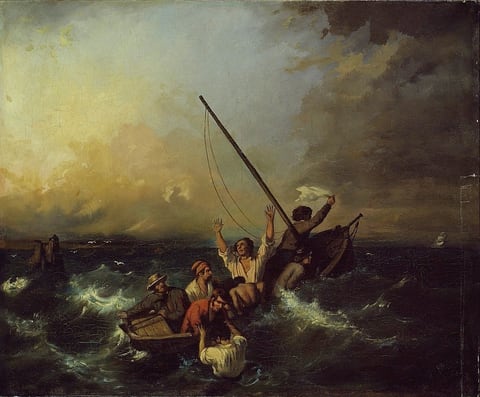
ShipwreckAfter Eugène Isabey, 19th centuryCourtesy of the Art Institute of Chicago 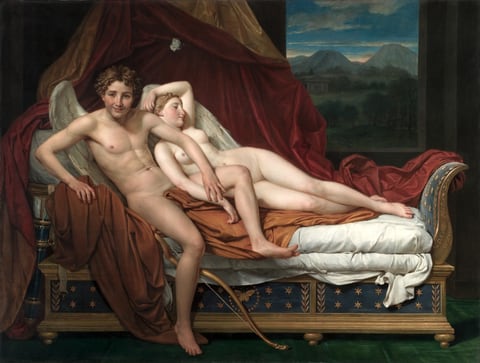
Cupid and PsycheJacques-Louis David, 1817Courtesy of the Cleveland Museum of Art
First room, south wall
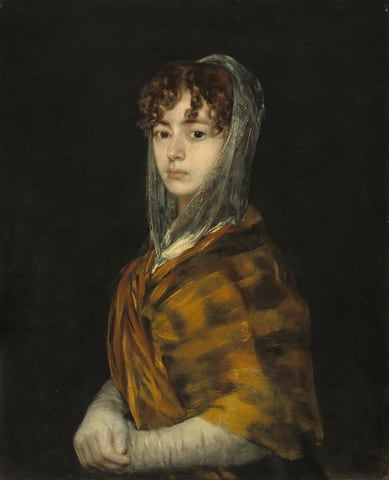
Señora Sabasa GarciaFrancisco Goya, c. 1806/1811Courtesy National Gallery of Art, Washington 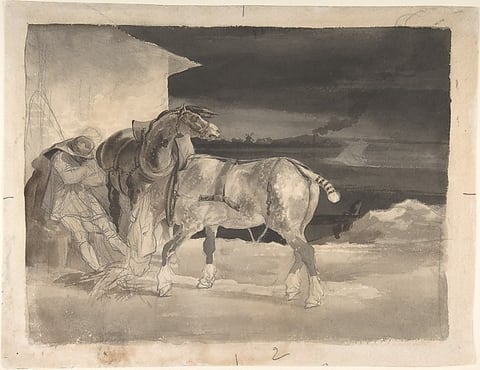
Two Draft Horses with a Sleeping DriverJean Louis André Théodore Géricault, 1820–22Courtesy of The Metropolitan Museum of Art 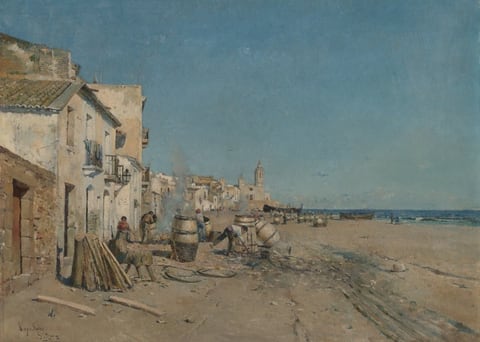
SitgesJuan Roig y Soler, 19th centuryCourtesy of the Art Institute of Chicago 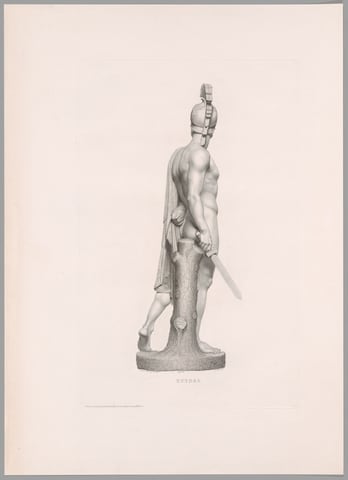
Ettore, Side View, from Oeuvre de CanovaAntonio Canova, 1817Courtesy of the Art Institute of Chicago
Second room, south wall
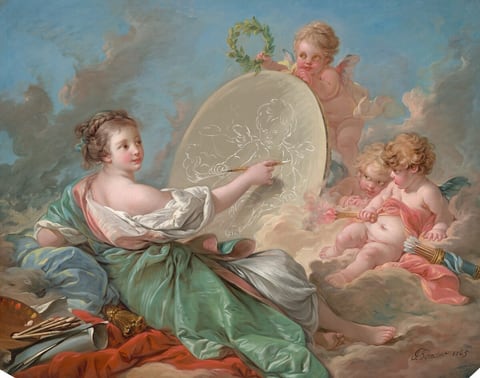
Allegory of PaintingFrançois Boucher, 1765Courtesy National Gallery of Art, Washington 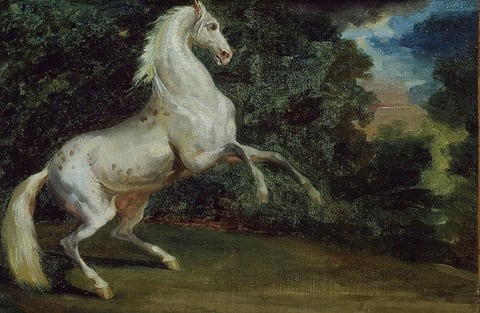
Prancing HorseFollower of Jean Louis André Théodore Géricault, 1808–12Courtesy of the Art Institute of Chicago 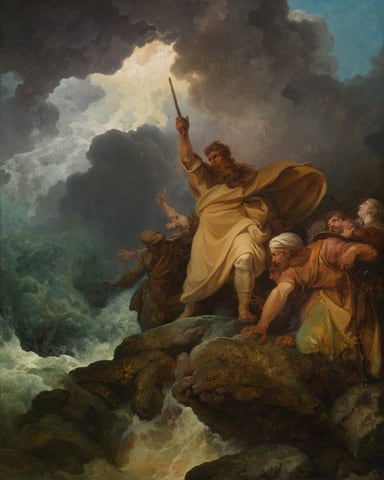
The Destruction of Pharaoh's ArmyPhilippe Jacques de Loutherbourg, II, 1792Courtesy of the Art Institute of Chicago
Second room, north wall
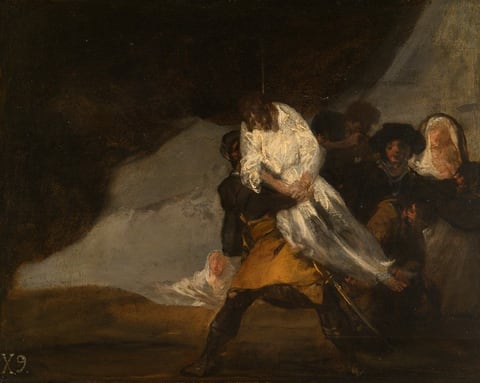
The Hanged MonkFrancisco Goya, c. 1810Courtesy of the Art Institute of Chicago 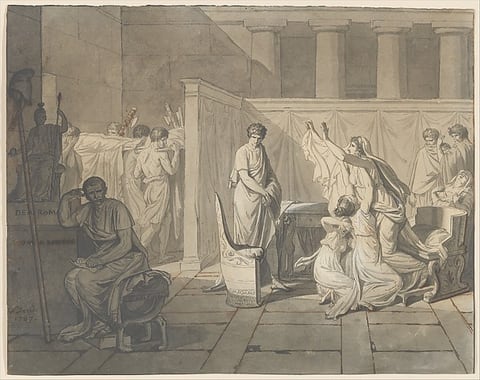
The Lictors Bringing Brutus the Bodies of his SonsJacques-Louis David, 1787Courtesy of The Metropolitan Museum of Art 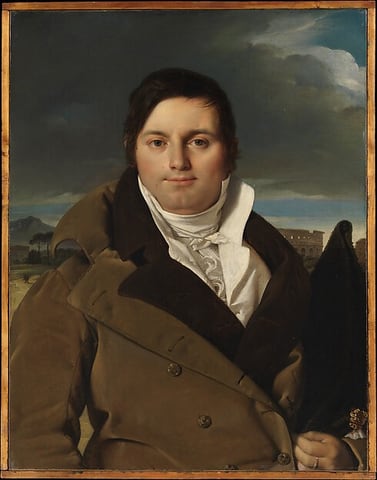
Joseph-Antoine Moltedo (born 1775)Jean Auguste Dominique Ingres, ca. 1810Courtesy of The Metropolitan Museum of Art
Third room, north wall
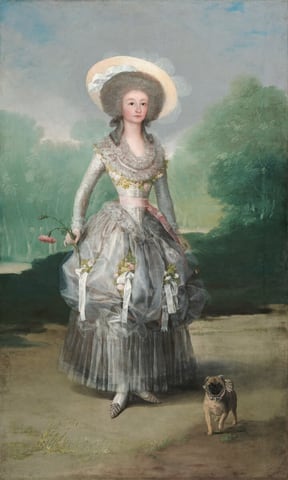
The Marquesa de PontejosFrancisco Goya, c. 1786Courtesy National Gallery of Art, Washington 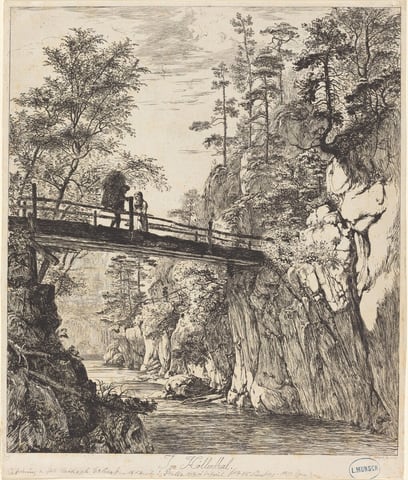
Im Höllenthal (In the Höllen Valley)Johann Christoph Erhard, 1818Courtesy National Gallery of Art, Washington 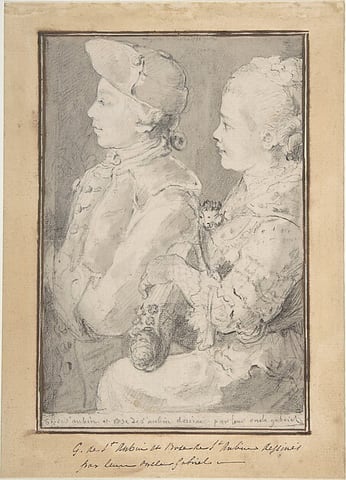
Germain-Augustin and Rose de Saint-Aubin, Drawn by Their UncleGabriel de Saint-Aubin, 1766Courtesy of The Metropolitan Museum of Art 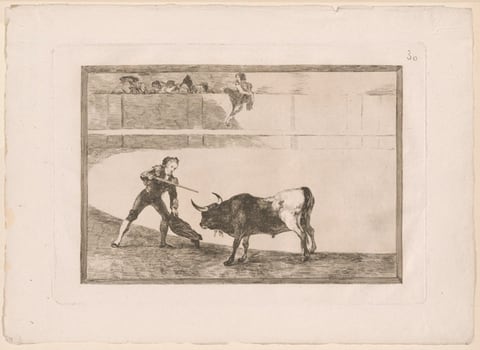
Pedro Romero killing the halted bull, plate 30 from The Art of BullfightingFrancisco Goya, 1814/16, published 1816Courtesy of the Art Institute of Chicago