Neoclassicism
Europe turns back to Greece and Rome: clear line, calm figures and civic virtue.
First room, north wall
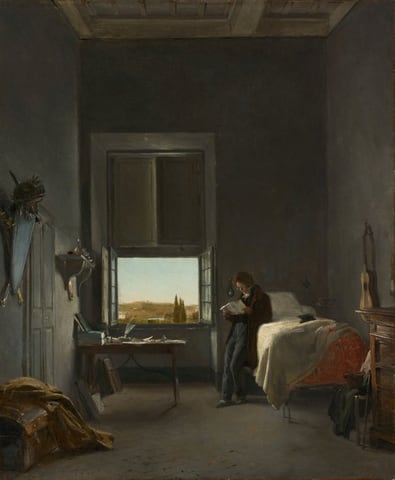
The Artist in His Room at the Villa Medici, RomeLéon Cogniet, 1817Courtesy of the Cleveland Museum of Art 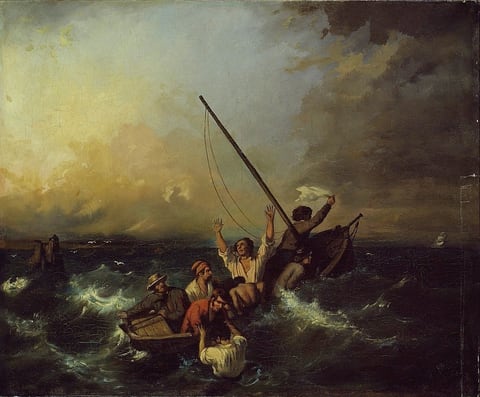
ShipwreckAfter Eugène Isabey, 19th centuryCourtesy of the Art Institute of Chicago 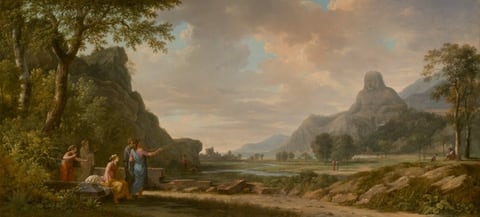
Mount Athos Carved as a Monument to Alexander the GreatPierre Henri de Valenciennes, 1796Courtesy of the Art Institute of Chicago 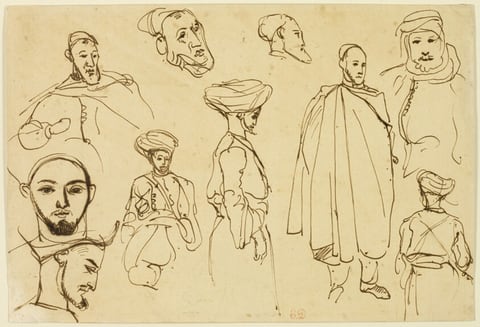
Sketches of Algerian MenEugène Delacroix, c. 1832Courtesy of the Art Institute of Chicago
First room, south wall
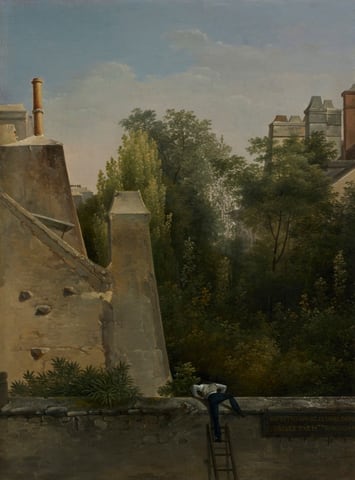
The Curious OneAntoine Pierre Mongin, 1823Courtesy of the Cleveland Museum of Art 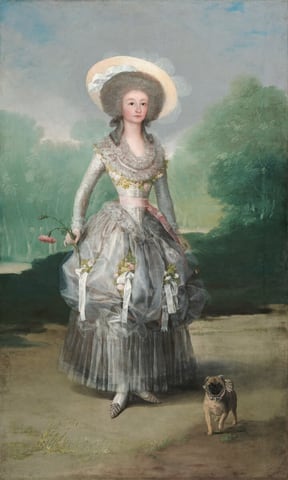
The Marquesa de PontejosFrancisco Goya, c. 1786Courtesy National Gallery of Art, Washington 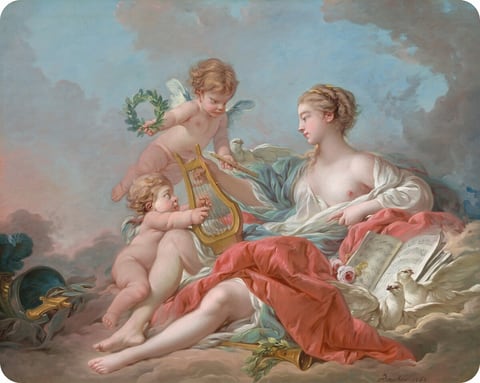
Allegory of MusicFrançois Boucher, 1764Courtesy National Gallery of Art, Washington
Second room, south wall
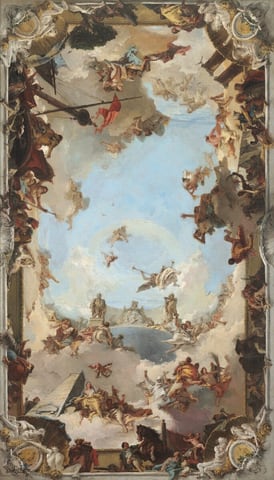
Wealth and Benefits of the Spanish Monarchy under Charles IIIGiovanni Battista Tiepolo, 1762Courtesy National Gallery of Art, Washington 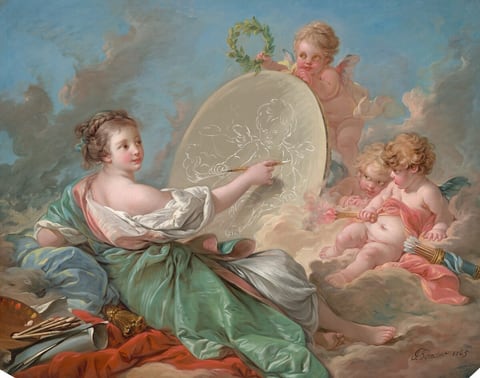
Allegory of PaintingFrançois Boucher, 1765Courtesy National Gallery of Art, Washington 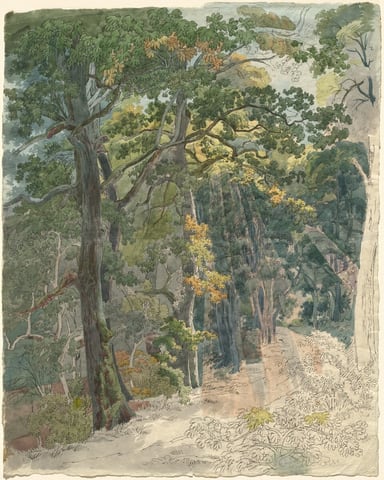
Rays of Sunlight Striking a Woodland PathFriedrich Salathé, c. 1815Courtesy National Gallery of Art, Washington
Second room, north wall
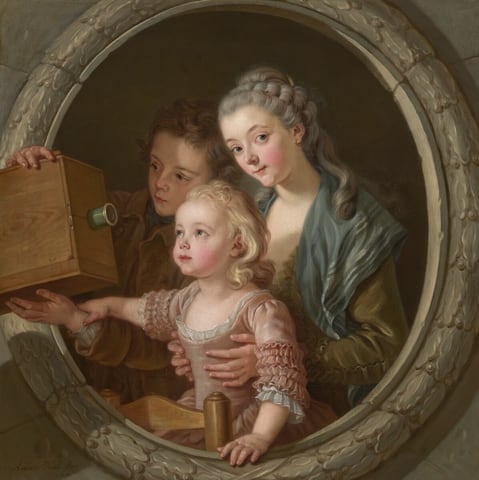
The Camera ObscuraCharles Amédée Philippe Van Loo, 1764Courtesy National Gallery of Art, Washington 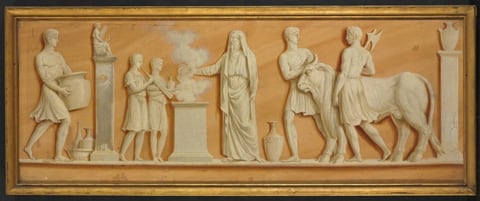
Overdoor Painting and Double-Leaf DoorsPierre Rousseau, 1790sCourtesy of the Cleveland Museum of Art 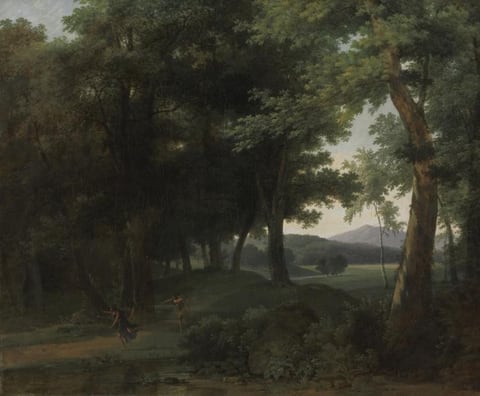
A Forest with Apollo and DaphneJean-Victor Bertin, 1810Courtesy of the Cleveland Museum of Art
Third room, north wall
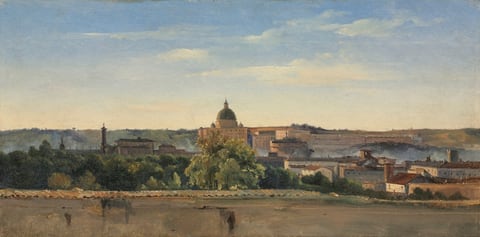
View of RomePierre Henri de Valenciennes, c. 1782–84Courtesy of the Cleveland Museum of Art 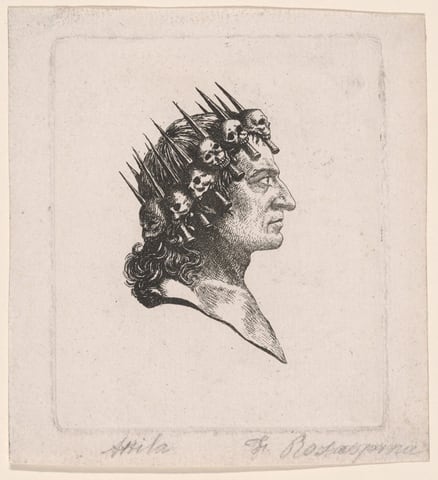
Portrait of Le Roi MaratViller, c. 1795Courtesy of the Art Institute of Chicago 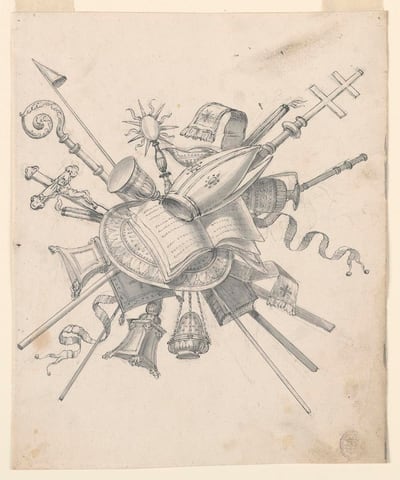
Trophy with Ecclesiastical ObjectsRomolo Achille Liverani, 1830–1850Courtesy of Cooper Hewitt, Smithsonian Design Museum