Skip to content
Ochre Editions
ArtArtistsCollectionsGalleriesDrops
SearchSign inCart (0)
The galleries · Style galleries

Drawings

Every one of the collection's drawings, in today's hang.

295 works · hang 2114 ·

Share Drawings, in the galleries

The rooms are imagined; every work on their walls is real.

Walk this roomRehang this room

Section 1, north wall

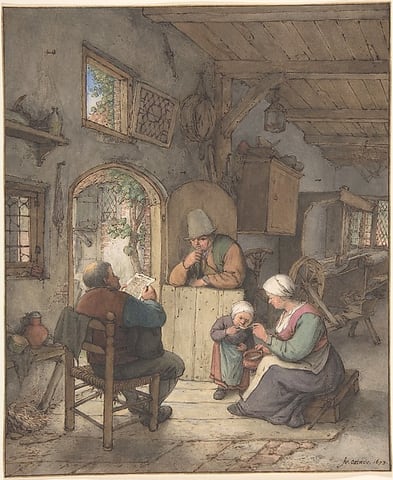
  1. Reading the News at the Weavers' Cottage, by Adriaen van Ostade, 1673
    Reading the News at the Weavers' CottageAdriaen van Ostade, 1673Courtesy of The Metropolitan Museum of Art
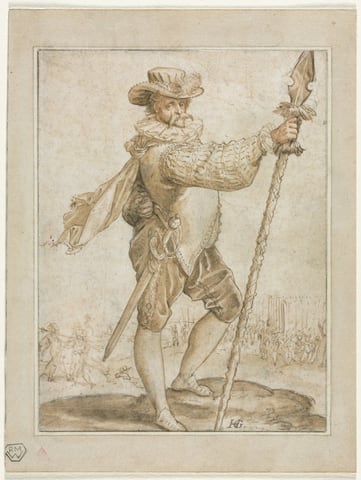
  2. Standing Officer Holding a Boar's Spear, by Hendrick Goltzius, 1586
    Standing Officer Holding a Boar's SpearHendrick Goltzius, 1586Courtesy of the Cleveland Museum of Art
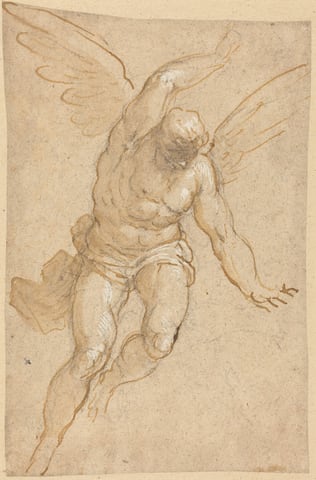
  3. The image shows a human figure with wings positioned as though in flight. The figure is captured from a slightly frontal perspective, with the head turned downwards and the right arm outstretched. The facial features are undefined, focusing more on the body's muscular structure. The figure wears a cloth or drapery around the waist and has well-defined muscles on the chest, arms, and legs. Large wings extend out behind the figure, adding to the sense of flight. The background is plain with a light texture.
    A Flying AngelJacopo Palma il Giovane, 1580/1590Courtesy National Gallery of Art, Washington

Section 1, south wall
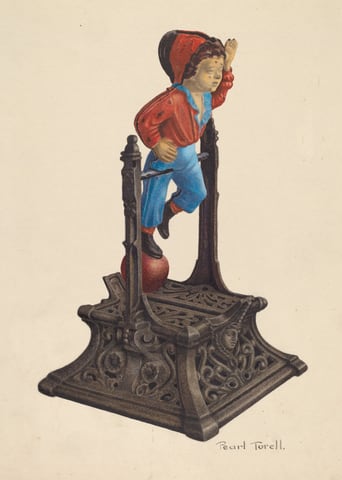
  1. The sculpture depicts a young boy dressed in a bright red coat, blue shirt, and blue pants, with black shoes. He is wearing a black hat with a red rim and has curly hair. The boy is balanced on one foot atop a red ball, with one leg lifted behind him and one hand held high above his head. The sculpture is made of painted, cast metal with intricate designs and textures. The boy stands on an ornately decorated dark pedestal.
    Toy BankPearl Torell, c. 1939Courtesy National Gallery of Art, Washington
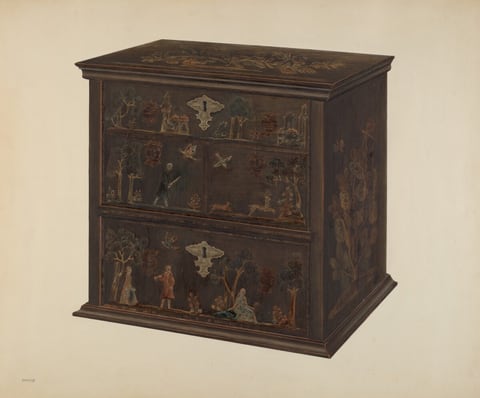
  2. This is a painting of a decorative wooden chest. The chest has intricate designs, such as painted figures, trees, and animals, creating a narrative scene on its front side, and floral motifs on its sides. The craftsmanship suggests it is an ornate object, potentially used for storage or as an ornamental piece. The painting focuses on the texture and details of the wood and decoration with precision, in a traditional arts and crafts or folk art style, emphasizing fine detail and storytelling through imagery on functional furniture.
    Jewel CabinetCharles Henning, c. 1939Courtesy National Gallery of Art, Washington
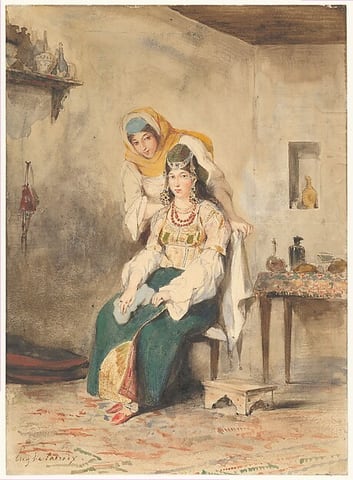
  3. Saada, the Wife of Abraham Ben-Chimol, and Préciada, One of Their Daughters, by Eugène Delacroix, 1832
    Saada, the Wife of Abraham Ben-Chimol, and Préciada, One of Their DaughtersEugène Delacroix, 1832Courtesy of The Metropolitan Museum of Art

Section 2, south wall
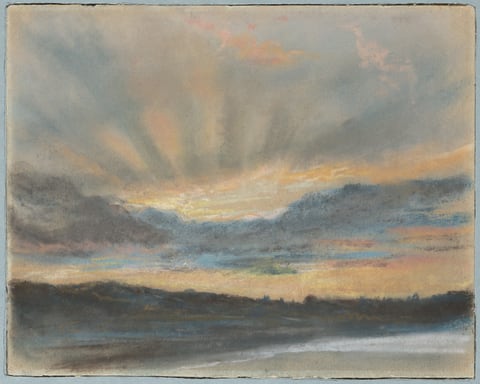
  1. Sunset, by Eugène Delacroix, ca. 1850
    SunsetEugène Delacroix, ca. 1850Courtesy of The Metropolitan Museum of Art
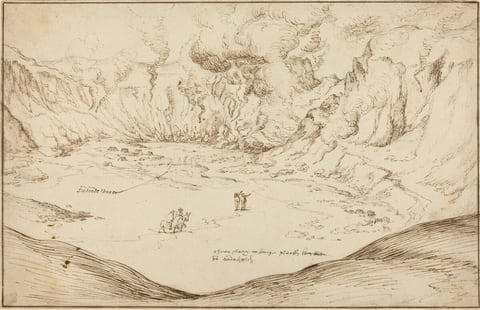
  2. The image shows an elevated view looking down into a crater-like landscape with steep surrounding cliffs. The horizon is high in the image, obscured by rocky formations and rising plumes of smoke. The detailed drawing has a sketch-like quality with fine lines depicting the cliffs and swirling smoke. The color palette is monochromatic, using shades of brown and beige. Two figures and a horse stand on a sloped terrain, providing scale. The crater's basin is visible, with smoke plumes and rock formations in the distance, stretching towards the horizon.
    Forum Vulcani: The Hot Springs at PozzuoliJoris Hoefnagel, 1578Courtesy National Gallery of Art, Washington
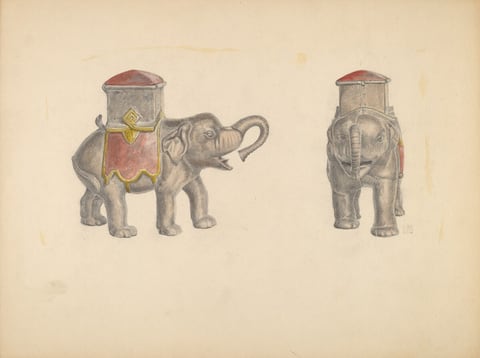
  3. This is a drawing of two ornate elephants. The image depicts two stylized elephants, each adorned with decorative elements. Both elephants are shown carrying a structure on their backs, resembling a small tower or box with a red domed top. The left elephant is turned to the side, its trunk raised. The right elephant faces forward. Each structure on their backs is detailed with intricate designs, including a diamond shape on the side. The overall composition suggests a ceremonial or regal theme. The subtle use of colors like red and gold enhances the ornate appearance. The coloring and shading indicate an attention to detail typical of deliberately crafted illustrations.
    Iron Bank ElephantZ.S. Lupus, c. 1938Courtesy National Gallery of Art, Washington

Section 2, north wall
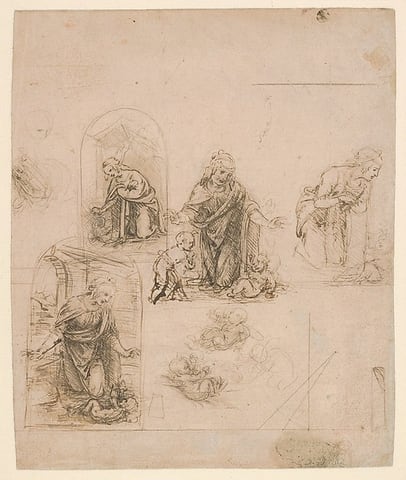
  1. Compositional Sketches for the Virgin Adoring the Christ Child, with and without the Infant St. John the Baptist; Diagram of a Perspectival Projection (recto); Slight Doodles (verso), by Leonardo da Vinci, 1480–85
    Compositional Sketches for the Virgin Adoring the Christ Child, with and without the Infant St. John the Baptist; Diagram of a Perspectival Projection (recto); Slight Doodles (verso)Leonardo da Vinci, 1480–85Courtesy of The Metropolitan Museum of Art
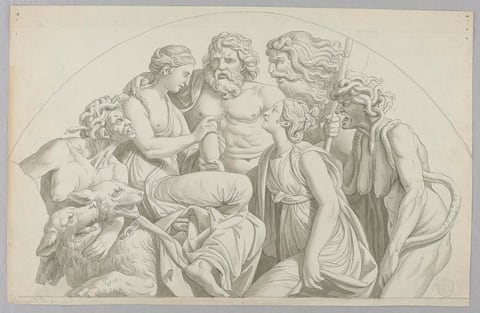
  2. PSYCHE ASKS PROSERPINE TO PUT A LITTLE OF HER BEAUTY IN AN URN FOR VENUS
    Psyche Asks Proserpine to Put a Little of her Beauty in an Urn for VenusJohann August Nahl The Younger, ca. 1781Courtesy of Cooper Hewitt, Smithsonian Design Museum
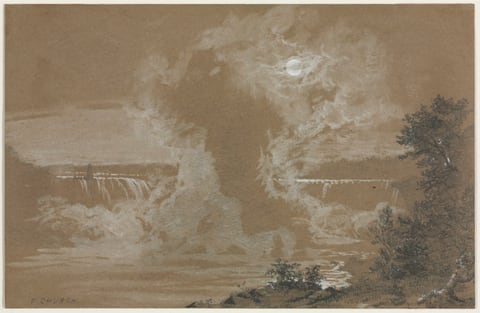
  3. Niagara Falls by Moonlight, by Frederic Edwin Church, probably 1856
    Niagara Falls by MoonlightFrederic Edwin Church, probably 1856Courtesy of the Cleveland Museum of Art

Section 3, north wall
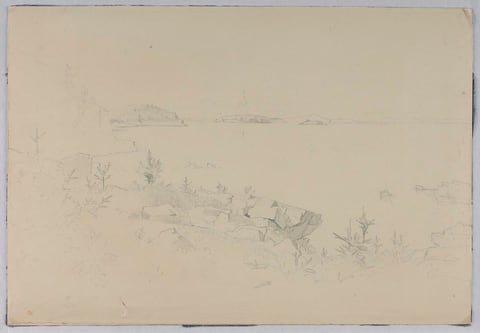
  1. STUDY OF SEASCAPE. PORCUPINE ISLANDS, BAR HARBOR, ME
    Study of seascape. Porcupine Islands, Bar Harbor, MEWilliam Stanley Haseltine, 1859Courtesy of Cooper Hewitt, Smithsonian Design Museum
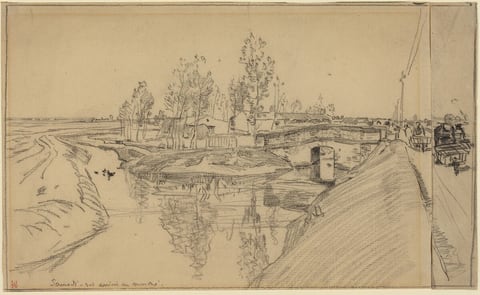
  2. The image depicts a landscape with a road alongside a canal. The view is elevated, showing the road, canal, trees, and structures on the horizon. The style of the sketch is characterized by soft lines and shading, creating depth. The color palette is monochromatic with shades of gray. Closest to us, a canal borders the road with some ducks in the water. Figures and carts are seen on the road leading into the distance.
    Arrivee au MarcheAuguste LepèreCourtesy National Gallery of Art, Washington

Section 3, south wall
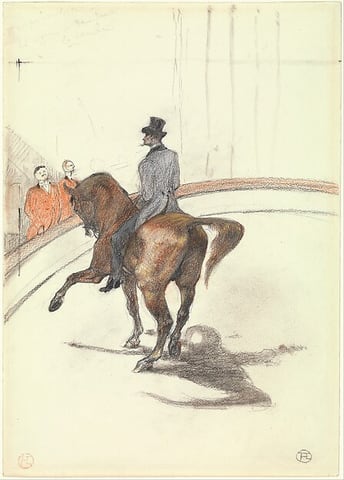
  1. At the Circus: The Spanish Walk (Au Cirque: Le Pas espagnol), by Henri de Toulouse-Lautrec, 1899
    At the Circus: The Spanish Walk (Au Cirque: Le Pas espagnol)Henri de Toulouse-Lautrec, 1899Courtesy of The Metropolitan Museum of Art
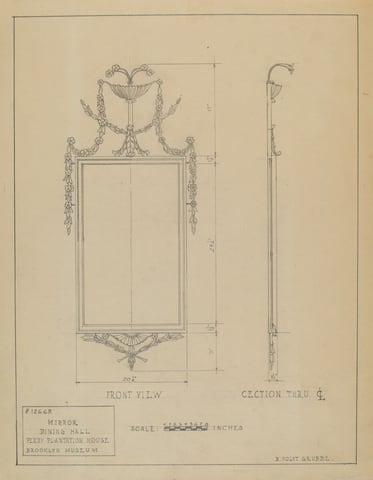
  2. This is a drawing of a decorative mirror. It presents a detailed design of an ornate mirror with two views: a front view and a sectional view. The mirror frame is embellished with elaborate motifs, including scrolls and floral elements. The sectional view shows the mirror's depth and structural details, indicating attention to construction. Measurements are included in inches, with title and notes providing context on the mirror's location and purpose as part of interior furnishings.
    MirrorB. Holst-Grubbe, 1935/1942Courtesy National Gallery of Art, Washington

Walk on

  • Drawings, room 2
  • B. Holst-Grubbe's contemporaries 8 works
  • 20th-century United States 124 works
Ochre Editions

The world's museums, on your wall. Every work here is a reproduction of a public-domain original, credited to the museum that holds it.

Shop

All artCollectionsLimited dropsPrints and framing

Help

Find an orderShippingReturnsVerify a certificate

About

About Ochre EditionsMuseum creditsFor agentsDevelopers

Legal

Terms of UseTerms of SaleLimited Editions and CertificatesPrivacy PolicyCookie PolicyAcceptable Use PolicyAgent & API TermsCopyright and DMCA PolicyPrinting Your Own PhotoVulnerability Disclosure PolicyAccessibility StatementOpen-Access Credits
© 2026 Ochre EditionsPrices in US dollars. Prints ship within the United States.