Skip to content
Ochre Editions
ArtArtistsCollectionsGalleriesDrops
SearchSign inCart (0)
The galleries · Time and place

Flanders

Works made in Flanders, from every century in the collection.

53 works · hang 4667 ·

Share Flanders, in the galleries

The rooms are imagined; every work on their walls is real.

Walk this roomRehang this room

First room, north wall

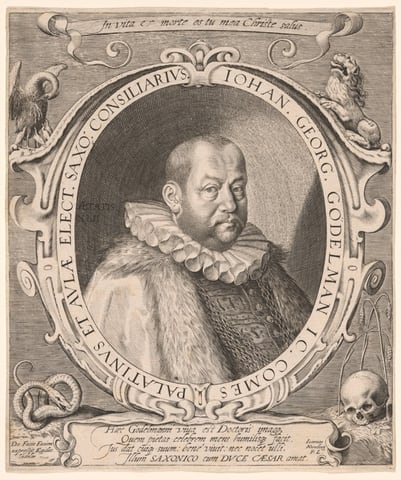
  1. A work made of engraving on paper.
    Johann Georg von Gödelmann, Law Professor, DiplomatAegidius Sadeler, II, c. 1601Courtesy of the Art Institute of Chicago
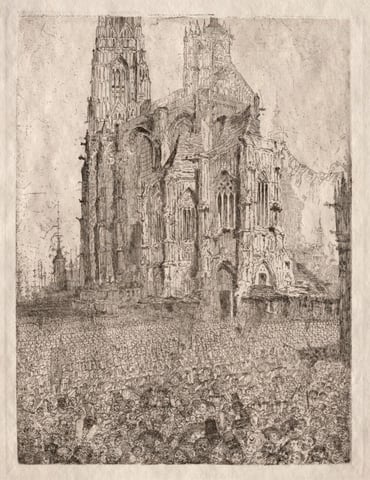
  2. The Cathedral, by James Ensor, 1886
    The CathedralJames Ensor, 1886Courtesy of the Cleveland Museum of Art
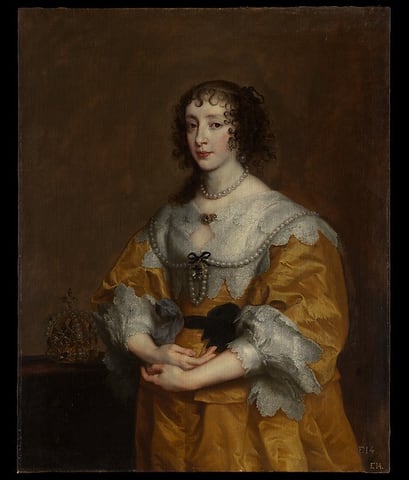
  3. Queen Henrietta Maria, by Anthony van Dyck, 1636
    Queen Henrietta MariaAnthony van Dyck, 1636Courtesy of The Metropolitan Museum of Art
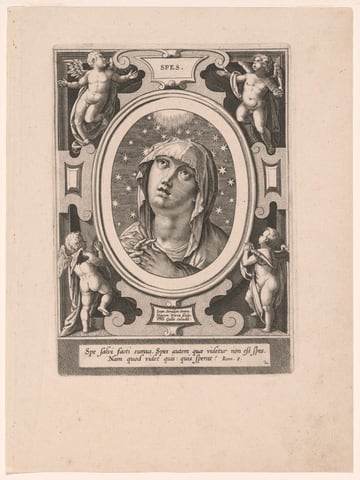
  4. A work made of engraving on paper.
    Spes, plate 2 from The Seven VirtuesHieronymous Wierix, c. 1598Courtesy of the Art Institute of Chicago

First room, south wall
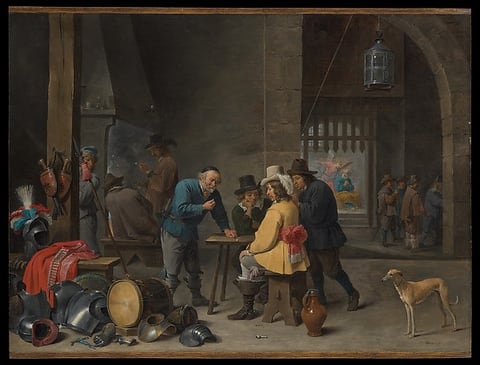
  1. Guardroom with the Deliverance of Saint Peter, by David Teniers the Younger, ca. 1645–47
    Guardroom with the Deliverance of Saint PeterDavid Teniers the Younger, ca. 1645–47Courtesy of The Metropolitan Museum of Art
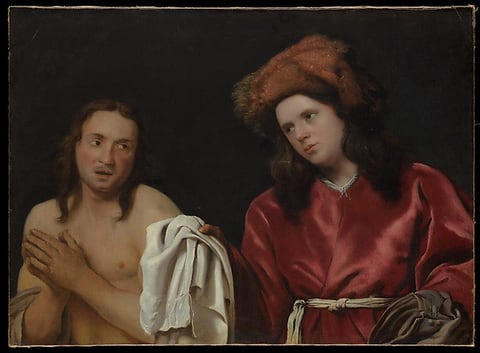
  2. Clothing the Naked, by Michiel Sweerts, ca. 1661
    Clothing the NakedMichiel Sweerts, ca. 1661Courtesy of The Metropolitan Museum of Art
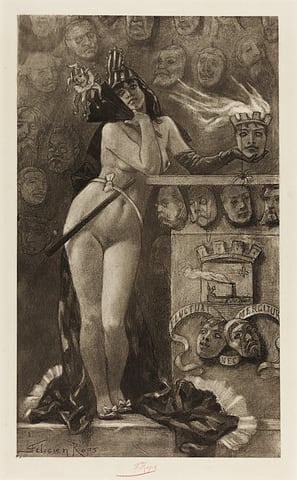
  3. A work made of photogravure in dark brown retouched with soft varnish (vernis mou), roulette and blue handcoloring on thick cream wove paper.
    Modern MasksFélicien Rops, 1889Courtesy of the Art Institute of Chicago
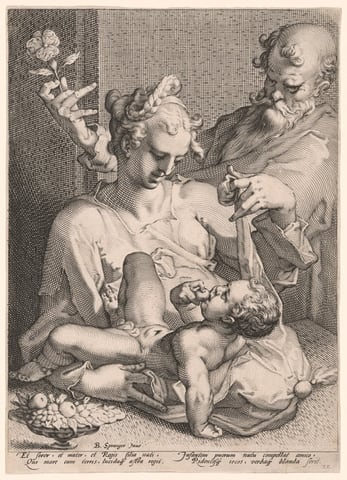
  4. A work made of engraving on laid paper.
    The Holy FamilyPieter de Jode, I, c. 1585-1595Courtesy of the Art Institute of Chicago

Second room, south wall
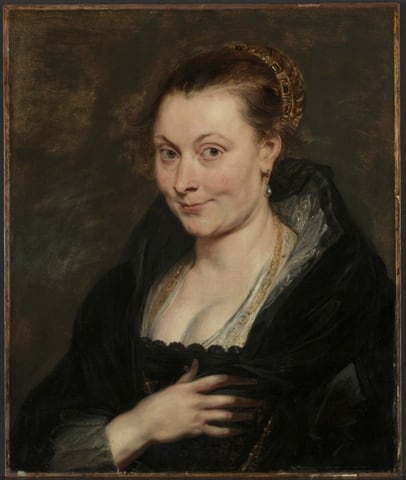
  1. Portrait of Isabella Brant, by Peter Paul Rubens, c. 1620–25
    Portrait of Isabella BrantPeter Paul Rubens, c. 1620–25Courtesy of the Cleveland Museum of Art
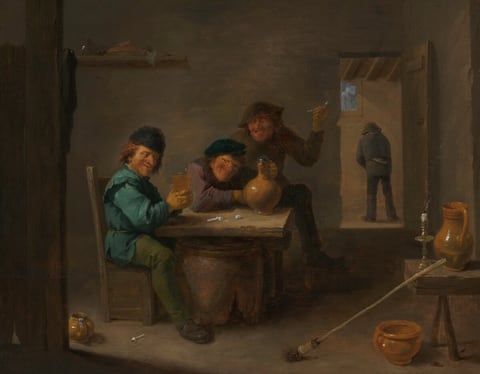
  2. Three pale-skinned people gather around a wooden table in a dimly lit tavern as a fourth person urinates against a wall in a back room in this horizontal painting. The table is a square board resting on a broken barrel. All three men at the table have prominent, reddened noses set in wide faces, and they wear clothing and hats in tones of spruce blue, olive green, muted purple, gray, or brown. One man sits on the left side of the table, holding a glass of beer with both hands. He wears what might be a furry cap. His face is turned slightly toward us but he looks down and to our right. The other seated man is across from us. He grins widely as he hunches over one forearm and holds the neck of a lidded ceramic jug with his other hand. He has a long, chunky chin and stares out at us from under a prominent brow ridge. The third man here stands behind, holding up a white clay pipe. His mouth is open, his eyes slitted, possibly crossed, and he hunches down. One foot rests on a low wooden box, a foot warmer. Another white clay pipe and the broken bowl of a pipe sit on the table, and another pipe lies by the first man’s feet. Also across the floor are two pots and a stubby broom, the long handle of which lies against a table holding a brass candlestick. A wisp of smoke rises from the wick in the candle stub. A shelf hung on the wall near the upper left corner of the painting holds a glass vessel and perhaps a plate. Two wooden beams line the left edge of the composition, and a cloth is draped over a nail there. The floor and wall are nearly uniform taupe gray. A rectangular doorway opens into the next room, in the top right corner of the painting. There a man stands facing the wall with both hands down in front of his torso. A window is set high in the wall there and the timbered ceiling is visible. The artist signed the lower left corner the painting, “D Teniers f.” The first two digits of the date read “16.”
    Peasants in a TavernDavid Teniers the Younger, c. 1633Courtesy National Gallery of Art, Washington
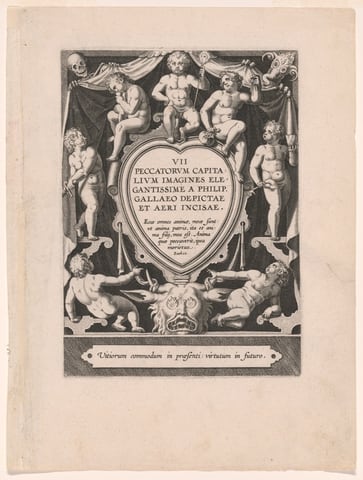
  3. A work made of engraving on paper.
    Title page, from The Seven VicesHieronymous Wierix, c. 1598Courtesy of the Art Institute of Chicago

Second room, north wall
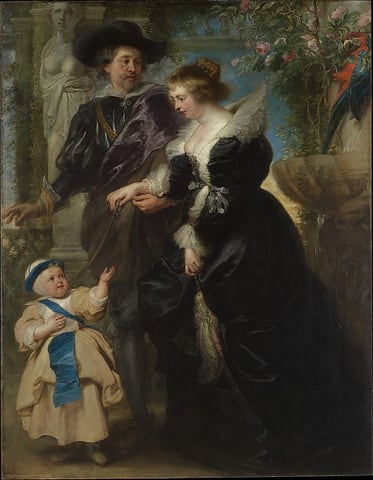
  1. Rubens, Helena Fourment (1614–1673), and Their Son Frans (1633–1678), by Peter Paul Rubens, ca. 1635
    Rubens, Helena Fourment (1614–1673), and Their Son Frans (1633–1678)Peter Paul Rubens, ca. 1635Courtesy of The Metropolitan Museum of Art
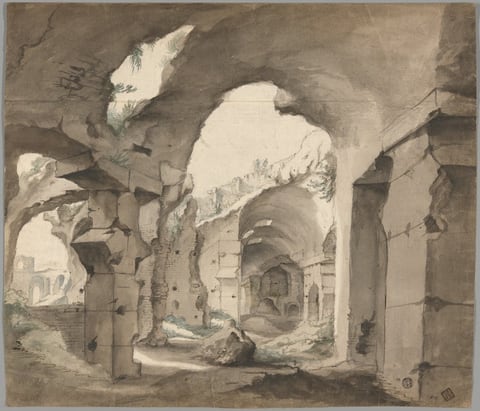
  2. A work made of pen and brown ink and brush and black and green washes, over black chalk, on cream laid paper.
    Interior View of the ColiseumLodewijk Toeput, c. 1580Courtesy of the Art Institute of Chicago
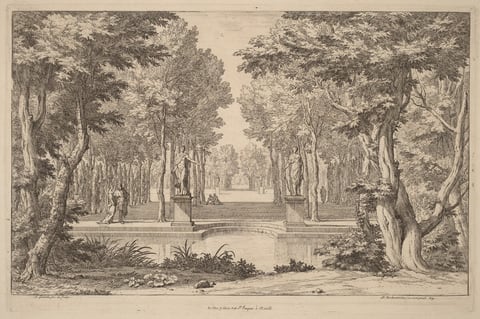
  3. The image shows a formal garden or park with a symmetrical view. It is taken from a slightly elevated position, revealing the vast space beyond a foreground of foliage and low-growing plants. The horizon line is positioned near the midpoint, where a tree-lined pathway extends into the distance. Flanking the pathway are two statues on pedestals under leafy trees. The scene is detailed with intricate line work emphasizing textures and forms. The color palette is monochromatic in various shades of brown, creating a classic appearance. Paved steps and a bridge over a small body of water add to the ordered elegance of the garden.
    The Two StatuesAbraham Genoels IICourtesy National Gallery of Art, Washington

Third room, north wall
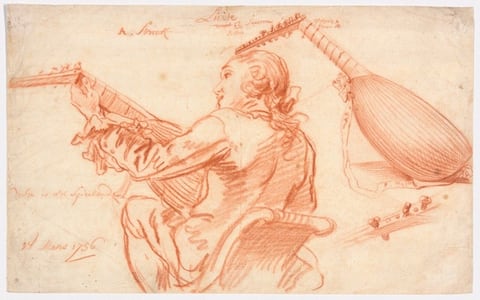
  1. A work made of red chalk on ivory laid paper.
    Sketches of a Lute Player and LuteJan Anton Garemyn, 1756Courtesy of the Art Institute of Chicago
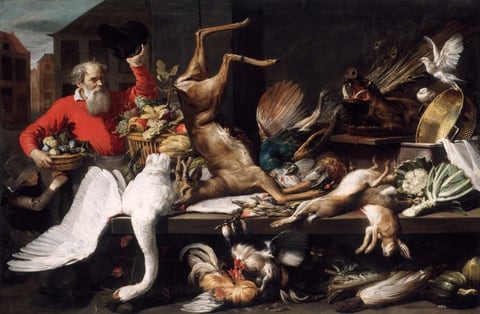
  2. An older man at left in red raises his hat toward a central table chaotically overflowing with dead game, fruits, and vegetables. The wings of dead birds and limbs of animals are splayed out at dramatic angles; a deer at center is suspended by his back legs. Live birds and a cat animate the scene.
    Still Life with Dead Game, Fruits, and Vegetables in a MarketFrans Snyders, 1614Courtesy of the Art Institute of Chicago

Walk on

  • Flanders, room 2
  • Frans Snyders's contemporaries 8 works
  • More Dutch and Flemish Baroque 94 works
Ochre Editions

The world's museums, on your wall. Every work here is a reproduction of a public-domain original, credited to the museum that holds it.

Shop

All artCollectionsLimited dropsPrints and framing

Help

Find an orderShippingReturnsVerify a certificate

About

About Ochre EditionsMuseum creditsFor agentsDevelopers

Legal

Terms of UseTerms of SaleLimited Editions and CertificatesPrivacy PolicyCookie PolicyAcceptable Use PolicyAgent & API TermsCopyright and DMCA PolicyPrinting Your Own PhotoVulnerability Disclosure PolicyAccessibility StatementOpen-Access Credits
© 2026 Ochre EditionsPrices in US dollars. Prints ship within the United States.