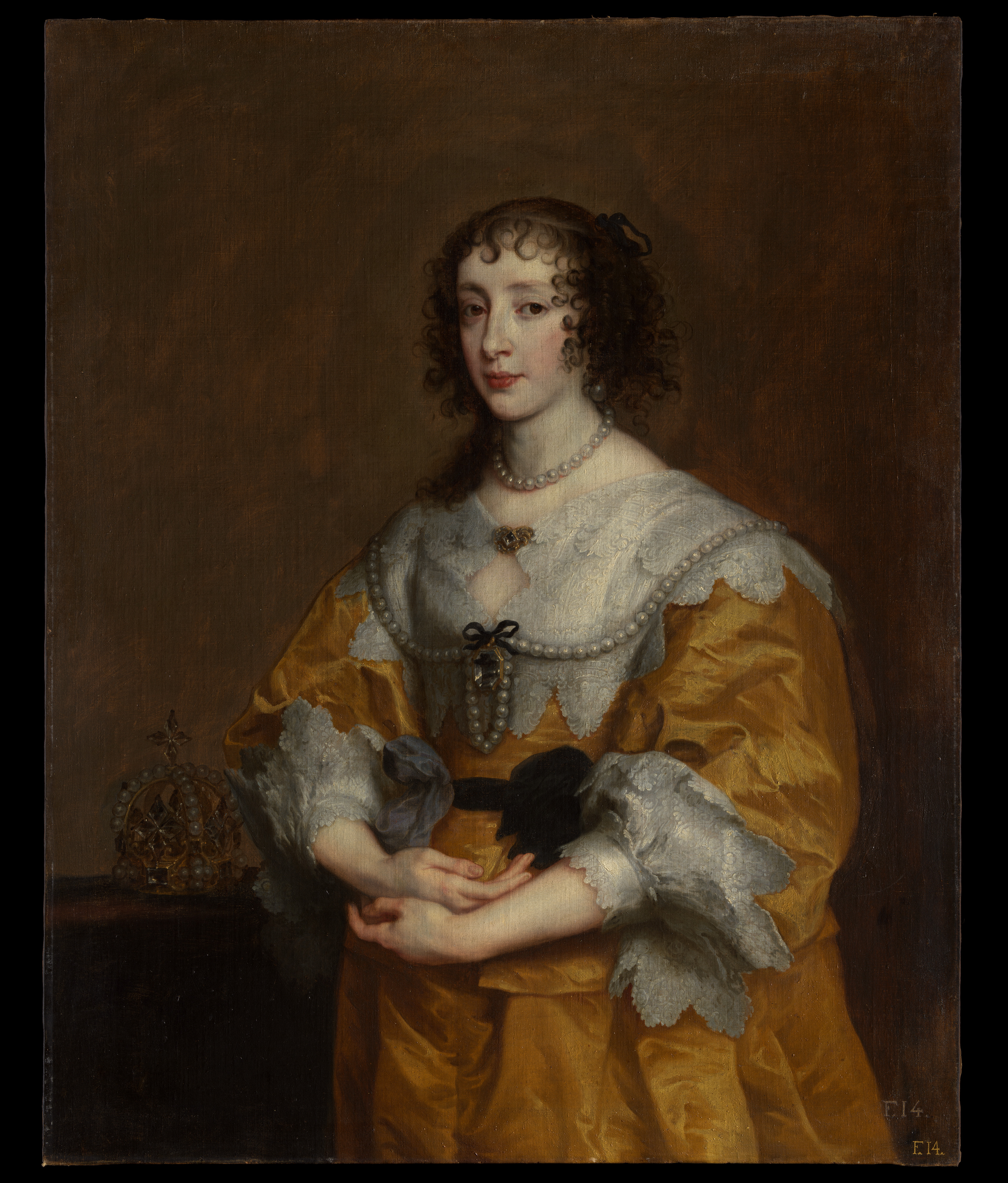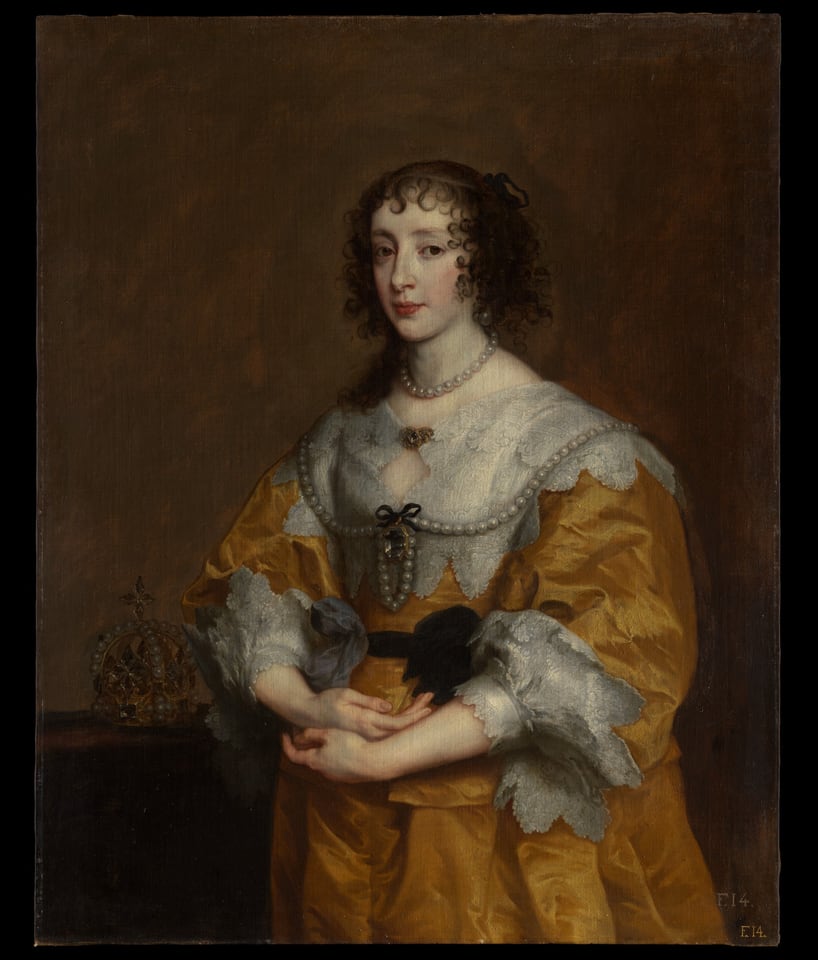
Queen Henrietta Maria1636
Anthony van Dyck painted this in 1636, aged 37. It is now at The Met in New York. More about this work
About this work
Anthony van Dyck painted this in 1636, aged 37. It is now at The Met in New York.
How it was made
- Oil paint
- Pigment ground in a drying oil, usually linseed. It dries slowly, so painters could blend on the canvas, build up thin translucent glazes, and rework a picture over weeks. Canvas replaced wooden panels in the 1500s because it is lighter and can be rolled.
Anthony van Dyck
Flemish, 1599–1641 · Born in Antwerp; died in London.
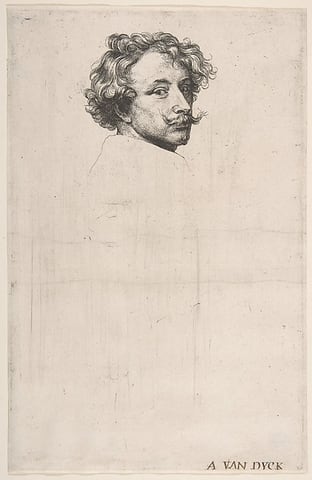
Van Dyck was the leading assistant in Rubens’s Antwerp studio before spending six years in Italy, chiefly in Genoa, where he painted the local aristocracy in elegant full-lengths. In 1632 he became principal painter to Charles I of England, and his portraits of the king, Queen Henrietta Maria and their court fixed the image of Caroline England and set the pattern for British portraiture for more than a century. He also conceived the Iconography, a series of etched portraits of notable contemporaries.
Written by Ochre Editions.
Rights and the museum’s record
Public domain. The Met has dedicated this image to the public domain under CC0, so anyone may copy, adapt and use it, for any purpose, without asking. Our prints and files are reproductions made from the museum’s image; the museum doesn’t endorse them.
- Object number
- 2019.141.10
- Credit
- Courtesy of The Metropolitan Museum of Art
- Type
- Paintings
- Department
- European Paintings
- Licence
- CC0 1.0 Universal
- Museum record
- See it on the museum’s site