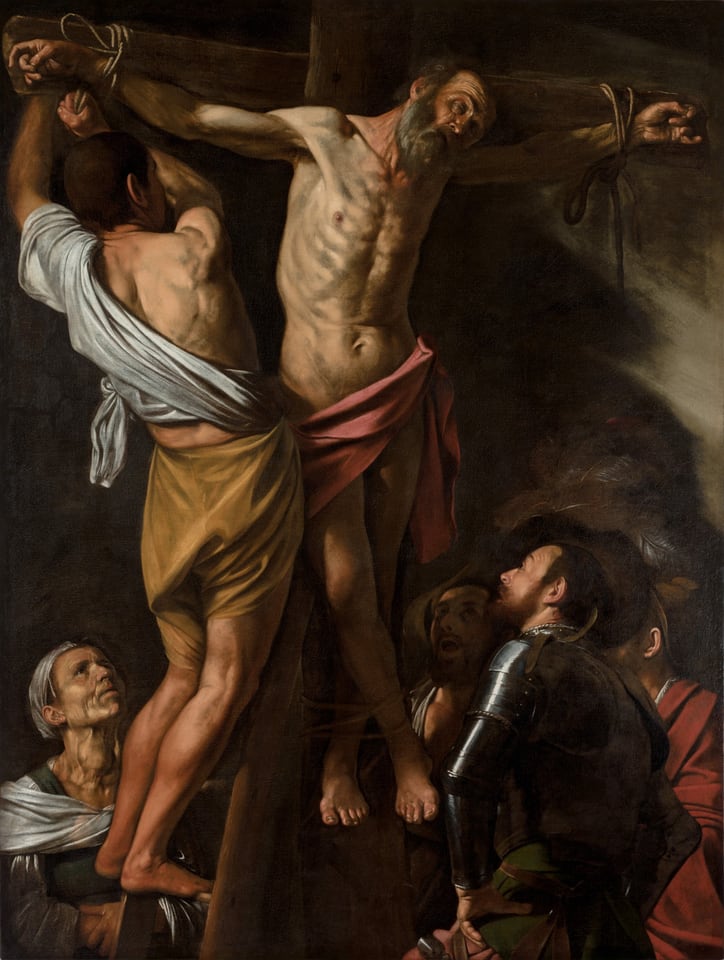
The Crucifixion of Saint Andrew1606–7
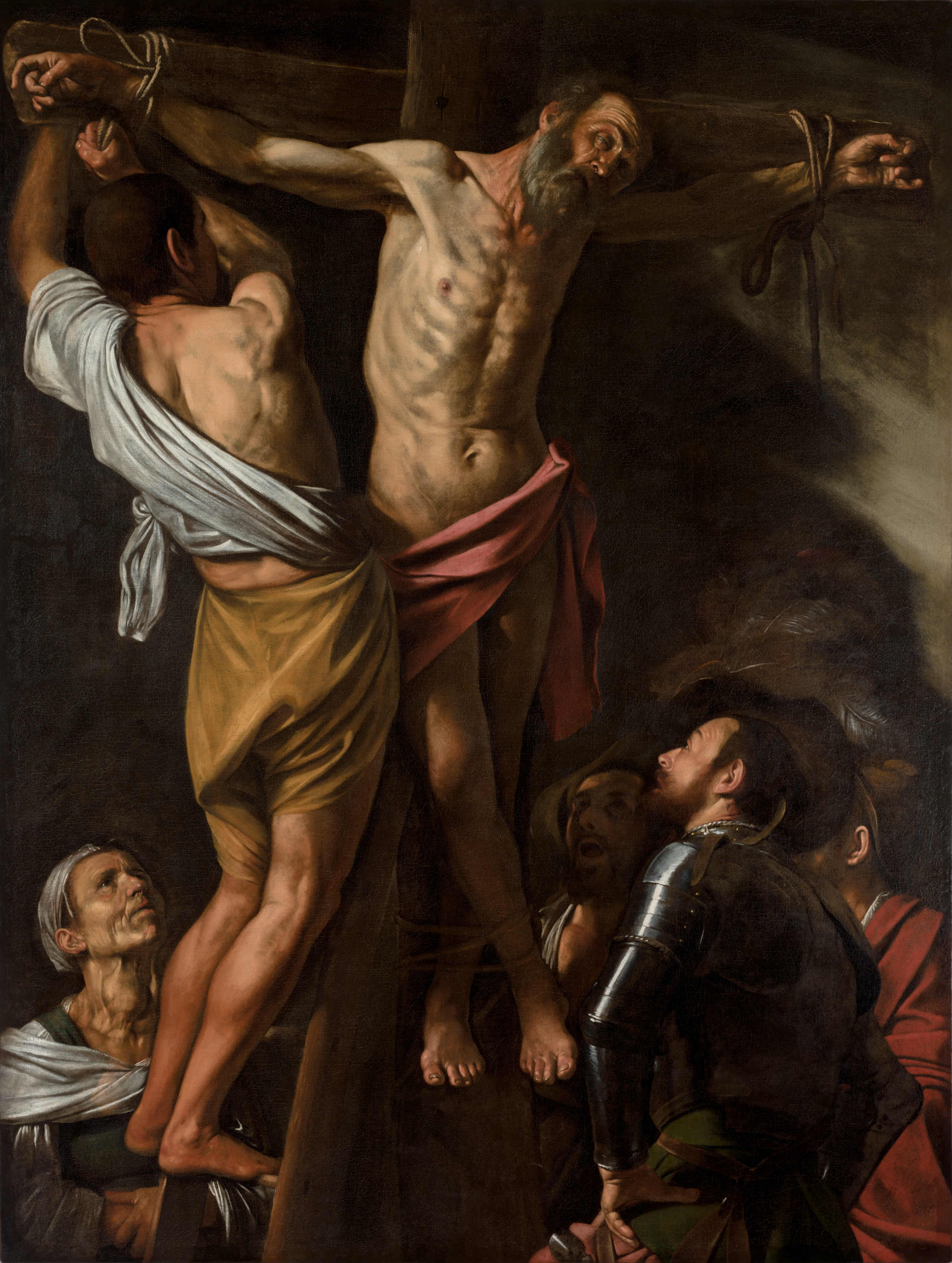
Saint Andrew’s efforts to introduce Christianity to Greece in the first century CE were met with hostility from local authorities. More about this work
About this work
Saint Andrew’s efforts to introduce Christianity to Greece in the first century CE were met with hostility from local authorities. He was sentenced to die on the cross because he refused to acknowledge pagan gods. For two days, Andrew preached from his martyr’s station to an increasingly sympathetic crowd. Bowing to public demand, Andrew’s would-be executioners attempted to untie him, but their hands were mysteriously paralyzed. Andrew’s desire for martyrdom was thus fulfilled and he died enveloped in divine light. Caravaggio’s innovative interpretation involves the viewer more closely in the event by presenting the crucifixion as intimate and private, rather than as a gruesome public spectacle. Bold contrasts of light and dark suggest the presence of God. A masterpiece of Baroque painting, Caravaggio’s Crucifixion of Saint Andrew is the only altarpiece by the artist in America.
Text from the Cleveland Museum of Art.
How it was made
- Oil paint
- Pigment ground in a drying oil, usually linseed. It dries slowly, so painters could blend on the canvas, build up thin translucent glazes, and rework a picture over weeks. Canvas replaced wooden panels in the 1500s because it is lighter and can be rolled.
Caravaggio
Italian, 1571–1610 · Born in Milan or Caravaggio; died in Porto Ercole.
Rights and the museum’s record
Public domain. The Cleveland Museum of Art has dedicated this image to the public domain under CC0, so anyone may copy, adapt and use it, for any purpose, without asking. Our prints and files are reproductions made from the museum’s image; the museum doesn’t endorse them.
- Object number
- 1976.2
- Credit
- Courtesy of the Cleveland Museum of Art
- Type
- Painting
- Department
- European Painting and Sculpture
- Licence
- CC0 1.0 Universal
- Museum record
- See it on the museum’s site