Skip to content
Ochre Editions
ArtArtistsCollectionsGalleriesDrops
SearchSign inCart (0)
The galleries · Time and place

The 16th century

Works made in the 16th century, anywhere in the world.

210 works · hang 4425 ·

Share The 16th century, in the galleries

The rooms are imagined; every work on their walls is real.

Walk this roomRehang this room

First room, north wall

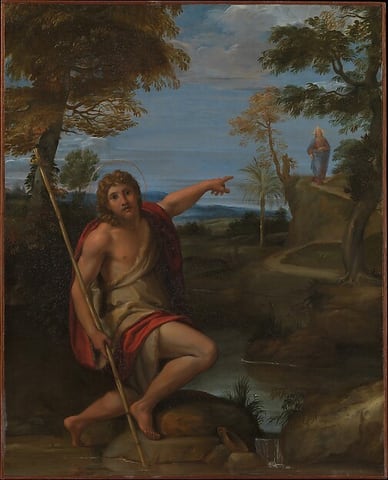
  1. Saint John the Baptist Bearing Witness, by Annibale Carracci, ca. 1600
    Saint John the Baptist Bearing WitnessAnnibale Carracci, ca. 1600Courtesy of The Metropolitan Museum of Art
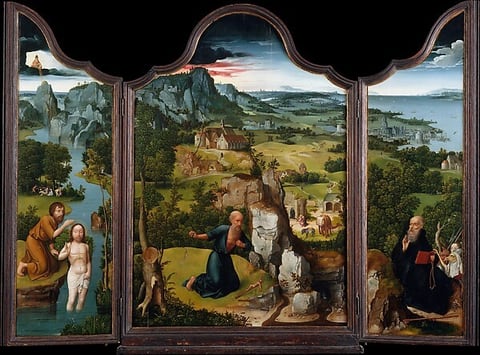
  2. The Penitence of Saint Jerome, by Joachim Patinir, ca. 1515
    The Penitence of Saint JeromeJoachim Patinir, ca. 1515Courtesy of The Metropolitan Museum of Art
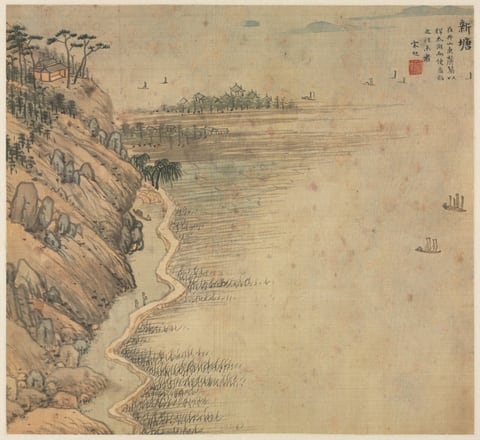
  3. Xintang (Immortal's Peak), by Song Xu, c. 1588
    Xintang (Immortal's Peak)Song Xu, c. 1588Courtesy of the Cleveland Museum of Art
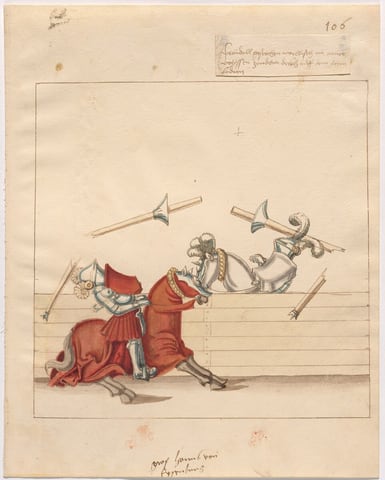
  4. This is a drawing of two armored figures on horseback engaged in a joust. Both knights are clad in ornate armor and mounted on horses as they participate in the match. The scene captures the moment of impact, with splintered lances flying in the air. One knight in silver armor with blue accents is being unseated from his horse, while the other knight in red and silver armor remains mounted. Both horses are draped in colors matching their riders' armors. The focus is on the dynamic action and energy of the joust, with fine details showing the armor's shine and the movement of the horses. The drawing is bordered, and there is some script at the top and bottom.
    Italian Joust of PeaceUnrecorded German maker, c.1512-1515Courtesy National Gallery of Art, Washington

First room, south wall
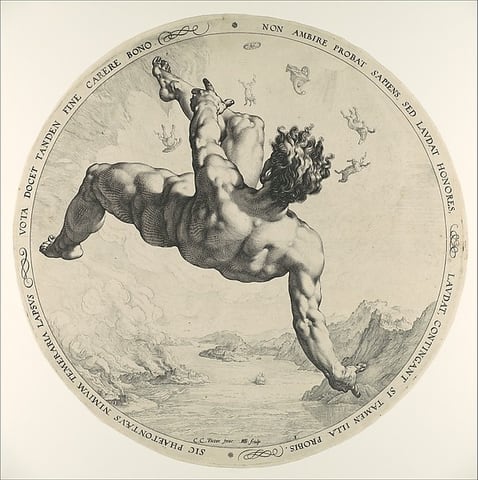
  1. Phaeton, from "The Four Disgracers", by Hendrick Goltzius, 1588
    Phaeton, from "The Four Disgracers"Hendrick Goltzius, 1588Courtesy of The Metropolitan Museum of Art
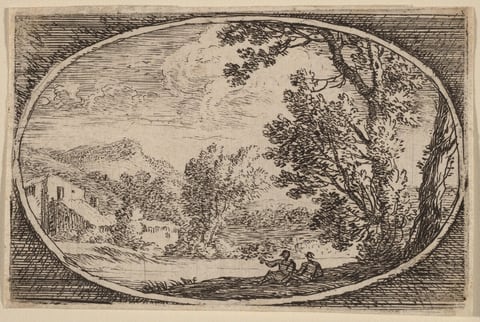
  2. The image shows an oval framing a scene with mountains, clouds, and trees. Delicate etched lines create textures in the landscape. The color palette is monochrome. Two figures are sitting under leafy trees, with a structure nearby.
    Two Men Seated Near the WatersideHerman van SwaneveltCourtesy National Gallery of Art, Washington
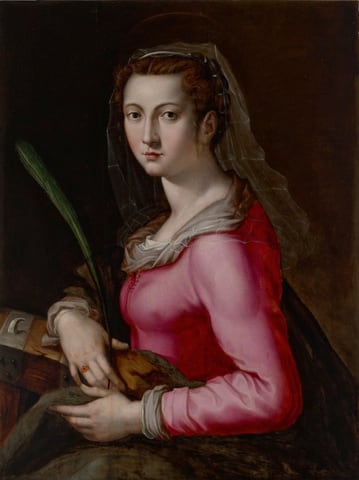
  3. Portrait of a Woman as Saint Catherine, by Pier Francesco Foschi, c. 1560
    Portrait of a Woman as Saint CatherinePier Francesco Foschi, c. 1560Courtesy of the Cleveland Museum of Art

Second room, south wall
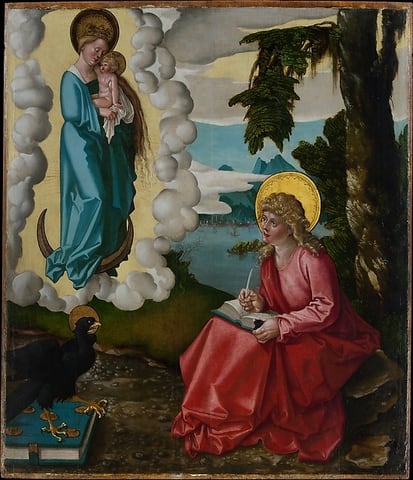
  1. Saint John on Patmos, by Hans Baldung (called Hans Baldung Grien), ca. 1511
    Saint John on PatmosHans Baldung (called Hans Baldung Grien), ca. 1511Courtesy of The Metropolitan Museum of Art
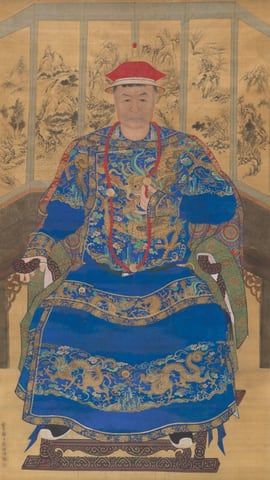
  2. A work made of hanging scroll; ink and color on silk.
    Portrait of an OfficialGu Jianlong, Qing dynasty (1644-1911), 17th centuryCourtesy of the Art Institute of Chicago
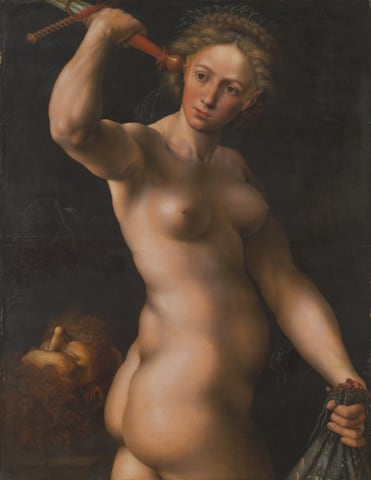
  3. Painting of Judith, naked, holding sword, with head of Holophernes.
    JudithJan Sanders van Hemessen, c. 1540Courtesy of the Art Institute of Chicago

Second room, north wall
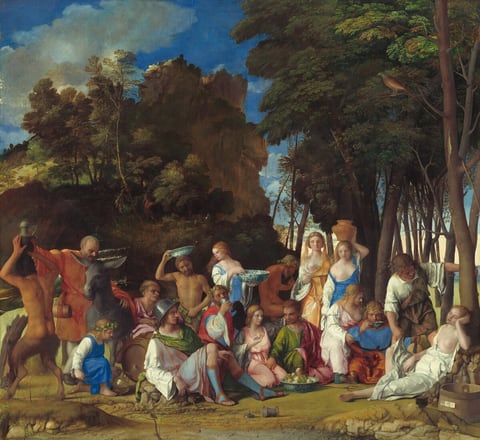
  1. Six women, eight men, two satyrs, and one child gather in pairs and trios in a loose row that spans the width of this nearly square painting. They are set within a landscape with craggy rocks, cliffs, and trees. Most of the people face us, and the men, women, and child have pale skin. The two satyrs have men’s torsos and furry goat’s legs, and they have darker, olive complexions. Most of the men wear voluminous, knee-length togas wrapped in short robes in shades of white, topaz blue, grass green, coral orange, or rose pink. Most of the women wear long, dress-like garments in tones of shell pink, apricot orange, or lapis blue over white sleeves. For all but one woman, their garments have fallen off one shoulder to reveal a round, firm breast. Several objects are strewn on the rocky, dirt ground in front of the group, including a wide, wooden bucket with a piece of paper affixed to its front to our right, a glass goblet, a pitchfork, a large blue and white ceramic dish filled with grapes and small yellow fruits, and an overturned cup near the center. Cliff-like, craggy rocks rise steeply behind the group to our left, filling much of the sky opposite a tall grove of leafy, dark green trees to our right. A few puffy white clouds float across the vivid blue sky. The slip of paper on the barrel has been inscribed, “joannes bellinus venetus p MDXIIII.”
    The Feast of the GodsGiovanni Bellini, 1514/1529Courtesy National Gallery of Art, Washington
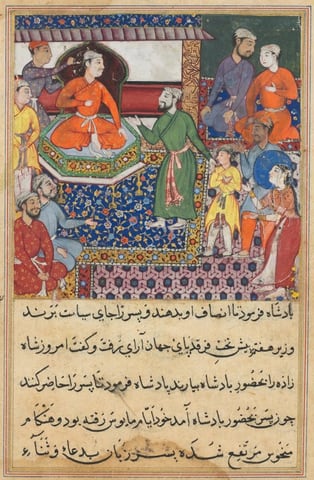
  2. The handmaiden again pleads for the death of the prince, from a Tuti-nama (Tales of a Parrot): Eighth Night, by Lalu, c. 1560
    The handmaiden again pleads for the death of the prince, from a Tuti-nama (Tales of a Parrot): Eighth NightLalu, c. 1560Courtesy of the Cleveland Museum of Art
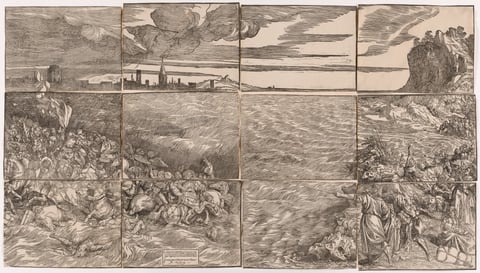
  3. The Submersion of Pharaoh's Army in the Red Sea, by Titian, 1514–15, printed 1549
    The Submersion of Pharaoh's Army in the Red SeaTitian, 1514–15, printed 1549Courtesy of the Cleveland Museum of Art

Third room, north wall
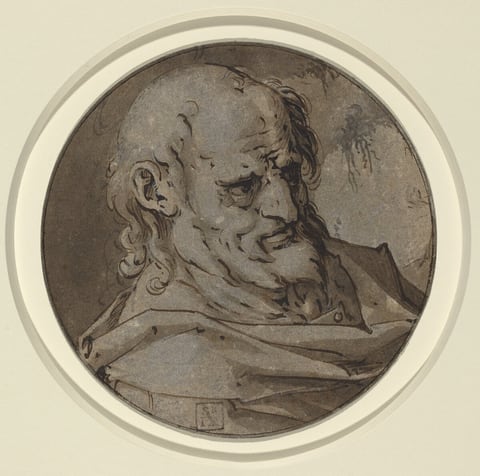
  1. The image features the upper body and head of a man in a circular frame. The man is facing slightly to the side and downward, with his body oriented to the left and his head turned towards the viewer. He has a prominent forehead, a defined nose, a furrowed brow, and a scrunched face. His hair is thinning on top, with longer strands curling around the back and sides of his head. The man has a beard with similar curled texture as his hair. He is wearing a garment that drapes over his shoulders, with visible folds and a texture that suggests a substantial fabric. No jewelry or objects are in his hands, as they are not visible in this image. The background is plain with a light, sketchy look, focusing attention on the man as the central figure in the circular composition.
    Head of an ApostleHendrick GoltziusCourtesy National Gallery of Art, Washington
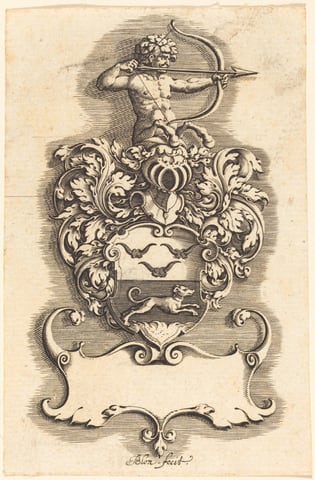
  2. This is a drawing of a heraldic emblem. The image shows a centaur-like figure holding a bow and arrow, with leaves around its head. Below, there is a shield divided into two sections: the upper part shows shapes resembling birds, while the lower part shows a hound-like animal in a running pose. The shield is surrounded by swirling acanthus-like leaves, with additional decorative elements and a blank scroll space below it.
    CrestMichel Le BlonCourtesy National Gallery of Art, Washington
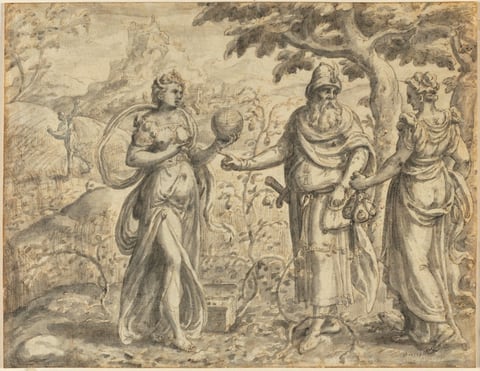
  3. The Seed Received among the Thorns, from the Parable of the Sower, by Gerard P. van Groningen, c. 1573
    The Seed Received among the Thorns, from the Parable of the SowerGerard P. van Groningen, c. 1573Courtesy of the Cleveland Museum of Art

Walk on

  • The 16th century, room 2
  • Gerard P. van Groningen's contemporaries 8 works
  • More Northern Renaissance 62 works
Ochre Editions

The world's museums, on your wall. Every work here is a reproduction of a public-domain original, credited to the museum that holds it.

Shop

All artCollectionsLimited dropsPrints and framing

Help

Find an orderShippingReturnsVerify a certificate

About

About Ochre EditionsMuseum creditsFor agentsDevelopers

Legal

Terms of UseTerms of SaleLimited Editions and CertificatesPrivacy PolicyCookie PolicyAcceptable Use PolicyAgent & API TermsCopyright and DMCA PolicyPrinting Your Own PhotoVulnerability Disclosure PolicyAccessibility StatementOpen-Access Credits
© 2026 Ochre EditionsPrices in US dollars. Prints ship within the United States.