Baroque and Rococo
Drama, movement and deep shadow in the 1600s, then the light, playful decoration of eighteenth-century Europe.
First room, north wall
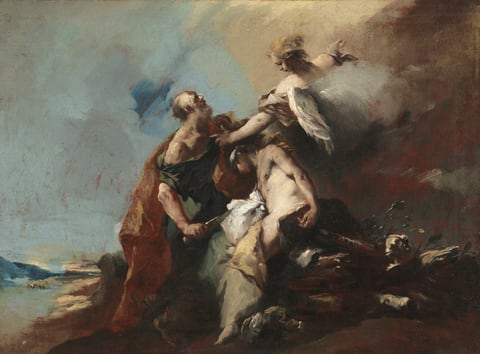
The Sacrifice of IsaacFrancesco Guardi, 1750sCourtesy of the Cleveland Museum of Art 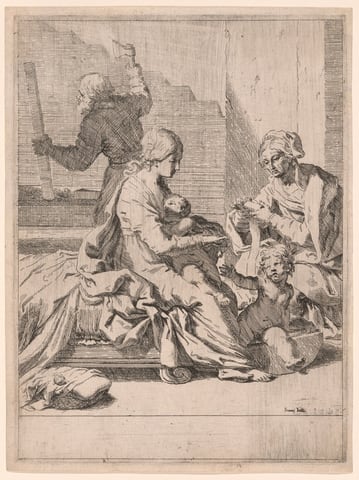
Holy Family with Saint Elizabeth and Saint John the BaptistElisabetta Sirani, 1650/60Courtesy of the Art Institute of Chicago 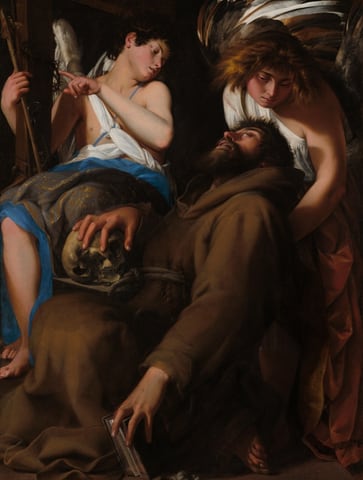
The Ecstasy of Saint FrancisGiovanni Baglione, 1601Courtesy of the Art Institute of Chicago
First room, south wall
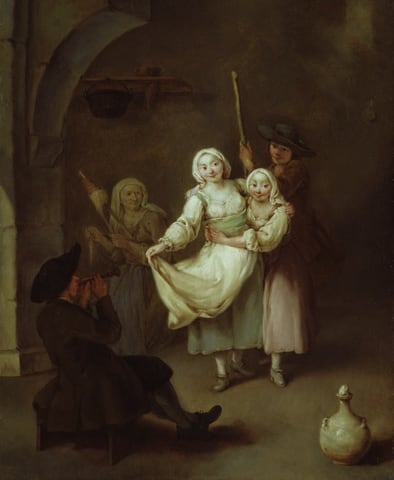
The DancePietro Longhi, c. 1750Courtesy of the Art Institute of Chicago 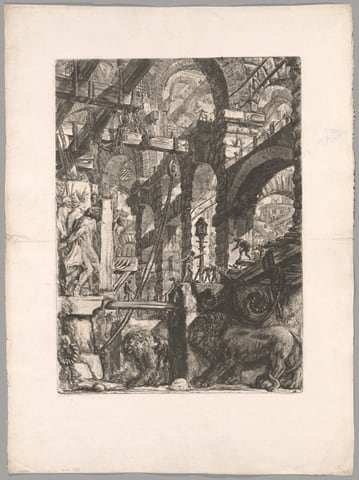
The Lion Bas-Reliefs, plate 5 from Imaginary PrisonsGiovanni Battista Piranesi, 1761Courtesy of the Art Institute of Chicago 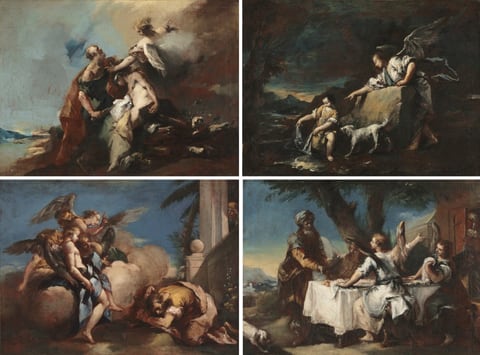
The Sacrifice of Isaac, Tobias and the Angel, The Angels Appearing to Abraham, Abraham Welcoming the Three Angels (painting series)Francesco Guardi, 1750sCourtesy of the Cleveland Museum of Art
Second room, south wall
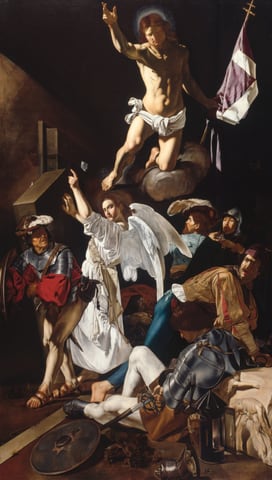
The ResurrectionCecco del Caravaggio, c. 1619-20Courtesy of the Art Institute of Chicago 
Antique Carved Marble Candelabra BaseAndrea di Lione, 1642/44 or 1647/51Courtesy of the Art Institute of Chicago 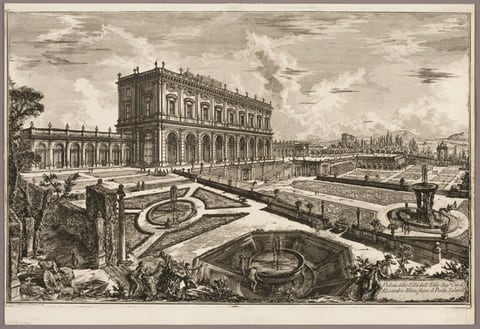
View of the Villa of His Eminence Cardinal Alessandro Albani, outside Porta Salaria, from Views of RomeGiovanni Battista Piranesi, 1769, published 1800–07Courtesy of the Art Institute of Chicago
Second room, north wall
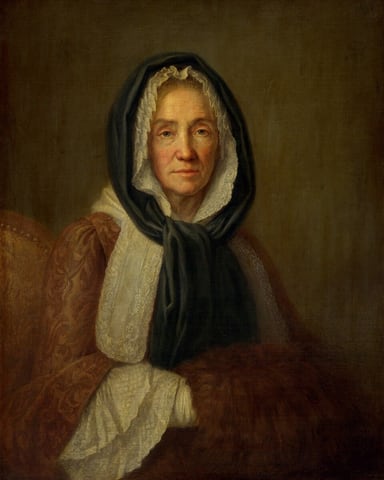
Old Woman with a MuffUnrecorded French maker, second half 18th centuryCourtesy National Gallery of Art, Washington 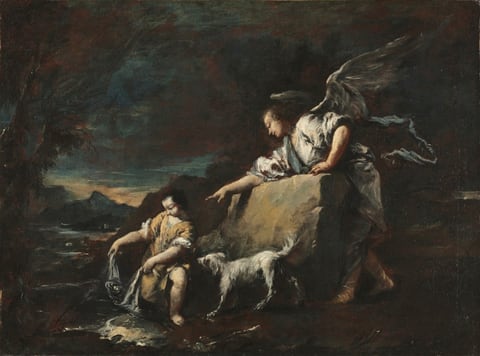
Tobias and the AngelFrancesco Guardi, 1750sCourtesy of the Cleveland Museum of Art 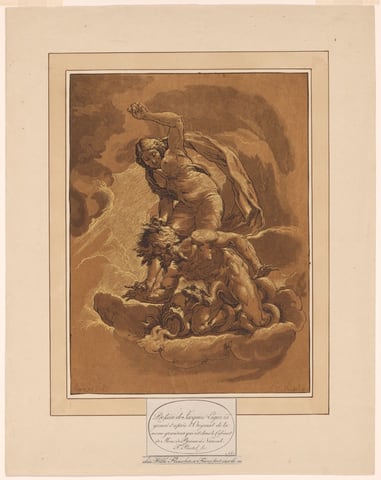
The Triumph of Truth over EnvyMaria Katharina Prestel, 1781Courtesy of the Art Institute of Chicago
Third room, north wall
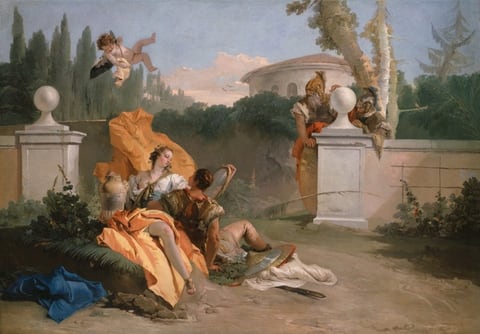
Rinaldo and Armida in Her GardenGiovanni Battista Tiepolo, c. 1742–45Courtesy of the Art Institute of Chicago 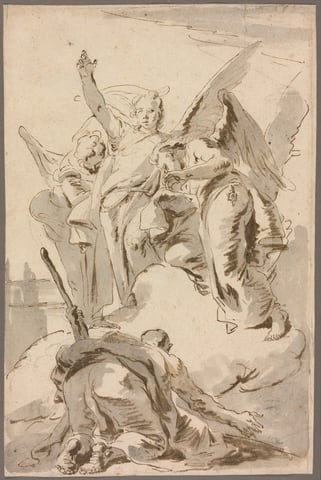
Three Angels Appearing to AbrahamGiovanni Battista Tiepolo, c. 1726Courtesy of the Art Institute of Chicago
Third room, south wall
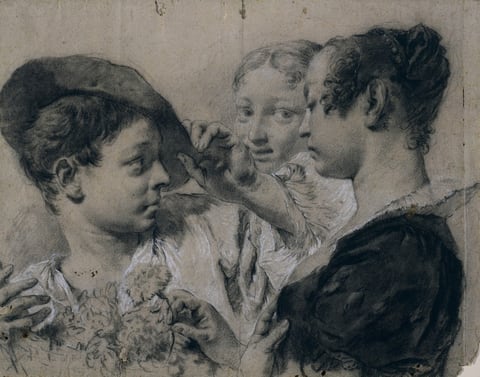
A Young Woman Buying a Pink from a Young ManGiovanni Battista Piazzetta, c. 1740Courtesy of the Cleveland Museum of Art 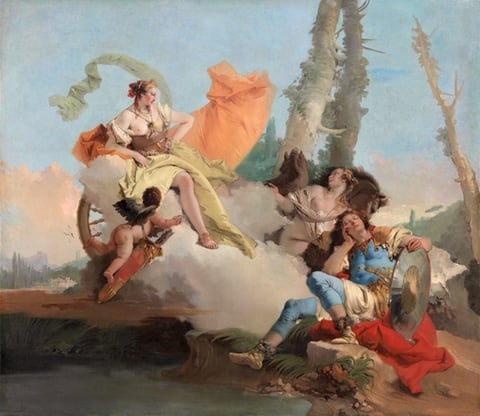
Armida Encounters the Sleeping RinaldoGiovanni Battista Tiepolo, c. 1742–45Courtesy of the Art Institute of Chicago