William Pitt1787/1796
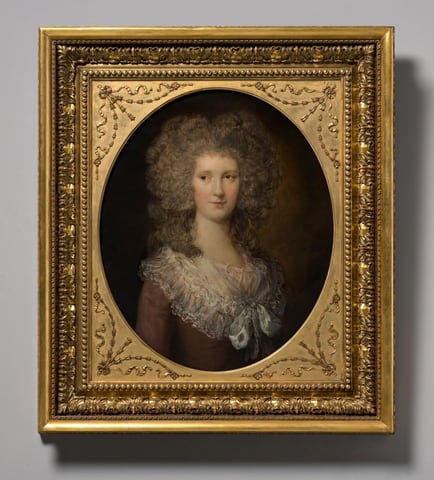
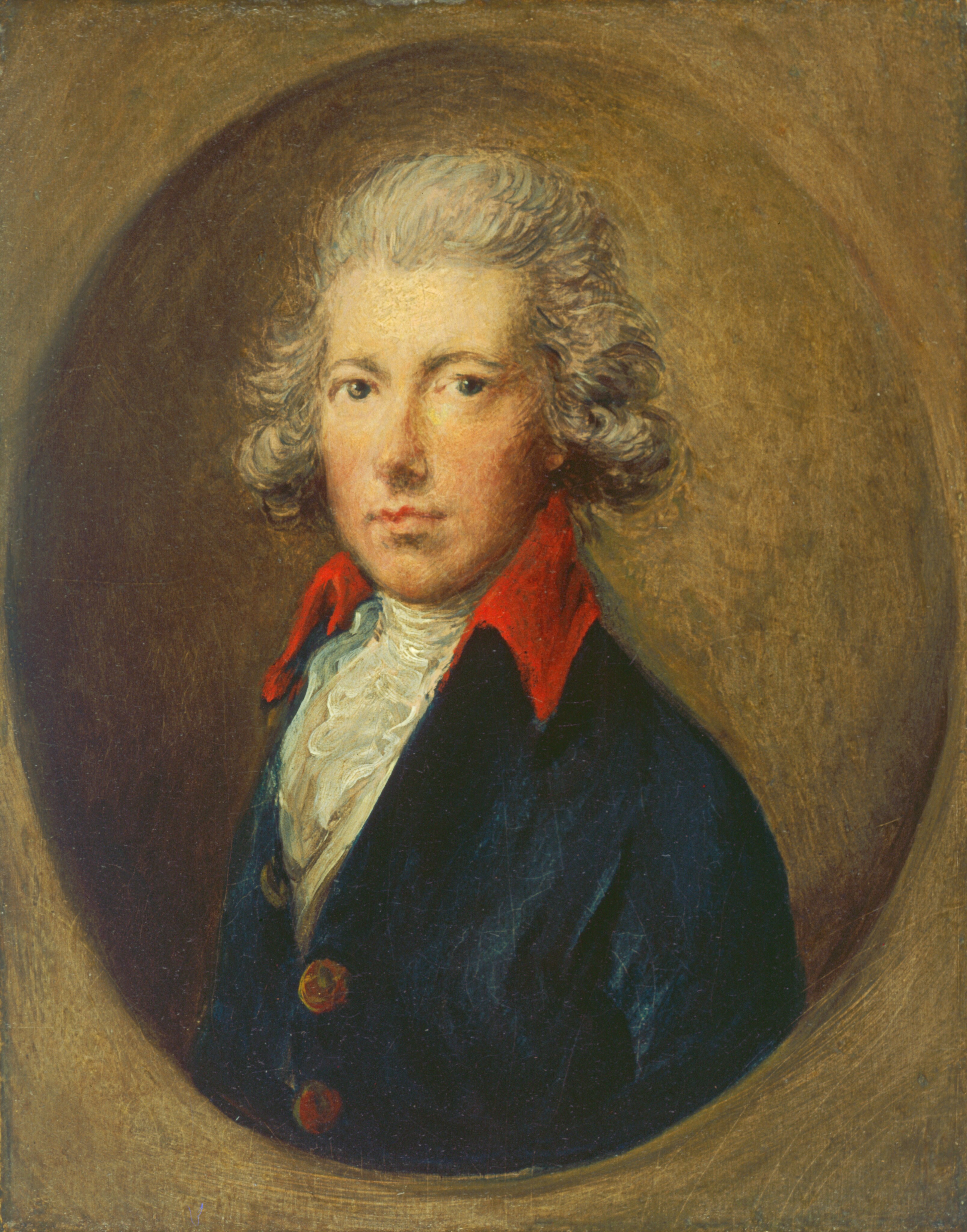
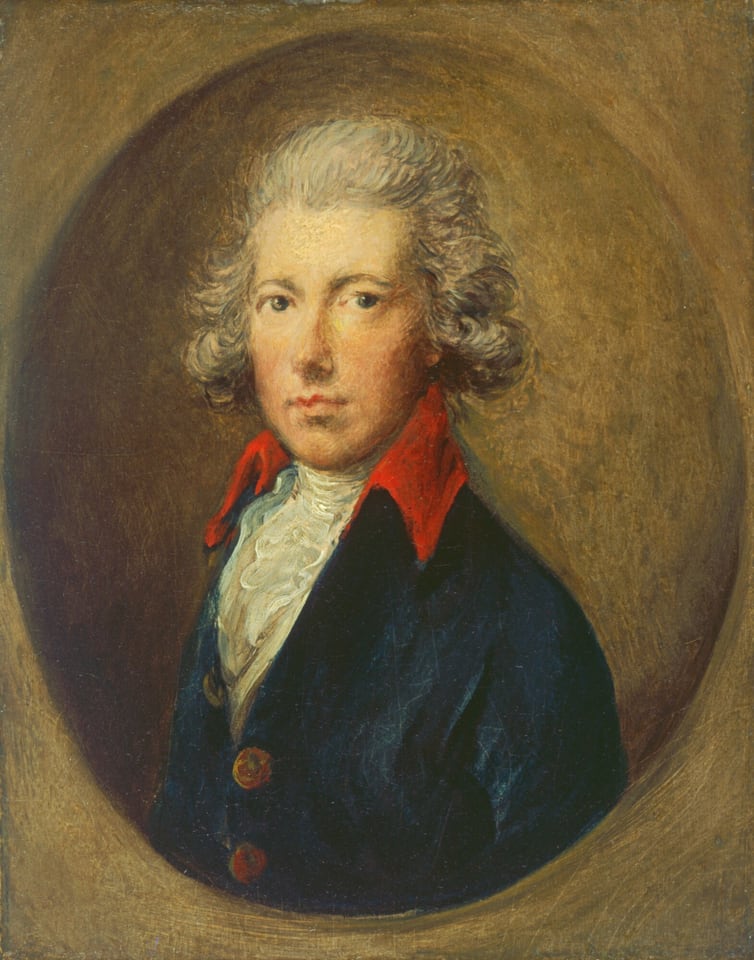
William Pitt the Younger, who became prime minister in 1783 at the age of twenty-four, is shown half-length in a dark coat with red lapels and brass buttons, his face turned towards us. More about this work
About this work
William Pitt the Younger, who became prime minister in 1783 at the age of twenty-four, is shown half-length in a dark coat with red lapels and brass buttons, his face turned towards us. Gainsborough Dupont, nephew and assistant of Thomas Gainsborough, painted Pitt more than once, and likenesses of the statesman were much in demand among his supporters. The thin, quick handling on board gives the portrait an informal, sketch-like freshness.
Written by Ochre Editions.
What you’re looking at
The image depicts a portrait of an individual with the upper half of their body visible. The person is facing forward with their head slightly turned to the side, looking directly at the viewer. They have a fair complexion, with distinct facial features, including a rounded face and closed lips. The hair is styled in an 18th-century manner, with curls around the ears. They are wearing a dark coat with red lapels and brass buttons, over a white shirt with ruffled details. There are no visible jewelry or objects in their hands. The background is a textured, earth-toned surface.
Description from the National Gallery of Art.
How it was made
- Oil paint
- Pigment ground in a drying oil, usually linseed. It dries slowly, so painters could blend on the canvas, build up thin translucent glazes, and rework a picture over weeks. Canvas replaced wooden panels in the 1500s because it is lighter and can be rolled.
Gainsborough Dupont
British, 1754–1797
Gainsborough Dupont was the nephew of Thomas Gainsborough and his only known apprentice, trained in his uncle’s studio in Bath and then London, where he absorbed his style closely. He made mezzotints after Gainsborough’s portraits and, after his uncle’s death in 1788, carried on the practice in a similar manner, painting William Pitt the Younger several times as well as many fashionable sitters.
Written by Ochre Editions.
Rights and the museum’s record
Public domain. The National Gallery of Art has dedicated this image to the public domain under CC0, so anyone may copy, adapt and use it, for any purpose, without asking. Our prints and files are reproductions made from the museum’s image; the museum doesn’t endorse them.
- Object number
- 1970.17.120
- Credit
- Courtesy National Gallery of Art, Washington
- Type
- Painting
- Licence
- CC0 1.0 Universal
- Museum record
- See it on the museum’s site