Unknown maker
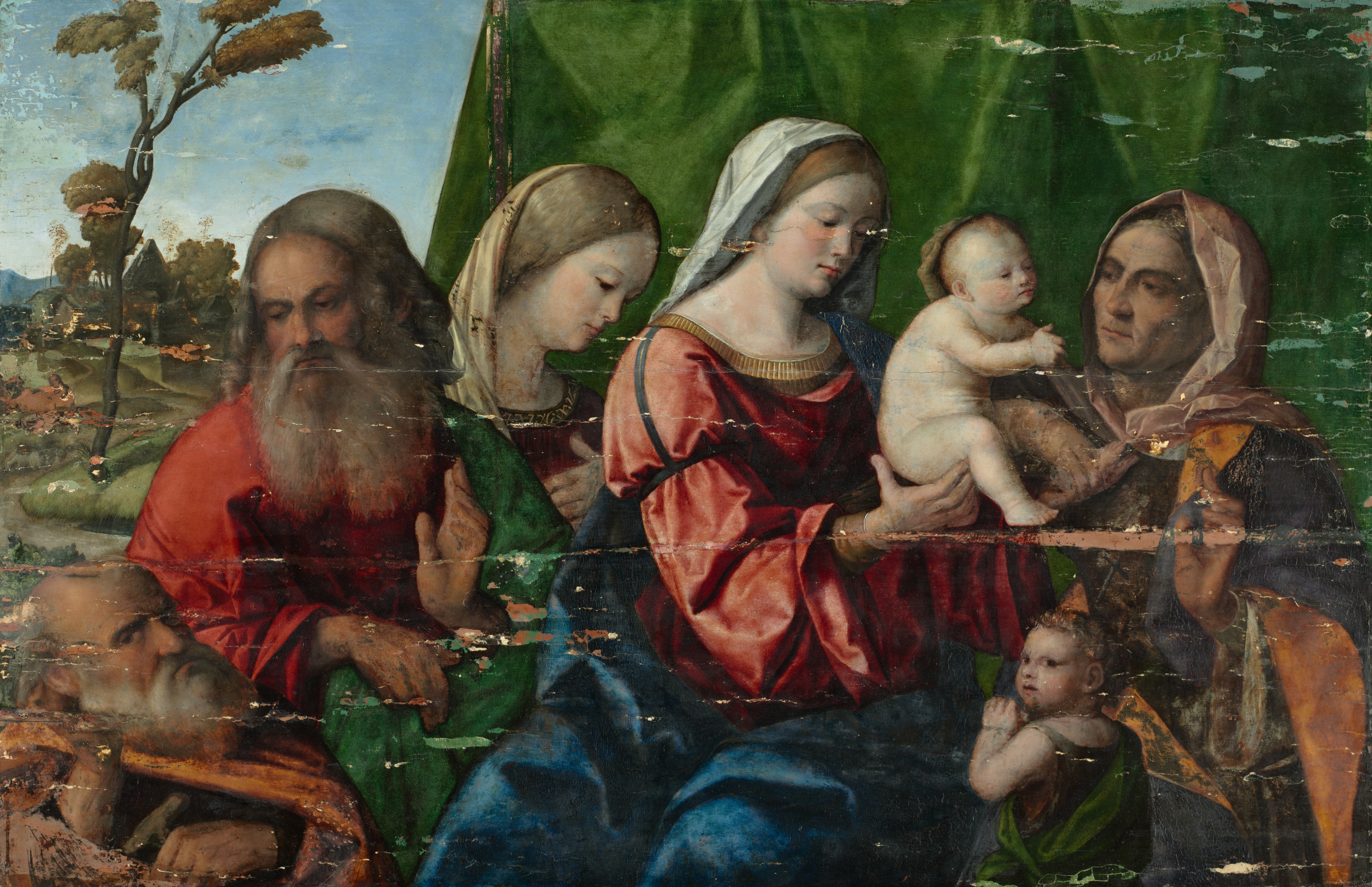
Virgin and Child with Saintsc. 1510
What are some of the key steps in conserving this picture? While it may seem disturbing, the condition of this work is not unusual for a 16th-century panel painting. More about this work
About this work
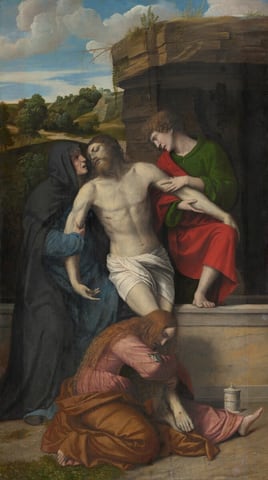
What are some of the key steps in conserving this picture? While it may seem disturbing, the condition of this work is not unusual for a 16th-century panel painting. Treatment was abandoned decades ago when the conservator who was cleaning the work left the museum. Brilliant colors and beautiful original passages remain, including expressive folds of red drapery and delicate flesh tones. New technical research could tell us more about how the panel was painted and subsequently treated. Identifying the artist is another key step that would help conservators reconstruct distinctive passages like hands and facial features. A painting by Francesco Bissolo in Munich (below) is closely related in subject and style and may provide some clues.
Text from the Cleveland Museum of Art.
How it was made
- Oil on panel
- Oil paint on prepared wooden boards, usually oak in the north and poplar in Italy. The rigid, smooth surface suits fine detail and thin, glowing glazes.
- Oil paint
- Pigment ground in a drying oil, usually linseed. It dries slowly, so painters could blend on the canvas, build up thin translucent glazes, and rework a picture over weeks. Canvas replaced wooden panels in the 1500s because it is lighter and can be rolled.
Renaissance
European art from about 1400 to 1600, when painters rediscovered perspective and the classical past.
Rights and the museum’s record
Public domain. The Cleveland Museum of Art has dedicated this image to the public domain under CC0, so anyone may copy, adapt and use it, for any purpose, without asking. Our prints and files are reproductions made from the museum’s image; the museum doesn’t endorse them.
- Object number
- 1916.796
- Credit
- Courtesy of the Cleveland Museum of Art
- Type
- Painting
- Department
- European Painting and Sculpture
- Licence
- CC0 1.0 Universal
- Museum record
- See it on the museum’s site
Report this work
Close in colour