Soap Bubblesca. 1733–34
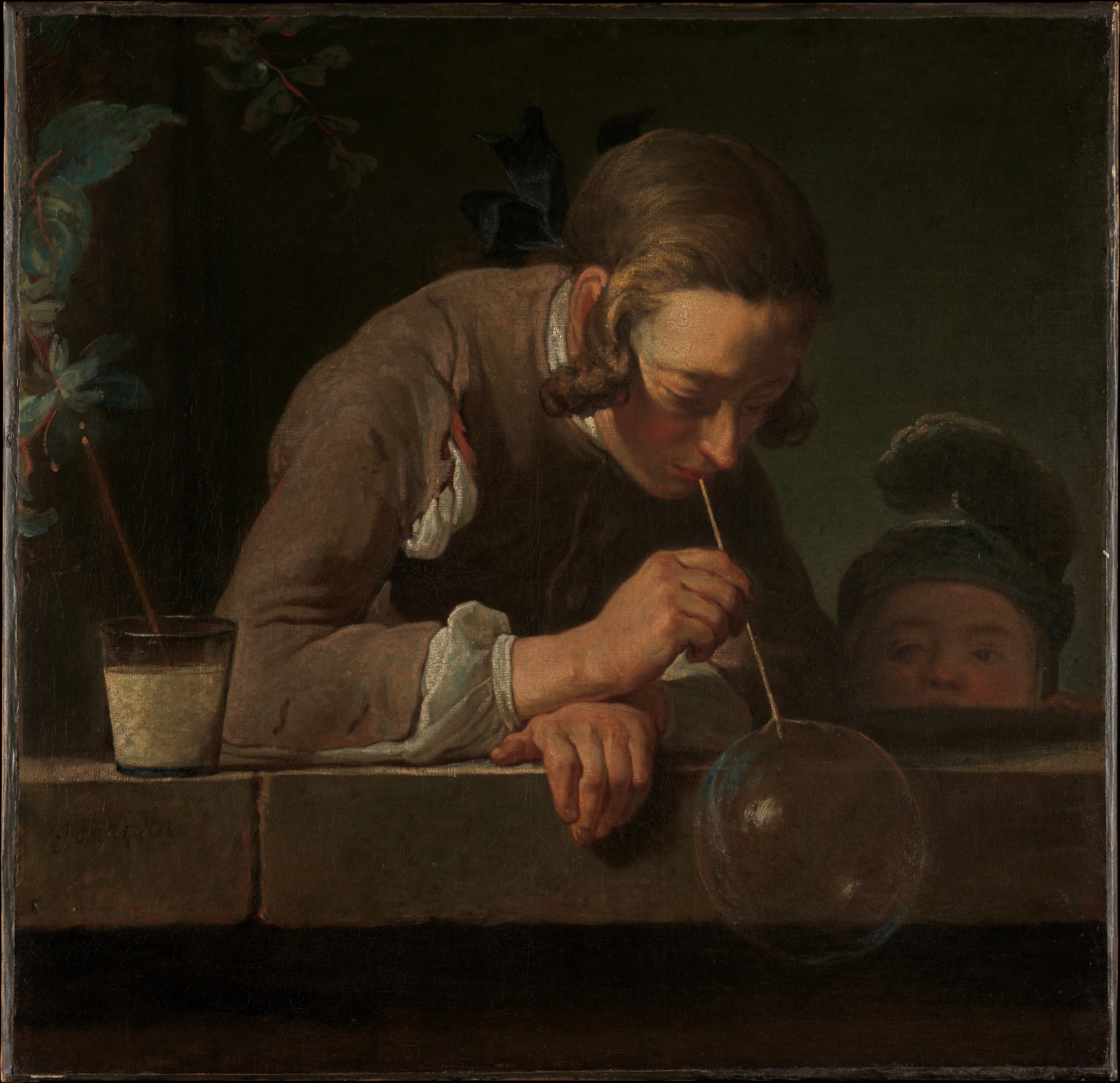
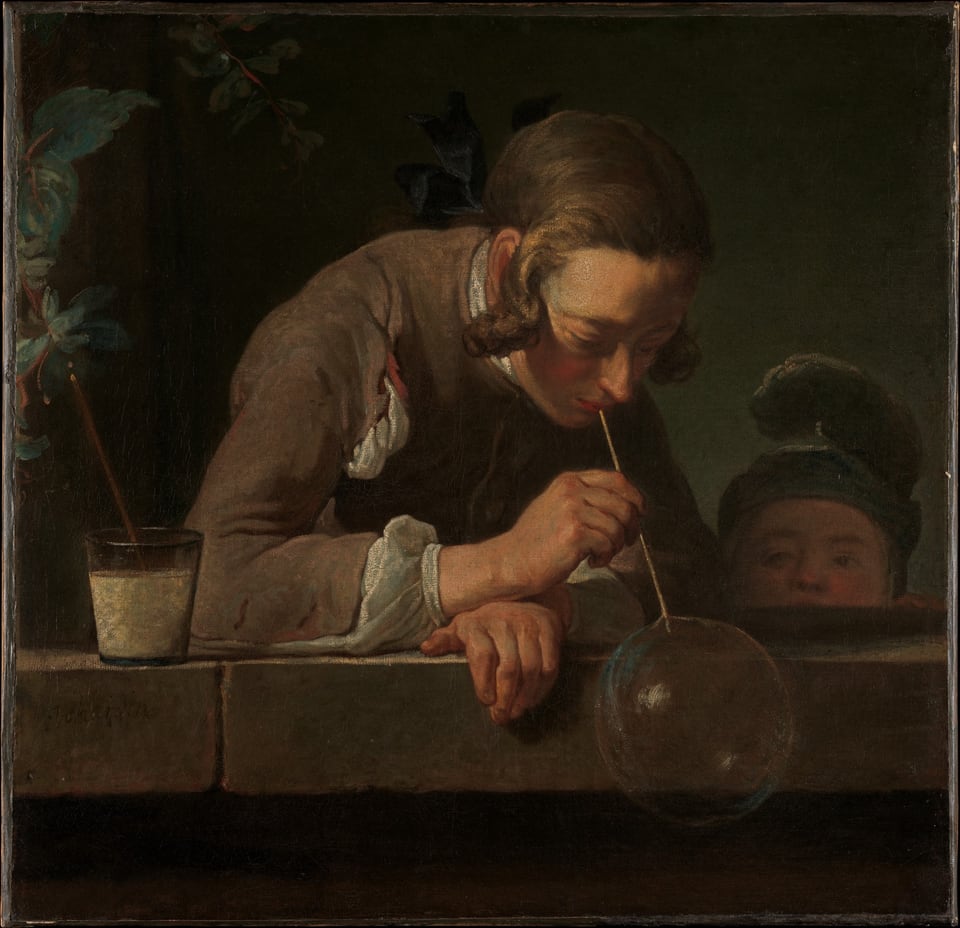
A young man leans out over a window ledge, carefully blowing a large, glistening bubble through a straw, while a small child peers over the sill to watch; a glass of soapy water stands beside him. More about this work
About this work
A young man leans out over a window ledge, carefully blowing a large, glistening bubble through a straw, while a small child peers over the sill to watch; a glass of soapy water stands beside him. The soap bubble was a traditional symbol of the brevity of life, but Chardin treats it with gentle attention rather than a heavy moral, lingering on the concentration in the young man’s face. He painted the composition several times, and other versions are in Washington and Los Angeles.
Written by Ochre Editions.
How it was made
- Oil paint
- Pigment ground in a drying oil, usually linseed. It dries slowly, so painters could blend on the canvas, build up thin translucent glazes, and rework a picture over weeks. Canvas replaced wooden panels in the 1500s because it is lighter and can be rolled.
Jean Siméon Chardin
French, 1699–1779 · Born and died in Paris.
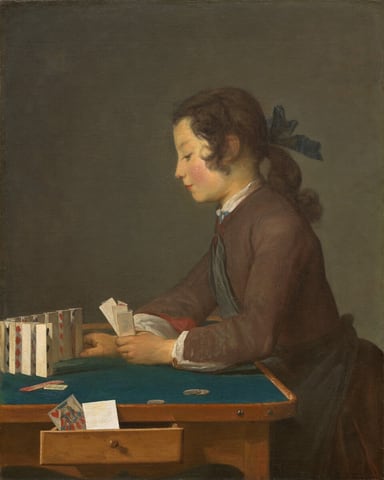
Chardin spent his life in Paris and was received into the Academy in 1728 as a painter of animals and fruit. He found his subjects in modest kitchens and households, painting still lifes and quiet genre scenes such as Soap Bubbles and The House of Cards with grainy, carefully worked paint and an air of calm concentration. In later life, as his eyesight weakened, he turned to pastel, producing searching self-portraits.
Written by Ochre Editions.
Rights and the museum’s record
Public domain. The Met has dedicated this image to the public domain under CC0, so anyone may copy, adapt and use it, for any purpose, without asking. Our prints and files are reproductions made from the museum’s image; the museum doesn’t endorse them.
- Object number
- 49.24
- Credit
- Courtesy of The Metropolitan Museum of Art
- Type
- Paintings
- Department
- European Paintings
- Licence
- CC0 1.0 Universal
- Museum record
- See it on the museum’s site